21 Different Types of Hand Tools and Their Uses
June 21st 2025
Hand tools are the essential backbone of construction here in the UAE. From towering skyscrapers to intricate renovations, the right tools empower every builder, contractor, and DIY enthusiast. Having a comprehensive hand tools list is vital for efficiency and quality work. This blog will explain 21 different types of essential hand tools and their uses. These very instruments turn raw materials into finished projects.
21 Essential Types of Hand Tools
Today, we will walk you through 21 essential hand tools that form the foundation of construction work. We'll explore what they are, why they're indispensable, and how they make a difference on-site. Let's get started with our extensive list of hand tools!
1. Masonry and Tile Hand Tools
Specialised masonry and tile tools are non-negotiable when working with bricks, blocks, concrete, or tiles—common materials across UAE construction. They allow for precise mortar application, shaping materials, and achieving clean finishes.
What they are:
A family of tools designed specifically for handling and shaping masonry materials and installing tiles.
Uses:
Applying and spreading mortar, shaping mortar joints, cutting bricks or blocks, installing and cutting ceramic, porcelain, or natural stone tiles, and cleaning excess material.
Applications:
Think about the different types of trowels alone: brick trowels for laying mortar beds, pointing trowels for finishing joints, margin trowels for small spaces and mixing.
You also have floats for smoothing screed or plaster, tile cutters for straight cuts, and tile nippers for irregular shapes. Without these, achieving the clean lines and strong bonds necessary for durable structures and beautiful finishes is nearly impossible.
A good set of masonry trowels, like those favoured for their balance and blade flexibility by experienced masons in the UAE, makes all the difference in speed and quality.
Our site offers a wide range of essential masonry and tile hand tools, perfect for any scale of project.
2. Wrenches & Spanners
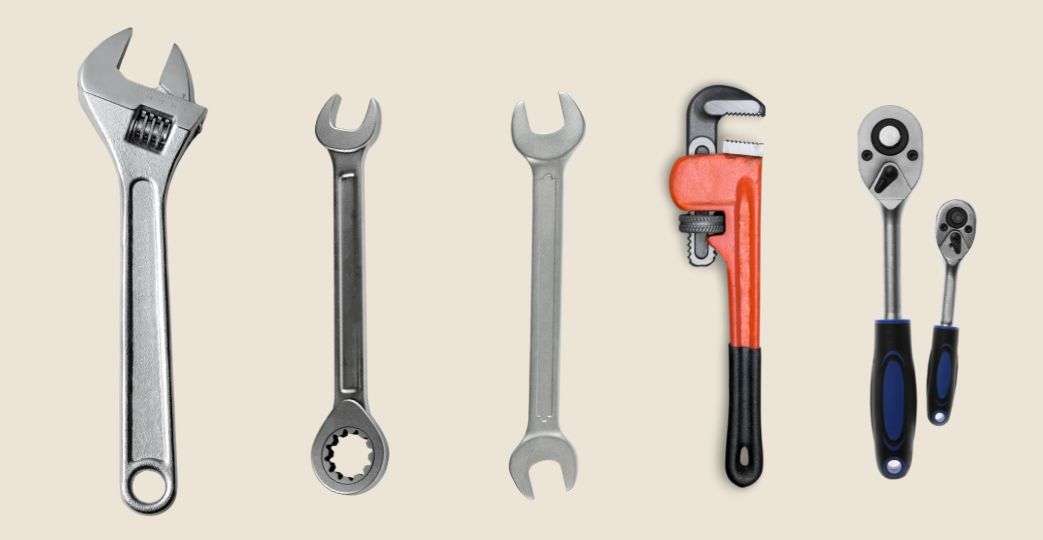
Wrenches and spanners are your go-to tools for anything involving nuts and bolts. They provide the necessary grip and leverage to tighten or loosen fasteners, which are crucial for assembly, structural connections, and maintenance.
What they are:
Tools that grip and turn objects, typically nuts and bolts, or sometimes pipes and fittings.
Uses:
Assembling steel structures, connecting pipes, tightening bolts on scaffolding, working on machinery, and securing fixtures.
Applications:
The variety is vast. Open-end wrenches, box-end wrenches, or the combination wrench offering both.
Adjustable wrenches provide versatility when you don't have the exact size. Pipe wrenches grip round pipes for plumbing tasks. Torque wrenches are used for tightening bolts to a specific tension, which is critical for structural integrity or automotive work, often done on-site.
Having a comprehensive set of wrenches, from small sizes for fittings to large ones for structural bolts, is fundamental.
Look for wrenches made from hardened steel for durability, a feature you'll find in the quality wrench sets we offer, including types trusted for heavy-duty applications. These are must-have hand tools for any site.
3. Measuring & Layout Tools
Accuracy is paramount in construction. Measuring and Layout tools ensure that lines are straight, angles are correct, and dimensions are precise from the initial layout to the final installation.
What they are:
Instruments used to determine dimensions, angles, levels, and plumb lines.
Uses:
Laying out foundations, framing walls, installing windows and doors, checking if surfaces are level or plumb, marking cutting lines, and ensuring accurate measurements for materials.
Applications:
The basic tape measure is indispensable, coming in various lengths and materials. Spirit levels, from trim torpedo levels to long box-beam levels, verify horizontal and vertical alignment.
Squares (framing squares, combination squares) check or mark right angles. Chalk lines snap straight lines over long distances. Plumb bobs use gravity to determine a true vertical line.
Laser levels are modern additions, but the reliability and simplicity of hand-held levels and squares mean they remain essential.
Getting reliable measurements starts with reliable tools, and our collection includes durable, easy-to-read measuring and layout hand tools suitable for the demanding UAE climate.
4. Hammers and Striking Tools
The most iconic hand tools, hammers and striking tools provide the force needed to drive fasteners, shape materials, or even demolish existing structures.
What they are:
Tools designed to deliver impact force to an object.
Uses:
Driving nails into wood, breaking concrete or stone (with a chisel), shaping metal, assembling components with force, and demolition.
Applications:
The claw hammer is the standard for driving and removing nails. Sledgehammers deliver heavy force for demolition or driving stakes. Mallets (rubber, wood, or plastic) are used when you need to strike something without damaging its surface. Ball-pein hammers are used to shape metal or rivets.
Proper balance and a secure grip are key features to look for in quality hammers, reducing fatigue and increasing safety.
We stock a variety of hammers, from versatile claw hammers perfect for general carpentry to heavy-duty sledgehammers, all built to withstand harsh site conditions. They are fundamental in any hand tools list.
5. Pliers
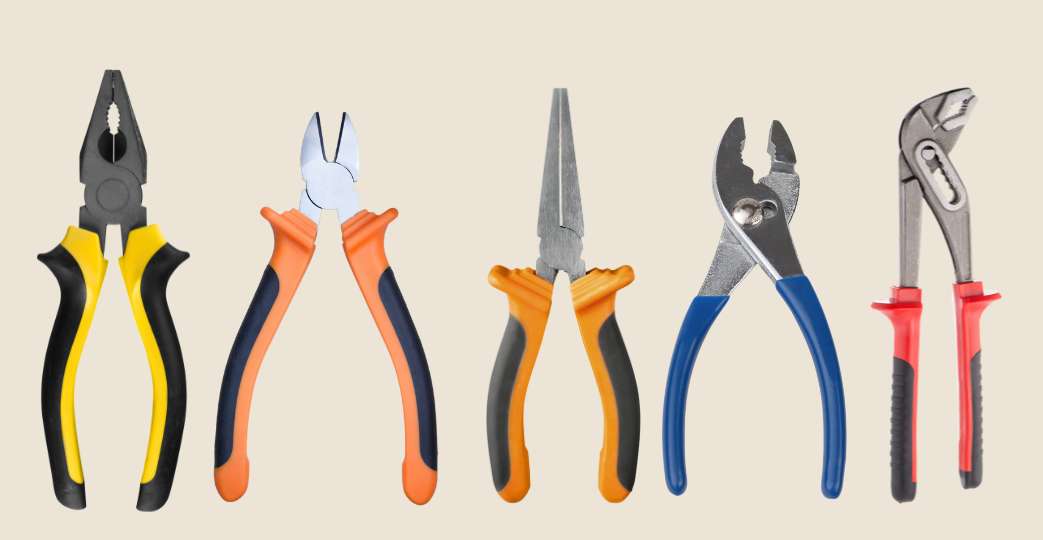
Pliers are versatile tools that offer gripping, bending, cutting, and sometimes stripping capabilities, making them invaluable for working with wires, small objects, or hard-to-reach components.
What they are:
Hand tools with jaws used for gripping, twisting, bending, or cutting.
Uses:
Bending wire, cutting wire or small metal pieces, gripping objects tightly, pulling nails, and holding small parts.
Applications:
Combination pliers are multi-purpose. Needle-nose pliers reach into tight spaces. Cutting pliers (diagonal cutters) snip wires. Locking pliers (like Vice-Grips) clamp onto objects with immense force, acting as a temporary vice. Slip-joint pliers adjust their jaw size to grip different objects.
Having a range of pliers ensures you have the proper grip and cutting power for various situations, from electrical work to intricate installations.
Our selection features pliers with ergonomic grips and hardened jaws, ensuring durability and comfort, perfect for demanding tasks on site.
6. Hand Planes
While power planers exist, hand planes offer unparalleled control and precision for shaping and smoothing wood surfaces, which are particularly valuable for fine adjustments or traditional joinery.
What they are:
Edge tools are used to shape wood by shaving off thin layers.
Uses:
Smoothing rough timber, beveling edges, fitting doors or windows that bind, shaping specific profiles, creating rebates or dados.
Applications:
Block planes are small and often used with one hand for chamfering edges and trimming end grain.
Bench planes come in various sizes (jack, smoothing, jointer planes) for larger surface work and straightening edges. They require skill to sharpen and use effectively, but yield exceptionally smooth and accurate results. Even with modern power tools, a sharp hand plane remains essential for site adjustments and fine finishing.
Explore our range of quality hand planes designed for both seasoned woodworkers and those looking to master this traditional craft.
7. Hand Saws & Cutting Tools
For situations where power isn't available, precision is paramount, or the material is specific, hand saws and other manual cutting tools are indispensable for making clean, controlled cuts.
What they are:
Tools with a sharp blade or edge are used to cut materials like wood, metal, plastic, or insulation manually.
Uses:
Cutting lumber to size, trimming metal pipes, cutting drywall, slicing insulation, cutting rope or cable, opening materials packaging.
Applications:
Handsaws for wood come with different tooth patterns (crosscut for cutting across the grain, rip saw for cutting with the grain).
Hacksaws cut metal or plastic pipes. Utility knives with replaceable blades are used for cutting cardboard, insulation, drywall, and many other materials. Bolt cutters snip through chains or thick wire/rebar. A sharp blade is key to efficient and safe cutting with any of these tools.
We offer a wide variety of hand saws and cutting tools, from durable utility knives with ergonomic grips to robust hacksaws and bolt cutters, ensuring you have the right edge for any material. This category is fundamental to any hand tools list.
8. Allen Key (Hex Key)
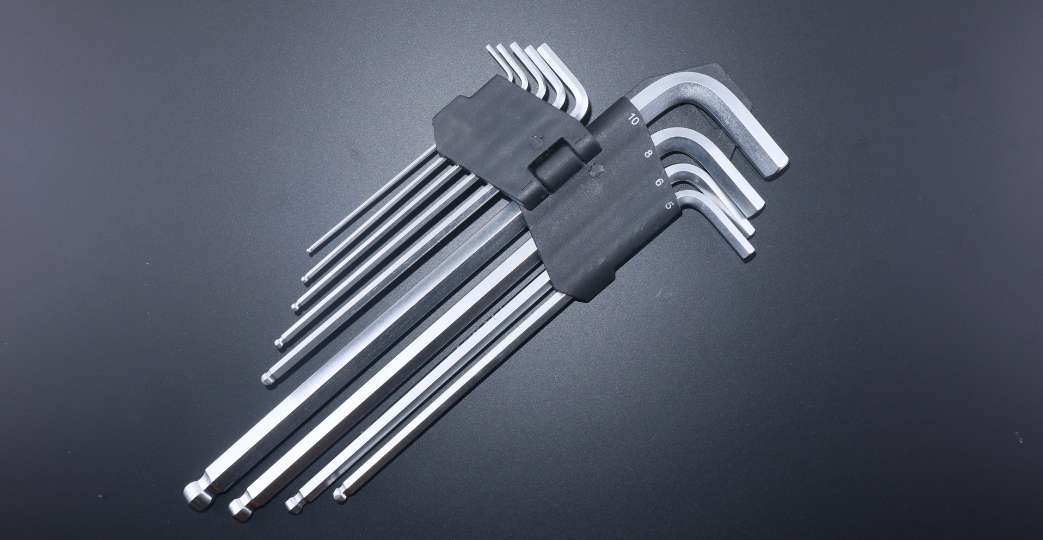
Specific fasteners with hexagonal sockets require a particular tool: the Allen key. These are simple, L-shaped tools that are essential for assembling many types of modern fittings, machinery, and furniture found on construction sites.
What they are:
An L-shaped tool used to drive bolts and screws that have a hexagonal socket in the head.
Uses:
Assembling pre-fabricated structures, securing machine parts, installing certain types of bolts and screws found in modern construction elements, and adjusting equipment.
Applications:
Allen keys come in sets of various sizes, measured in millimetres (metric) or inches (imperial). Ball-end Allen keys allow you to insert the key at an angle, which is proper in tight spots.
While simple, using the correct size is crucial to avoid stripping the fastener head. Keep a comprehensive set handy; you never know when you'll encounter a hexagonal socket bolt.
Find complete metric and imperial Allen key sets, including convenient holder designs, ready for immediate dispatch to your site.
9. Bar Bending Tools
Handling steel reinforcement bars (rebar) is a common task in concrete construction. Manual bar-bending tools allow workers to shape rebar on-site to fit specific structural requirements without needing heavy machinery.
What they are:
Tools designed explicitly for manually bending steel reinforcement bars.
Uses:
Shaping rebar to create hooks, angles, or specific forms required by structural drawings before placement in concrete forms.
Applications:
These tools provide leverage to bend the tough steel bars. They come in different sizes to accommodate various rebar diameters.
While hydraulic or electric benders are used on large projects, manual bar-bending tools are essential for smaller sites, adjustments, or detailed work. They are simple but incredibly effective for manipulating one of the construction's core materials.
We supply sturdy manual bar-bending tools designed for durability and leverage, ensuring you can shape rebar effectively on your project.
10. Clamp & Vices
Holding pieces together securely is vital for many construction tasks, from cutting and drilling to assembly and glueing. Clamps and vices provide the necessary stability.
What they are:
Devices used to hold workpieces firmly in place.
Uses:
Holding wood or metal together for drilling or cutting, securing components while the adhesive dries, providing a stable platform for shaping, and holding materials for welding.
Applications:
C-clamps are versatile and come in many sizes. Bar clamps or pipe clamps are used for holding wider assemblies, like tabletops or frames. Spring clamps offer quick, light-duty holding. Bench vices attach to a workbench or table, providing a firm, fixed grip for working on smaller items.
Having a variety of clamps on site means you can secure materials of different sizes and shapes effectively, improving both safety and accuracy.
Explore our comprehensive range of clamps and vices, from robust bench vices to quick-action bar clamps, designed to keep your workpieces steady and secure.
11. Inspection & Retrieving Tools
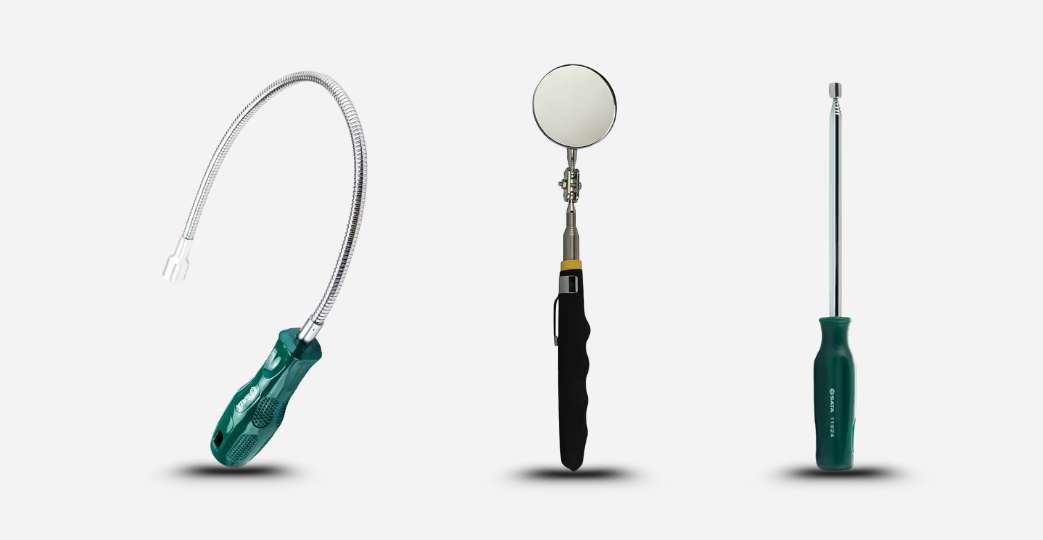
Sometimes, you need to see into tight spaces or retrieve dropped items in hard-to-reach areas. Inspection & Retrieving Tools make those tricky tasks possible.
What they are:
Tools designed to help you see into concealed areas or retrieve objects from awkward spots.
Uses:
Inspecting behind walls or pipes, checking the underside of structures, retrieving dropped nuts, bolts, or tools from confined spaces, and examining welds or connections in difficult access areas.
Applications:
Inspection mirrors, often telescoping and with articulated heads, allow you to see around corners or into cavities. Magnetic pick-up tools (often telescoping) retrieve dropped ferrous metal objects. Flexible grabber tools with claws or magnets retrieve non-ferrous items.
These tools are lifesavers on site when you drop a crucial fastener or need to check something inaccessible without demolition.
Our range of inspection and retrieval hand tools provides the solutions you need for those tricky situations.
12. Plastering Tools
Applying plaster or render is a skilled trade, and having the correct plastering tools is fundamental to achieving smooth, even surfaces ready for painting or finishing.
What they are:
Specialised tools used for applying, spreading, smoothing, and finishing plaster, render, or stucco.
Uses:
Applying plaster onto walls and ceilings, spreading and levelling render, creating textured finishes, finishing corners and edges, and cleaning excess material.
Applications:
Plastering trowels have large, flat blades for spreading material. Finishing trowels are used to smooth the final coat. Hawks are flat platforms with a handle holding a small amount of plaster for the trowel. Floats (wood, plastic, or sponge) are used to finish and create textures. Scrapers remove old plaster or prepare surfaces.
The quality of these tools directly impacts the finish of your walls and ceilings. Find high-quality plastering trowels and accessories on our site, which are trusted by finishers for achieving professional-grade surfaces.
13. Screwdrivers
Driving screws is a common task across all phases of construction, from framing and sheathing to installing fixtures and finishes. Screwdrivers are the manual solution, offering precision and control.
What they are:
Hand tools used to turn screws, with different tips to match various screw head types.
Uses:
Installing fasteners in wood, metal, or drywall, assembling components, installing electrical fixtures, working on machinery, and general fastening tasks.
Applications:
The most common types are flathead (slotted) and Phillips head. However, modern construction also frequently uses Pozidriv, Torx (star-shaped), and square (Robertson) heads. Having a set covering these common types in various sizes and shaft lengths is crucial.
Look for comfortable, non-slip handles and durable tips. Magnetic tips can also help hold screws in place. Our selection includes comprehensive screwdriver sets covering all common tip types and sizes, featuring durable construction and ergonomic handles for comfort during prolonged use. They are an essential part of any hand tools list.
14. Prying Tools
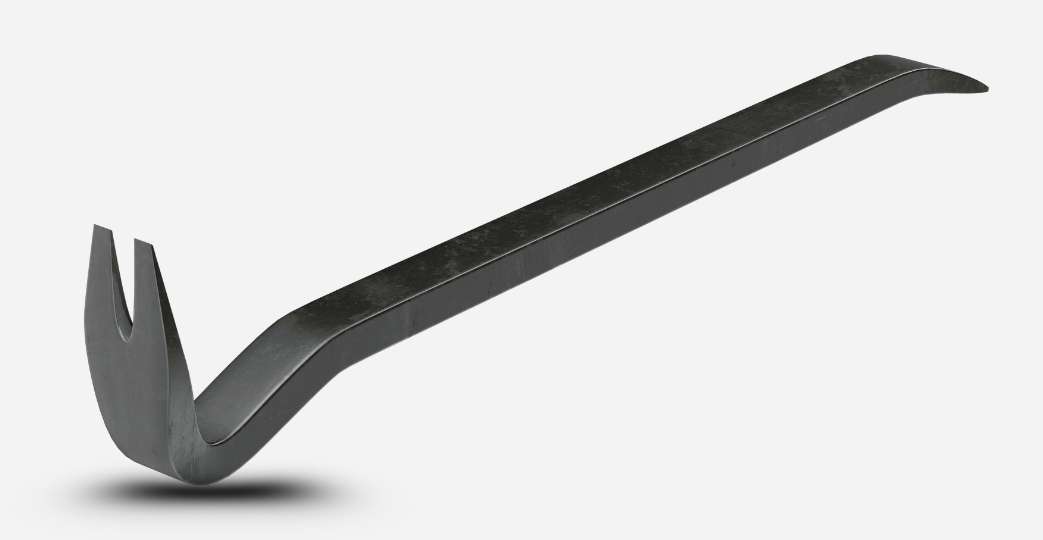
Sometimes, things need to come apart, or you need leverage to move something heavy. Prying tools are designed for demolition, dismantling, and gaining leverage.
What they are:
Tools designed to provide leverage to separate objects, remove fasteners, or move heavy items.
Uses:
Removing nails, dismantling wooden structures, opening crates, lifting heavy objects slightly to get a grip, and doing demolition work.
Applications:
Crowbars and wrecking bars are heavy-duty tools for significant leverage and demolition. Pry bars are smaller, often with nail-pulling slots. Flat bars are thinner and used for separating materials without causing excessive damage.
The angle and shape of the pry end are designed to get under objects and apply force effectively. A good pry bar is invaluable during renovation or demolition phases.
FEPY offers a range of robust prying tools, built from hardened steel to withstand significant force, ready for your most brutal demolition or dismantling jobs.
15. MultiTools & Accessories
Versatility in a compact form. While not always the primary tool for a specific heavy task, multi-tools offer a range of functions in one unit, perfect for quick fixes, adjustments, or situations where carrying a complete toolbox isn't feasible.
What they are:
Tools combining multiple functions (like pliers, knives, screwdrivers, saws) into a single unit or accessory sets (like extensive bit collections) that extend the use of a primary tool.
Uses:
On-the-spot repairs, tightening screws, cutting small materials, opening packaging, having a range of bits readily available for a screwdriver handle or drill.
Applications:
A quality construction-grade multi-tool can include pliers, wire cutters, knife blades, saws, bottle openers (sometimes necessary!), and various screwdriver bits.
Accessory sets like extensive screwdriver bit collections, socket adapters, or extension bars fall under this category, expanding the utility of other hand tools. They are about convenience and having a solution readily available.
Explore our range of durable multi-tools and versatile accessory sets, which provide flexibility and capability in a compact package that is perfect for every tradesperson's belt or bag.
16. Taps & Dies
Creating or repairing screw threads is a specific but critical task in metalworking and plumbing, often done on-site. Taps cut internal threads (like in a nut or a hole), while dies cut external threads (like on a bolt or pipe).
What they are:
Tools used to cut or repair screw threads. Taps cut internal threads; Dies cut external threads.
Uses:
Creating threaded holes in metal, cutting threads on pipes, repairing damaged threads on bolts or nuts, and making custom bolts or fittings.
Applications:
Taps and dies come in sets covering various standard thread sizes and pitches. Using the correct size and lubricating during cutting is essential for success and tool longevity.
This is a more specialised set of hand tools, but indispensable when dealing with threaded fasteners or pipes that need modification or repair on site.
Find comprehensive tap and die sets in both metric and imperial sizes in our store, which are made from high-quality steel for clean and durable threading.
17. Punches
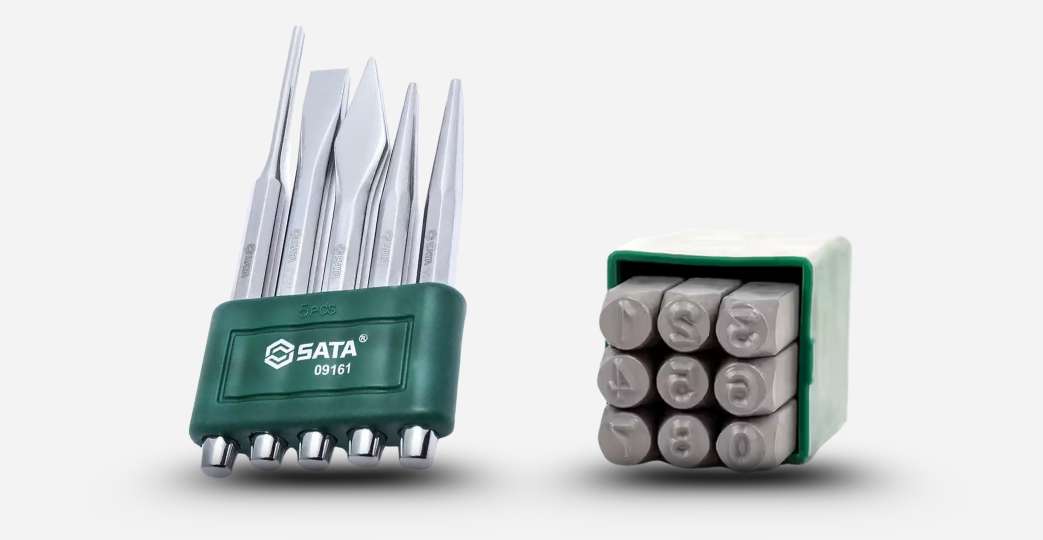
Punches are used to mark surfaces precisely before drilling, driving pins, or aligning holes. They provide a controlled impact for specific tasks where a hammer alone isn't suitable.
What they are:
Hand tools are used with a hammer to create indentations, drive pins, or align holes.
Uses:
Marking the centre of a point for drilling (centre punch), driving pins out of holes (pin punch), aligning bolt holes in assemblies (alignment punch), and marking sheet metal.
Applications:
Centre punches create a small dimple, preventing a drill bit from wandering. Pin punches are used to drive pins or rivets out of holes. Alignment or drift punches have a tapered end to align holes in mating parts. They come in sets of varying sizes and tip types.
Using the right punch for the job prevents damage to the workpiece or the fastener. Our selection includes durable punch sets made from hardened steel, ensuring they maintain their shape and effectiveness under repeated impact.
18. Pullers
Sometimes, components are fitted together very tightly (e.g., gears on a shaft or bearings in a housing) and require mechanical advantage to remove them without damage. Pullers provide this leverage.
What they are:
Tools designed to remove tightly fitted components by applying a pulling force.
Uses:
Removing gears, bearings, pulleys, or bushings from shafts or housings, often in maintenance or repair tasks on heavy equipment or machinery used on-site.
Applications:
Gear pullers and bearing pullers use jaws that grip the component and a screw mechanism to exert force and pull it free. They come in different configurations (two-jaw, three-jaw) and sizes.
While less common for new construction assembly, they are invaluable for maintaining and repairing the machinery and vehicles that operate on-site, preventing costly damage during disassembly.
Keep your site machinery running smoothly with our range of robust pullers, designed for the safe and effective removal of stuck components.
19. Machinist Files
Machinist Files are essential for shaping, smoothing, and deburring metal or other hard materials by hand. They allow for precise material removal in situations where power tools are too aggressive or lack the necessary control.
What they are:
Hand tools with hardened steel surfaces, cut with sharp teeth, are used for removing small amounts of material by abrasion.
Uses:
Shaping metal parts, smoothing rough edges (deburring), enlarging holes, sharpening other tools, and cleaning threads.
Applications:
Files come in various shapes (flat, round, half-round, square, triangular) and tooth coarseness (bastard, second cut, smooth) for different applications and levels of finish.
Machinist files are specifically designed for working with metal. Proper filing techniques and using a file card to clean clogged teeth are essential. A set of quality machinist files is crucial for metal fabrication, site welding clean-up, or custom-fitting metal components.
We offer a comprehensive range of high-quality machinist files and sets, providing the right shape and cut for precise material removal and finishing.
20. Rivet - Nail Gun & Staplers (Manual)
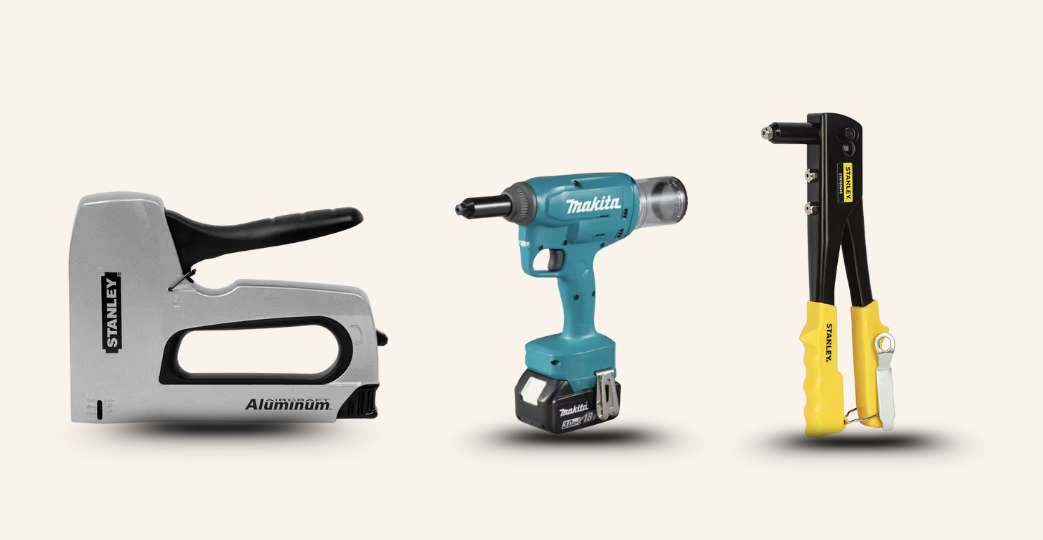
Manual fastening tools provide a simple, portable way to join materials using rivets, nails, or staples, often in lighter applications or when power isn't needed or available.
What they are:
Hand-operated tools are used to install rivets, drive nails, or insert staples.
Uses:
Installing rivets to join sheet metal or other materials, driving nails in tight spaces or for specific fasteners (like brad nails in some tools), fastening insulation, vapour barriers, roofing felt, or upholstery with staples.
Applications:
Manual rivet tools (riveters) use leverage to deform a pop rivet, creating a strong joint.
Manual nail guns (often called brad nailers or pin nailers, depending on the nail type) are less common than power versions but offer portability for light trim work. Staple guns (manual tackers) are widely used for fastening fabrics, insulation batts, or roofing underlayment. They provide quick, secure fastening for many lighter-duty site tasks.
Find durable manual riveters and versatile staple guns in our collection, offering reliable fastening solutions without the need for compressed air or electricity.
21. Sockets & Accessories
While often used with ratchets (which can be considered power tools if battery-powered or hand tools if manual), sockets themselves are hand tools that interface directly with nuts and bolts, transmitting torque.
What they are:
Cylindrical attachments that fit onto wrench handles (like ratchets, breaker bars, or torque wrenches) to grip and turn nuts and bolts. Accessories include extensions, universal joints, and adapters.
Uses:
Tightening or loosening nuts and bolts, particularly in confined spaces (with extensions or universal joints), applying specific torque with a torque wrench, and working with fasteners of various sizes and types.
Applications:
Sockets come in numerous sizes (metric and imperial) and depths (standard and deep well), as well as different drive sizes (e.g., 1/4", 3/8", 1/2").
Impact sockets are designed to be used with impact wrenches. Accessories like extensions allow access to recessed fasteners. Universal joints allow turning fasteners at an angle.
A comprehensive socket set with essential accessories is invaluable for any task involving multiple nuts and bolts, from vehicle maintenance to assembling structural components.
Our selection features high-quality socket sets and accessories in various drive sizes, built from chrome vanadium steel for durability and performance on tough jobs. This rounds out our comprehensive hand tools list.
21 Hand Tools List: A Quick Reference Guide
Here is a table summarising the different types of hand tools, their brief description, and their primary uses in the construction industry. This serves as your quick hand tools list reference.
| Tool Type | What it is (Brief Description) | Primary Uses in Construction |
| Masonry and Tile Hand Tools | Tools for working with bricks, blocks, concrete, and tiles. | Spreading mortar, cutting/shaping masonry/tile, finishing joints. |
| Wrenches & Spanners | Tools that grip and turn fasteners (nuts & bolts). | Tightening/loosening bolts on structures, machinery, pipes, and assembly work. |
| Measuring & Layout Tools | Instruments for determining dimensions, angles, and levels. | Laying out sites, checking plumb/level, ensuring accurate cuts, and measuring materials. |
| Hammers and Striking Tools | Tools designed to deliver impact force. | Driving nails, breaking materials, shaping metal, and demolition tasks. |
| Pliers | Tools with jaws for gripping, bending, or cutting. | Working with wires, gripping small objects, cutting small metal pieces, and holding components. |
| Hand Planes | Edge tools for shaping wood by shaving layers. | Smoothing timber surfaces, beveling edges, fitting doors/windows, and shaping wood. |
| Hand Saws & Cutting Tools | Manual tools with a blade for cutting materials. | Cutting wood, metal pipes, plastic, drywall, and insulation manually. |
| Allen Key (Hex Key) | L-shaped tool for driving hex socket fasteners. | Assembling pre-fab structures, securing machine parts, and installing furniture/fixtures. |
| Bar Bending Tools | Tools specifically for manually bending rebar. | Shaping steel reinforcement bars for concrete structures on site. |
| Clamp & Vices | Devices to hold workpieces firmly in place. | Securing materials for cutting, drilling, assembly, glueing, and holding workpieces steady. |
| Inspection & Retrieving Tools | Tools to see into or retrieve from tight areas. | Inspecting hidden spaces, retrieving dropped fasteners/tools, and examining difficult access areas. |
| Plastering Tools | Tools for applying and finishing plaster/render. | Spreading plaster/render, smoothing surfaces, finishing corners, creating textures. |
| Screwdrivers | Hand tools used to turn screws. | Installing fasteners in wood, metal, and drywall, assembling components, and performing electrical work. |
| Prying Tools | Tools designed to provide leverage. | Removing nails, dismantling structures, separating materials, and gaining leverage. |
| MultiTools & Accessories | Combine multiple functions or extend tool use. | Quick on-the-spot repairs, providing versatility, and expanding the capability of primary tools. |
| Taps & Dies | Tools used to cut or repair screw threads. | Creating threaded holes, cutting threads on pipes/bolts, and repairing damaged threads. |
| Punches | Tools to mark, drive pins, or align holes via impact. | Marking drill points, driving pins out, and aligning bolt holes in assemblies. |
| Pullers | Tools to remove tightly fitted components. | Removing gears, bearings, and pulleys from shafts or housings during maintenance/repair. |
| Machinist Files | Abrasive tools for shaping/smoothing hard materials. | Shaping metal, deburring edges, enlarging holes, sharpening tools, and cleaning threads. |
| Rivet - Nail Gun & Staplers (Manual) | Hand-operated tools to install rivets, nails, staples. | Joining sheet metal (rivets), light nailing/trim, fastening insulation/fabric (staples). |
| Sockets & Accessories | Attachments gripping fasteners, used with handles. | Tightening/loosening nuts/bolts, accessing recessed fasteners, and applying specific torque. |
Frequently Asked Questions (FAQs)
Q. What are the absolute must-have hand tools for someone starting in construction?
Essential tools include a claw hammer, tape measure, utility knife, screwdriver set (flathead/Phillips), combination pliers, adjustable wrench, and a spirit level.
Q. How do I know which size wrench or socket to use for a bolt?
Match the wrench/socket size to the bolt head or nut. Fasteners are metric (mm) or imperial (inches). Test sizes for a snug fit.
Q. How should I maintain my hand tools to ensure they last longer?
Clean and dry tools after use to prevent rust. Store them in a dry place. Sharpen cutting edges regularly.
Q. When is it better to use a hand saw instead of a power saw?
Use hand saws for precise cuts, intricate shapes, or when power is unavailable. They offer more control for trimming and adjustments.
Q. Are more expensive hand tools always worth the investment for professional use?
Yes, professional-grade tools offer better durability, performance, and ergonomics, which are crucial for daily site work and longevity.
Q. Do I need specialised hand tools for different trades like electrical or plumbing?
Yes, trades often require specific tools (e.g., insulated pliers for electrical, pipe wrenches for plumbing) for safety and efficiency.
Q. Can I find replacement parts or accessories for hand tools on FEPY?
Yes, FEPY stocks standard accessories like replacement blades, screwdriver bits, socket extensions, and some parts. Check the specific product page or the accessories section.
Final Words
We've highlighted 21 vital hand tools, forming a critical hand tools list for any construction professional in the UAE. Investing in quality versions of these essential tools means boosting your efficiency, safety, and the quality of your work. You can find every tool discussed, from measuring instruments to striking tools, available now on our product pages.
For contractors and professionals, enhance your benefits with our FEPY PRO membership, offering exclusive discounts and faster service. Visit our website today to explore our comprehensive range and discover how our PRO membership can support your projects. Equip yourself with the best and build better.