



















By Khalid Al Mansoori, Senior Procurement Specialist | Published: April 2026
Having sourced PPE for active construction projects across Dubai South, Sharjah Industrial Area, and Abu Dhabi's waterfront developments, I've seen firsthand what happens when procurement teams cut corners on safety equipment — DOSH inspections, site shutdowns, and in the worst cases, preventable injuries. The UAE's construction sector is running at full pace in 2026, with high-rise towers, infrastructure expansions, and villa fit-out projects keeping hundreds of thousands of workers on site daily. Getting your PPE selection right — for the climate, the trade, and the regulatory framework — is not optional. This guide walks through every major category, the applicable standards, and what to look for when buying in the UAE market.
Why PPE Compliance Is Non-Negotiable on UAE Construction Sites
The UAE Federal Law No. 8 of 1980 (UAE Labour Law) and its subsequent amendments mandate employers to provide adequate personal protective equipment to all workers exposed to occupational hazards. OSHAD (Abu Dhabi Occupational Safety and Health Center) enforces the SF-37 Code of Practice for Construction, which explicitly defines PPE requirements by task and trade. Dubai Municipality's Construction Safety Regulations (Technical Guideline TG-07) set parallel obligations across Dubai projects. Failure to comply risks project suspension, fines, and — critically — liability in the event of an injury.
Beyond regulation, the UAE's physical environment makes proper PPE selection a technical matter in its own right. Surface temperatures on exposed concrete can exceed 70°C in summer. Fine silica dust from desert sand and cutting operations loads the air on most sites. Coastal projects from Dubai Creek to Abu Dhabi Corniche deal with salt-laden humidity that degrades equipment faster than any temperate market. Every PPE decision needs to account for these conditions, not just the standard hazard profile.
UAE Regulatory Standards for Safety Equipment (ESMA, Dubai Municipality, Federal Law)
The Emirates Authority for Standardisation and Metrology (ESMA) mandates conformity with specific technical standards for PPE sold and used in the UAE. Most categories align with EN ISO standards from the European framework, which ESMA has adopted or referenced directly. Key standards to know:
- Safety helmets: EN 397:2012+A1:2012 (industrial helmets), EN 12492 (mountaineering/height work)
- Safety footwear: EN ISO 20345:2022 (S1, S2, S3 classifications)
- Cut-resistant gloves: EN ISO 21420:2020 and EN 388:2016+A1:2018
- Respiratory protection: EN 149:2001+A1:2009 (FFP1, FFP2, FFP3)
- Safety harnesses: EN 361:2002 (full-body harness), EN 354:2010 (lanyards)
- High-visibility clothing: EN ISO 20471:2013+A1:2016 (Classes 1–3)
- Eye protection: EN 166:2002 (personal eye protection)
All PPE imported and distributed in the UAE must carry the relevant CE marking and, for regulated categories, ESMA conformity. When evaluating suppliers, always request the Declaration of Conformity (DoC) and third-party test reports — not just a CE mark printed on packaging.
The 7 Essential PPE Categories Every UAE Site Worker Needs
Head Protection: Safety Helmets and Hard Hats
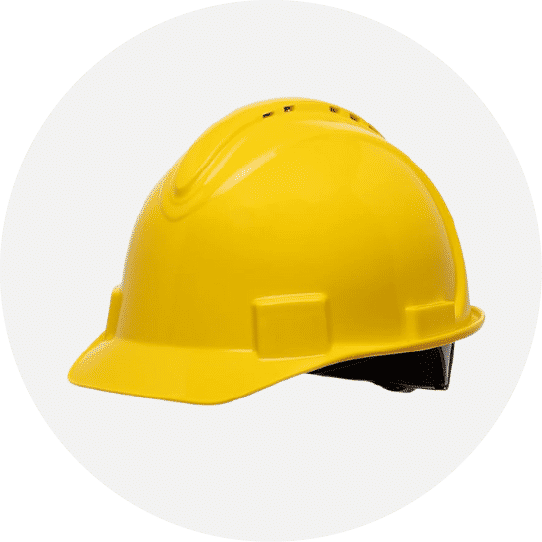
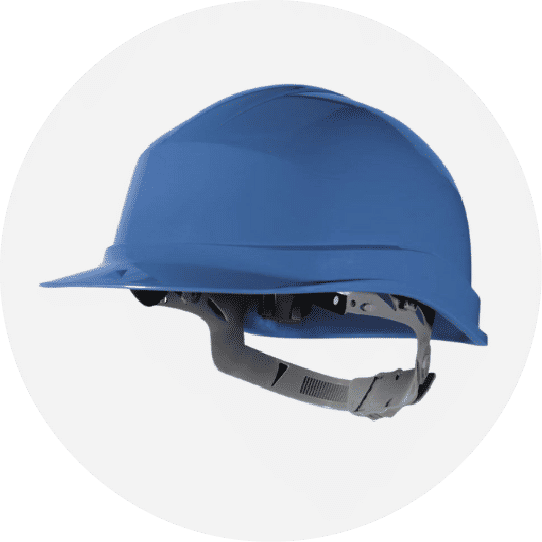
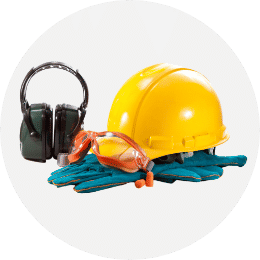
On any UAE construction site, helmets are mandatory from the moment a worker steps past the site hoarding. The standard is EN 397:2012+A1:2012 for industrial applications [BSI Group]. For tower work or rope access, EN 12492 applies. Helmet colour coding varies by contractor and project, but a widely adopted convention in UAE projects follows: white for engineers and supervisors, yellow for general workers, blue for subcontractors, red for safety officers, and orange for scaffolders — though this is not universally standardised by law and project-specific site rules may differ.
In the UAE summer, vented helmets with moisture-wicking liners are strongly preferable. UV degradation is real — helmets left in direct sunlight lose structural integrity faster than in European markets. Replace any helmet that shows chalking, cracking, or has sustained an impact, regardless of visible damage. Browse the full range of safety helmets available in the UAE across multiple standards and price points.
Eye and Face Protection: Goggles, Face Shields, and Welding Visors
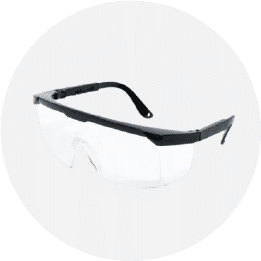
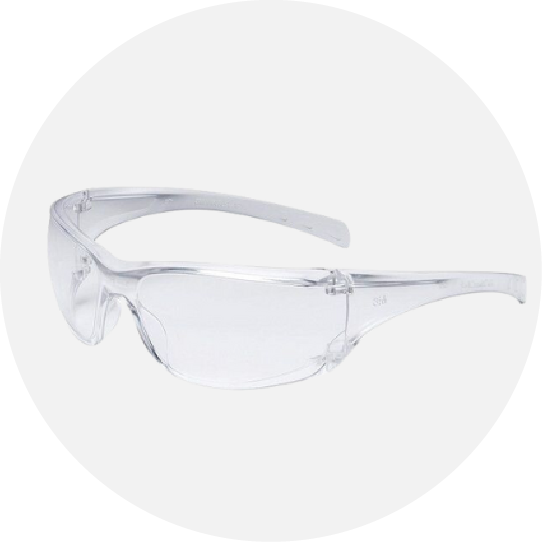
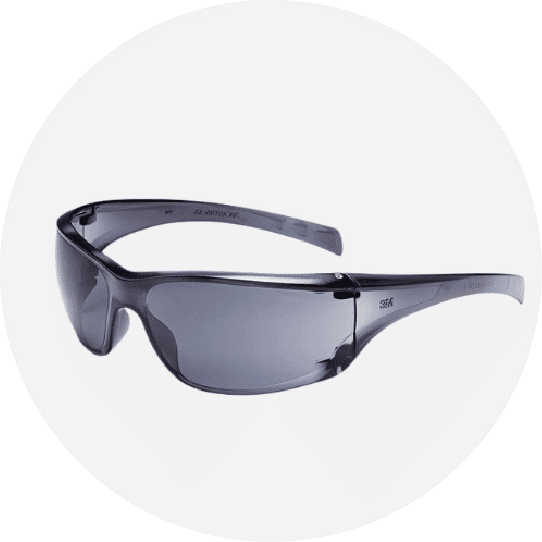
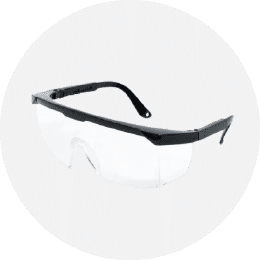
Desert dust, concrete splatter, grinding sparks, and chemical splashes make eye and face protection one of the most frequently needed — and most frequently neglected — PPE categories on UAE sites. Safety goggles rated to EN 166:2002 are the minimum for dusty environments. Anti-fog coatings are critical in coastal or humidity-heavy locations like Ras Al Khaimah industrial zones or Abu Dhabi island projects — standard goggles fog up within minutes, leading workers to remove them entirely.
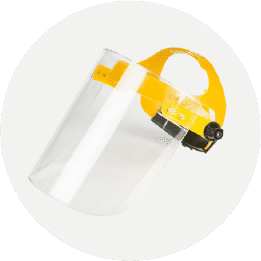
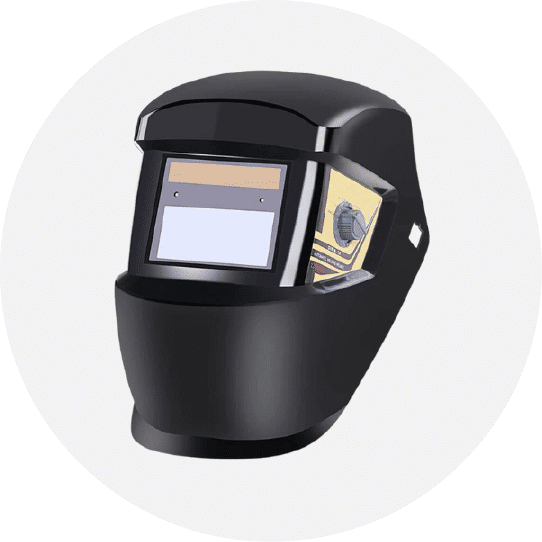
For grinding, cutting, and angle work, face shields providing full-face splash and fragment protection are required in addition to safety glasses underneath. Welding operations demand auto-darkening or appropriate shade-rated visors certified to EN 169 or EN 175.
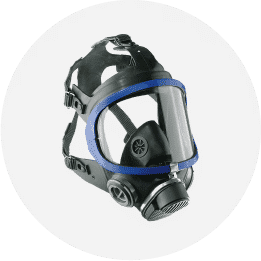
Respiratory Protection: Dust Masks, Half-Face Respirators, and P100 Filters
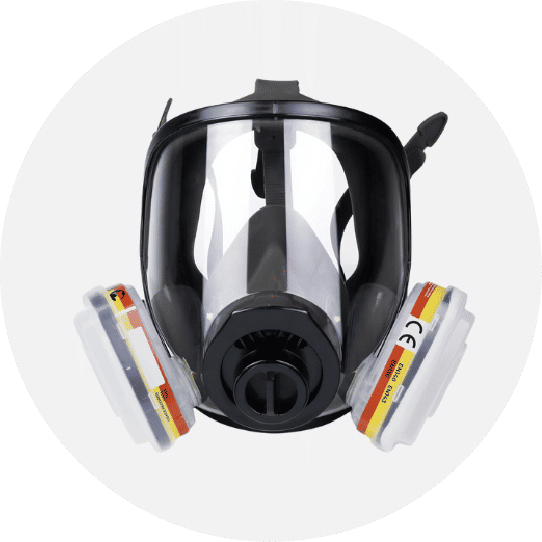
UAE sites generate two primary inhalation hazards: fine silica dust from cutting, grinding, and desert sand, and chemical vapours from coatings, adhesives, and MEP materials. Disposable FFP2 masks [EN 149:2001+A1:2009] are the minimum for dusty site environments — FFP1 is not adequate for silica exposure. For spray painting, epoxy application, or working in enclosed spaces with solvent-based products, a half-face respirator mask with appropriate cartridges is mandatory.
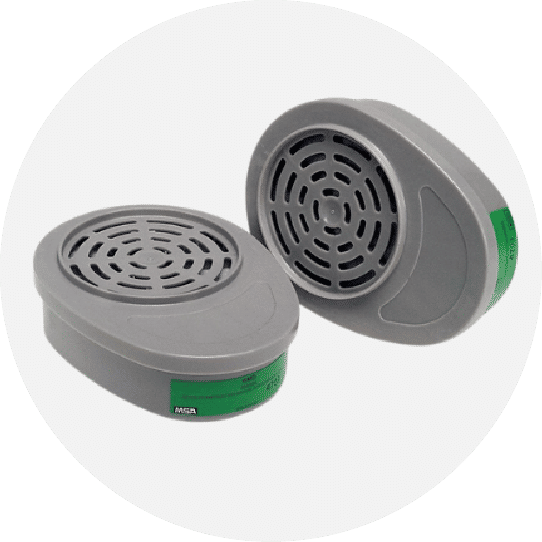
Respirator filters and cartridges must be matched to the specific hazard — P100 particulate filters for dust, OV (organic vapour) cartridges for solvents, and combination cartridges for mixed environments. Cartridge replacement schedules in UAE heat should be more frequent than manufacturer defaults, as higher temperatures accelerate chemical saturation of activated carbon media.
Hand Protection: Cut-Resistant, Chemical, and Heat-Resistant Gloves
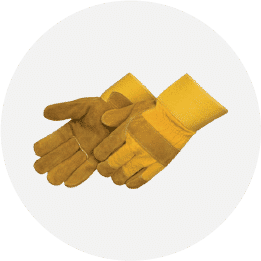
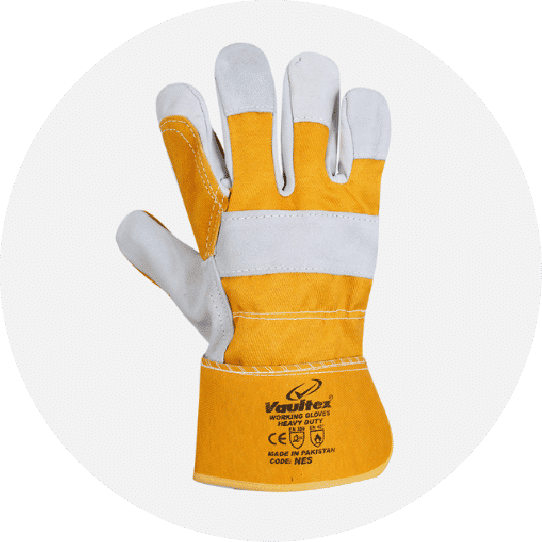
Hand injuries are among the most common lost-time incidents on UAE construction sites. The choice of glove must match the specific task — a general-purpose safety glove appropriate for material handling is not suitable for glass cutting, rebar tying, or chemical handling.
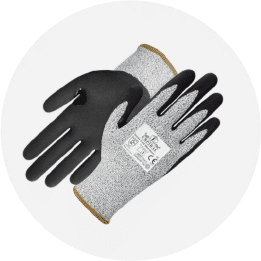
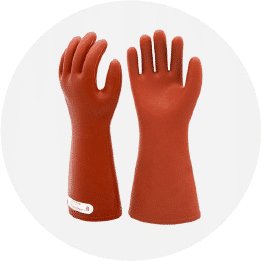
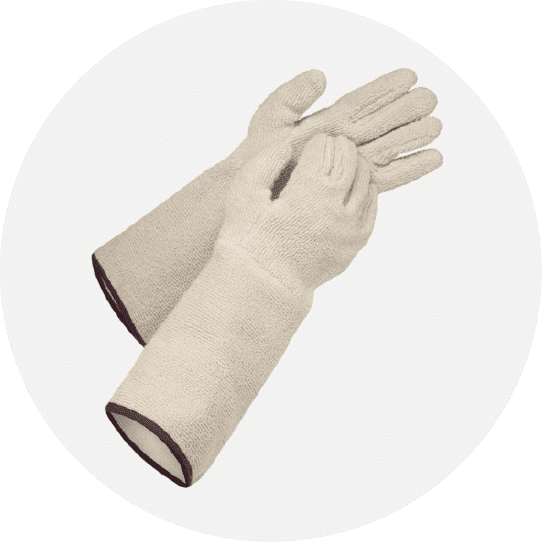
Cut-resistant gloves rated to EN 388:2016+A1:2018 with a cut level of C or above are required for glass handling, sheet metal work, and rebar operations — a common task in UAE slab and column pours. For electrical work, insulating gloves certified to IEC 60903 are required, with voltage class matched to the system being worked on. Heat-resistant gloves for welding and cutting should carry EN 12477 or EN 407 certification.
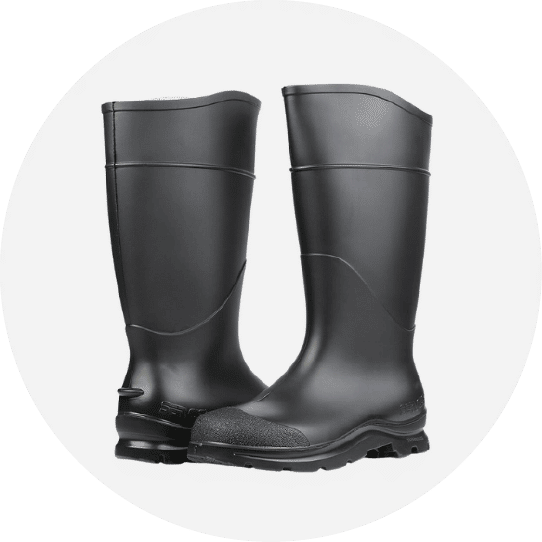
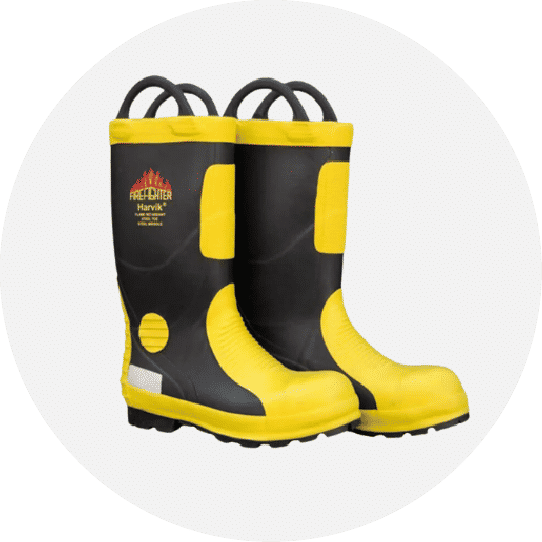
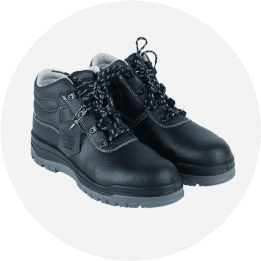
Foot Protection: Safety Boots, Anti-Static Footwear, and Puncture-Resistant Soles
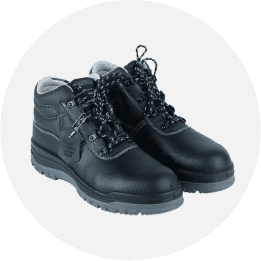
EN ISO 20345:2022 classifies safety footwear from S1 to S3 based on protection features. S1 provides a 200-joule toe cap and anti-static properties. S3 adds a penetration-resistant midsole and water-resistant upper — the standard most UAE site HSE managers specify as minimum for all ground-level workers. Safety boots with ankle support are strongly recommended over low-cut shoes for any site with uneven terrain, rebar, or formwork.
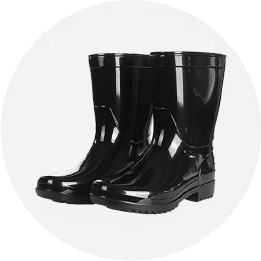
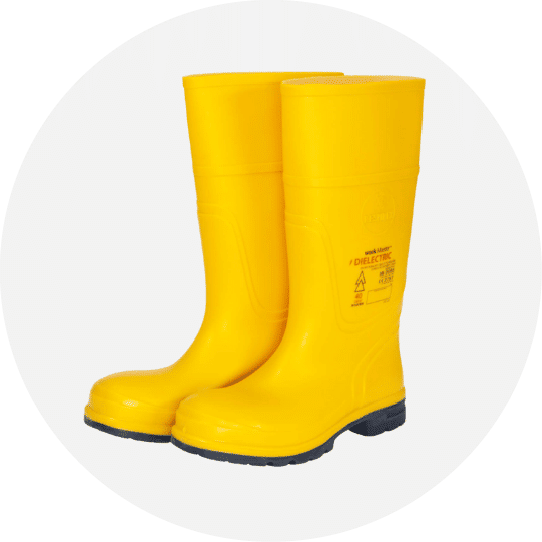
Steel toe shoes and composite toe alternatives are both available — composite is lighter and does not conduct heat, an advantage on UAE sites where ground temperatures can make steel toe caps uncomfortable in summer. Anti-static and ESD (electrostatic dissipative) footwear is mandatory in MEP installations and data centre fit-outs. Dielectric boots, rated to ASTM F2413 or IEC 60900, are required for live electrical environments.
Body and High-Visibility Protection: Vests, Coveralls, and Reflective Workwear
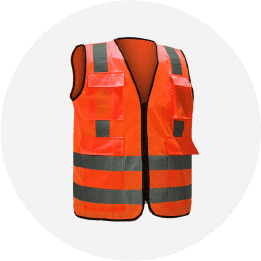
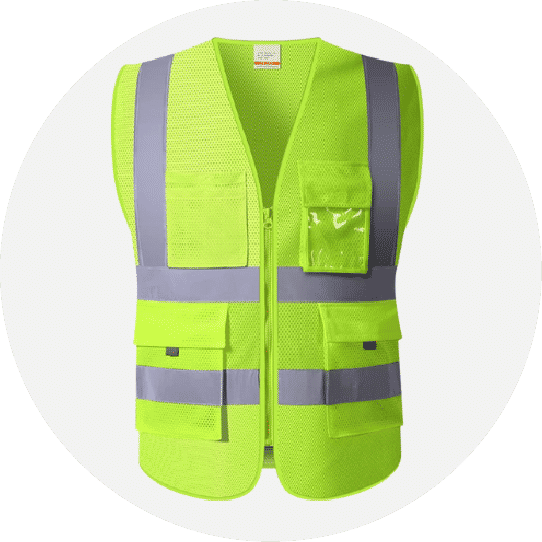
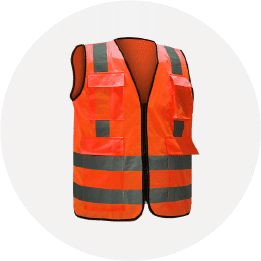
High-visibility vests rated to EN ISO 20471:2013+A1:2016 Class 2 or Class 3 are mandatory on all UAE road-adjacent and traffic-exposed worksites. Dubai Municipality and RTA-regulated projects specify Class 3 (the highest visibility rating) for personnel working within 1 metre of live traffic lanes. For general site use, Class 2 is the typical minimum.
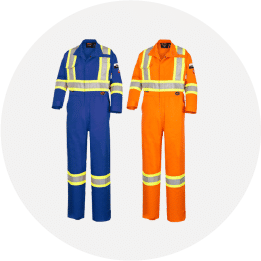
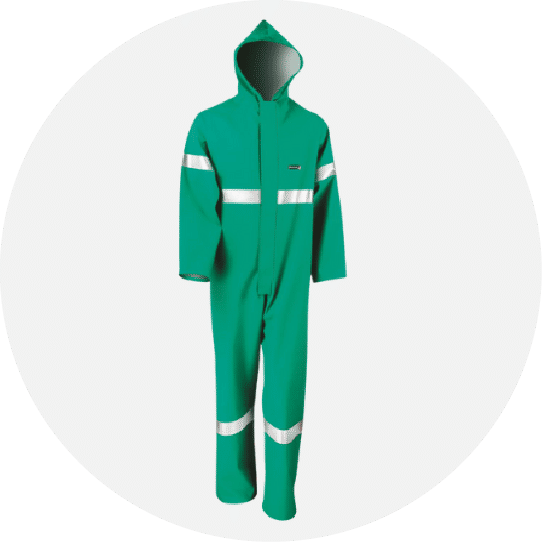
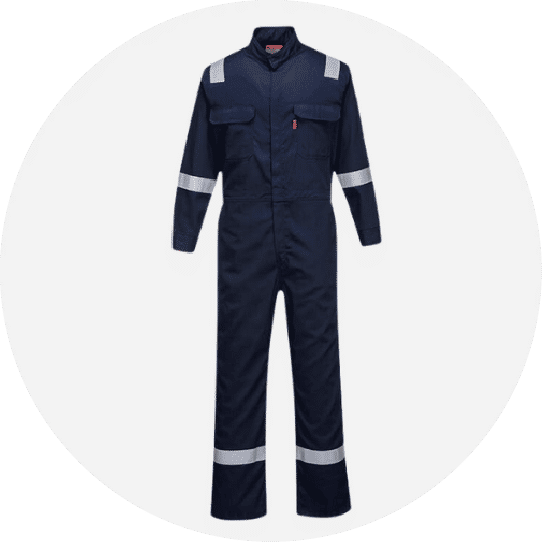
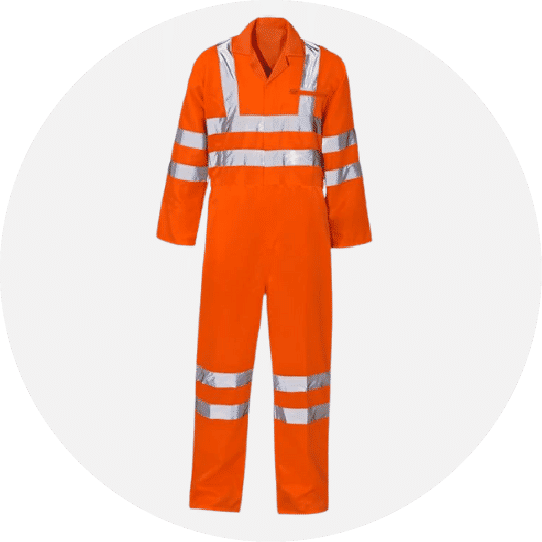
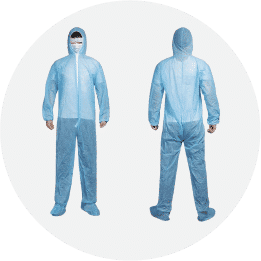
Coveralls serve dual purposes on UAE sites: protection from chemical splash, fibreglass irritants, and concrete dust, and — in lighter cotton or poly-cotton variants — as a practical uniform layer. For hot work areas and welding bays, flame-retardant (FR) coveralls certified to EN ISO 11612 are required. Safety vests should be inspected regularly — retroreflective tape degrades in UV-intense UAE sunlight faster than in European conditions.
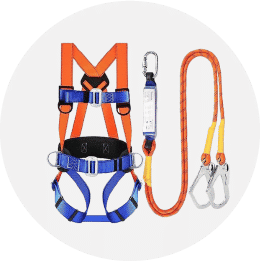
Fall Protection: Safety Harnesses, Lanyards, and Anchor Systems
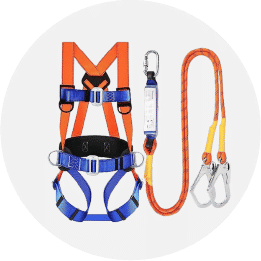
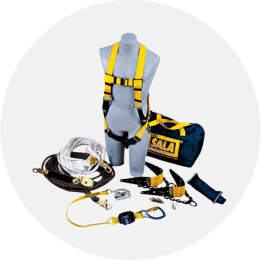
Working at height is one of the leading causes of fatalities in UAE construction. OSHAD's SF-37 and Dubai Municipality guidelines require a full-body harness and shock-absorbing lanyard for any unprotected work at 1.8 metres or above — a threshold lower than many international standards. Full-body harnesses and accessories must comply with EN 361:2002, and lanyards with EN 354:2010 and EN 355:2002 (shock absorbers).
On high-rise tower projects across Dubai Marina, JLT, and Business Bay, self-retracting lifelines (SRLs) are increasingly specified over standard lanyards for efficiency and reduced swing-fall risk. Anchor points must be rated to a minimum 15 kN [EN 795:2012]. Never use a single-leg lanyard without a double-anchor setup when moving between anchor points — this is a common failure mode on scaffold transitions.
Choosing the Right PPE for UAE's Climate: Heat, Dust, and Coastal Humidity
Working in Extreme Heat: Cooling Vests, Hydration, and Heat Stress Management
Between June and September, UAE outdoor wet-bulb globe temperatures regularly cross thresholds associated with heat stress risk for any sustained physical work. Ministerial Decree No. 511 of 2023 prohibits outdoor work between 12:30 PM and 3:00 PM during the summer season (June 15 – September 15). PPE selection must account for added metabolic heat load — heavier PPE increases core temperature faster. Lightweight, breathable coveralls, vented helmets, and moisture-wicking base layers are not comfort options; they are risk controls.
Dust and Sand Exposure: Filter Ratings and Mask Selection for UAE Sites
Fine desert sand in the UAE contains crystalline silica fractions. Prolonged inhalation without adequate respiratory protection leads to silicosis — an irreversible, progressive lung disease. FFP2 minimum for dusty environments; FFP3 for any confirmed high-silica task such as concrete cutting, stone grinding, or sandblasting. Change disposable masks every shift or when breathing resistance increases noticeably.
Coastal and Humidity Zones: Corrosion-Resistant and Anti-Fog PPE
Projects along the Abu Dhabi coastline, Palm Jumeirah, and Deira waterfront face salt air that corrodes metal fittings on harnesses, helmet brackets, and boot eyelets faster than inland sites. Inspect metal components of fall arrest equipment at every shift start in coastal zones. Anti-fog coated goggles and face shields are non-negotiable in high-humidity areas — visibility loss from fogging is a direct safety hazard.
PPE for Specialist Roles: MEP, High-Rise, Fit-Out, and Renovation Teams
PPE for Electrical and MEP Trades: Arc Flash, Insulated Gloves, and Dielectric Boots
MEP workers face hazards that general construction PPE does not address. Arc flash events require arc-rated (AR) face shields and FR clothing rated in cal/cm² appropriate to the incident energy level of the system being worked on [NFPA 70E]. Insulated rubber gloves to IEC 60903 Class 00 (500V) or Class 0 (1,000V) must be worn over leather protector gloves for live electrical work. Dielectric overshoes or boots prevent step-potential and touch-potential injuries when working near high-voltage systems.
For plumbing and HVAC work involving soldered joints or refrigerants, chemical-resistant gloves and eye protection rated for splash are required. MEP fit-out in occupied or semi-occupied towers — a common scenario in UAE retrofit projects — also demands coordination of respiratory protection when cutting into existing walls with unknown insulation materials.
Top Safety Equipment Brands Available in the UAE Market
The UAE market is well-served by both global PPE manufacturers and regional specialists. The table below covers the major brands across key PPE categories:
| Brand | Specialisation | Key Standards | Market Presence |
|---|---|---|---|
| Honeywell | Full PPE range — respiratory, eye, head, fall, gloves | EN 397, EN 166, EN 361, EN 149 | Widely distributed UAE-wide; favoured by major contractors |
| Delta Plus | Full PPE range — footwear, gloves, harnesses, helmets | EN ISO 20345, EN 388, EN 361 | Strong UAE and GCC distribution; competitive pricing |
| Vaultex | Safety footwear, helmets, gloves, vests | EN ISO 20345, EN 397 | Popular in UAE mid-market; widely used on labour camps and general sites |
| Gazelle | Safety footwear, industrial gloves | EN ISO 20345, EN 388 | Established UAE and Gulf market brand |
| Topsafe | Fall protection, harnesses, lanyards, helmets | EN 361, EN 354, EN 397 | Specified on high-rise and scaffolding projects in UAE |
| ATG | High-performance cut-resistant and work gloves | EN 388:2016+A1:2018 | Premium glove specialist; used in manufacturing and precision trades |
| Empiral | Safety footwear, gloves, PPE accessories | EN ISO 20345, EN 388 | Growing UAE market presence; value-focused range |
| Intercare | First aid, hygiene, and workplace health products | UAE and GCC health standards | Widely used in UAE site first aid and medical stations |
| 3M | Respiratory protection, eye protection, hearing protection | EN 149, EN 166, EN 352 | Global leader; extensive UAE distribution through multiple channels |
| MSA Safety | Head protection, fall arrest, gas detection | EN 397, EN 361, ANSI Z89.1 | Specified on oil & gas and infrastructure projects in UAE |
| Uvex | Eye protection, safety footwear, hearing protection | EN 166, EN ISO 20345, EN 352 | Premium segment; used in pharmaceutical and cleanroom UAE projects |
| Ansell | Specialty gloves — chemical, cut, heat-resistant | EN 388, EN 374, EN 407 | Preferred by chemical plant and laboratory fit-out teams in UAE |
How to Inspect, Maintain, and Replace PPE on Active Sites
Common PPE Failures on UAE Sites and How to Avoid Them
The most frequent PPE failures documented on UAE sites are not product failures — they are management failures. Helmets stored in direct sun in site cabins become brittle within a single season. Harnesses left coiled on scaffold ledges collect concrete dust that abrades webbing fibres invisibly. Gloves that have been washed with industrial solvent lose their cut-resistant properties without any visible sign of degradation.
Establish a physical inspection log for all fall protection equipment — harnesses, lanyards, SRLs — with a weekly check minimum and a mandatory post-incident retirement policy. Any harness that has arrested a fall must be immediately removed from service, even if visually undamaged. This is not a recommendation; it is required under EN 365:2004 (periodic examination and inspection of PPE for protection against falls).
Storage and Shelf Life of PPE in High-Temperature Environments
UAE summer temperatures in site storage areas — uninsulated cabins, vehicle boots, open racks — can exceed 60°C. Most PPE manufacturers specify storage temperatures below 30–40°C. Accelerated degradation of rubber (gloves, boot soles, harness padding), foam (ear plugs, helmet liners), and polymer components (goggle frames, visor polycarbonate) is a real issue in this climate. PPE stores should be air-conditioned or at minimum shaded and ventilated. Maintain FIFO (first in, first out) stock rotation and record expiry dates — especially for disposable respiratory masks, which carry shelf-life ratings.
How to Build a PPE Procurement Plan for a Large UAE Project
For large projects — tower structures, infrastructure packages, or multi-building villa compounds — PPE procurement should be treated as a supply chain exercise, not an ad hoc purchase. Key steps: (1) Conduct a task-based risk assessment to identify every PPE category required by trade. (2) Specify standards (EN ISO numbers) in the procurement brief, not just generic descriptions. (3) Consolidate suppliers — fewer sources means better price leverage and easier compliance tracking. (4) Build a buffer stock of 20–30% above calculated needs for consumable items (masks, gloves, disposable coveralls) to account for waste, damage, and site additions. (5) Schedule quarterly PPE audits with your HSE officer to catch degraded or non-compliant equipment before an inspection does.
Where to Buy Safety Equipment and PPE in the UAE
FEPY supplies a comprehensive range of certified safety equipment and PPE across the UAE, with delivery to Dubai, Abu Dhabi, Sharjah, Ajman, RAK, and Fujairah. Orders can be placed online with delivery to site or warehouse addresses. For large project procurement, bulk pricing is available — contact the FEPY trade desk directly.
Browse the full safety equipment range on FEPY, or navigate directly to the specific categories relevant to your trade and project:
- Head Protection — helmets and hard hats for all UAE site classifications
- Eye & Face Protection — goggles, face shields, and welding visors
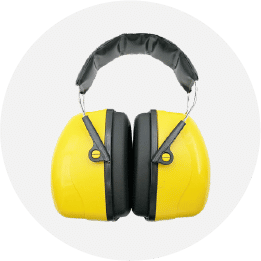
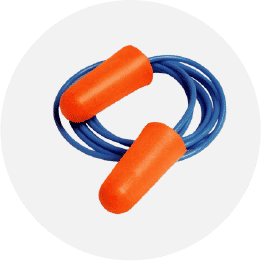
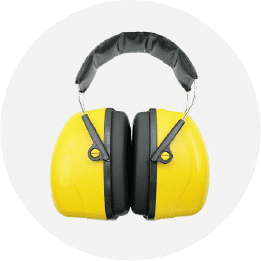
- Ear Protection — ear plugs and ear muffs for construction noise environments
- Foot Protection — safety boots and shoes across EN ISO 20345 classifications
- Fall Protection — harnesses, lanyards, and anchor systems for height work
- Safety Masks & Respirators — disposable and reusable respiratory protection
- Protective Clothing — coveralls, hi-vis vests, and FR workwear
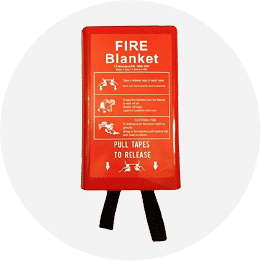
- Fire Safety Equipment — extinguishers, fire blankets, and site fire kits
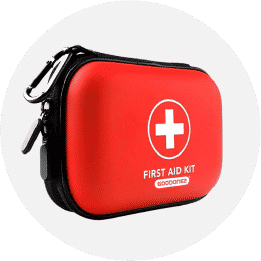
- First Aid Kits — site-ready first aid for UAE projects of all sizes
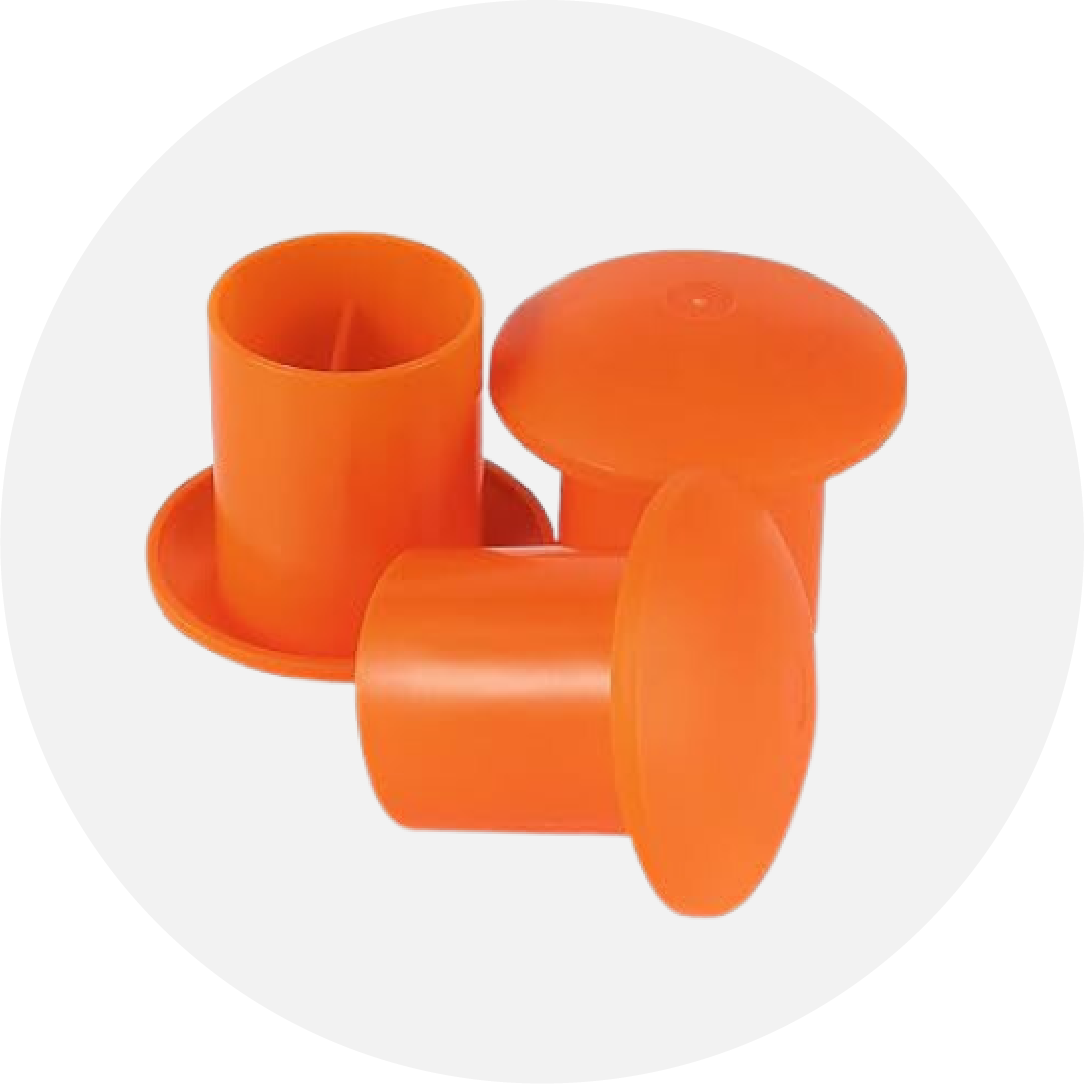
- Rebar Safety Caps — impalement protection for all exposed rebar on UAE slabs and columns
Frequently Asked Questions About Safety Equipment in the UAE
What PPE is required on UAE construction sites?
As a minimum, all UAE construction site workers are required to wear: a safety helmet (EN 397), safety footwear (EN ISO 20345 minimum S1), high-visibility vest or clothing (EN ISO 20471), and appropriate hand protection. Additional PPE — respiratory masks, eye protection, fall arrest harnesses, hearing protection — is required based on specific task hazards as identified by a site risk assessment. Requirements are enforced under UAE Federal Labour Law, OSHAD SF-37 (Abu Dhabi), and Dubai Municipality Construction Safety Technical Guideline TG-07.
What do safety helmet colour codes mean on UAE sites?
There is no single nationally mandated helmet colour code in the UAE, but the following convention is widely adopted on major UAE construction projects: white = engineers, managers, and visitors; yellow = general labourers; blue = subcontractor workers; red = safety officers; orange = scaffolders; green = first aiders or environmental officers. Always check the site-specific HSE induction documentation, as individual project specifications may differ from this general convention.
Is ESMA certification required for PPE sold in the UAE?
ESMA (Emirates Authority for Standardisation and Metrology) oversees conformity requirements for PPE imported and sold in the UAE. Most PPE categories are required to meet the relevant EN ISO standard and carry a valid CE marking with a Declaration of Conformity from an accredited third-party body. For certain regulated product categories, ESMA product registration may be required before import. Always request conformity documentation from your supplier before placing bulk orders for site use.
How often should safety harnesses be replaced in the UAE climate?
Most harness manufacturers recommend a maximum service life of 10 years from manufacture date and 5 years from first use under standard conditions. In the UAE, due to UV exposure, extreme heat, and dust, a conservative replacement cycle of 3–5 years from first use is advisable for equipment in regular outdoor use. Any harness that has arrested a fall must be retired immediately, regardless of age or visual condition, as required by EN 365:2004. Regular inspection — at least weekly on active sites — is mandatory throughout the service life.
What is the difference between FFP2 and FFP3 dust masks, and which is needed on UAE construction sites?
FFP2 masks filter at least 94% of airborne particles [EN 149:2001+A1:2009] and are the standard minimum for general dusty site environments, including those with fine desert sand. FFP3 masks filter at least 99% of particles and are required where high concentrations of silica dust are present — concrete cutting, stone grinding, sandblasting, and demolition work. On most UAE construction sites, FFP2 is the baseline for all workers, with FFP3 mandatory for high-dust tasks. Disposable masks should be replaced every shift or when breathing resistance increases, whichever comes first.
Sources & References
- ESMA — Emirates Authority for Standardisation and Metrology: UAE PPE and Product Conformity Requirements
- BSI Group — EN ISO Standards for Personal Protective Equipment (EN 397, EN ISO 20345, EN 361, EN 149, EN 388)
- IEC — International Electrotechnical Commission: IEC 60903 Insulating Gloves and IEC 60900 Insulating Hand Tools Standards
