





Author: Khalid Al Mansoori, Senior Procurement Specialist — 12+ years in UAE construction supply chain | Published: April 2026 | Updated: April 2026
Having sourced electrical cables for fit-out and infrastructure projects across Dubai Marina, Business Bay, and Abu Dhabi's industrial zones, I've seen firsthand how the wrong cable choice triggers consultant rejection, rework costs, and in worst cases, site shutdowns during DEWA inspection. The types of electrical cables in UAE projects span a wide range — from 1.5mm² BS 6004 singles in a villa bedroom circuit to 300mm² XLPE armoured feeders running into a high-rise LV switchroom. Getting that selection right from the start is the difference between a smooth handover and a costly variation order.
This guide covers every major cable type used across UAE construction — residential villas, commercial towers, MEP services, industrial warehouses, and underground distribution. It includes a cable selection table by application, a size reference, brand comparison, AED pricing, and compliance notes for DEWA, ESMA, and IEC standards. Whether you are a contractor pricing a bill of quantities, a site electrician specifying materials, or a procurement officer reviewing a supplier quote, this guide gives you a practical, UAE-grounded reference.
Why Cable Selection Matters More in the UAE Than Anywhere Else
Temperature, Dust, and Salt Air: The UAE Cable Stress Triad
UAE ambient temperatures regularly reach 45–50°C in summer, and ground temperatures in direct sunlight can exceed 60°C. Standard PVC insulation begins to soften and degrade above 70°C conductor temperature [IEC 60502-1], meaning a cable running at its rated ampacity in a poorly ventilated UAE riser or a sunlit cable tray operates with almost no thermal margin. Add fine desert dust that blocks ventilation, coastal salt air accelerating outer sheath corrosion in Abu Dhabi and Sharjah coastal sites, and the case for over-specifying insulation and sheath quality in the UAE becomes clear. XLPE insulation, which is rated to 90°C continuous conductor temperature [IEC 60502-1], provides substantially more headroom than standard PVC-insulated cables in these conditions. Choosing the right cables and wires for the specific UAE environment is not optional — it directly affects cable life, load capacity, and regulatory compliance.
How Electrical Cables Are Classified
By Voltage Level: LV, MV, and HV
Most UAE building and fit-out work involves Low Voltage (LV) cables rated up to 1000V. Medium Voltage (MV) cables — typically 11kV or 33kV — are used for utility distribution networks and large campus or industrial feeds. High Voltage (HV) cables above 66kV are utility-grade and outside the scope of typical site procurement. DEWA's distribution network in Dubai operates at 11kV MV and 400/230V LV, so most contractor work falls squarely in the LV range.
By Conductor Material: Copper vs Aluminium
Copper conductors dominate UAE building wiring due to their higher conductivity, better flexibility, and easier termination. Aluminium conductors are used for large-section feeders (95mm² and above) where weight and cost savings justify the trade-off in conductivity and the additional care required at terminations. Most DEWA-approved distribution cables below 95mm² are specified as copper. Aluminium cables must be terminated with bimetallic lugs to prevent galvanic corrosion — a precaution that is especially critical in coastal UAE sites.
By Insulation Type: PVC, XLPE, LSZH, Rubber
PVC (Polyvinyl Chloride) insulation is cost-effective and widely used for indoor, protected applications. Its limitation is temperature performance and the fact that it emits toxic halogen gases when burning — a critical concern in occupied buildings. XLPE (Cross-Linked Polyethylene) offers superior thermal performance (90°C rated), better chemical resistance, and longer service life. LSZH (Low Smoke Zero Halogen) cable sheaths are mandatory in many UAE high-rise escape routes, public corridors, and confined spaces because they minimise toxic smoke output in a fire. Rubber-insulated cables are used where flexibility and resistance to oils or outdoor weathering are required.
By Construction: Single Core, Multicore, Flexible
Single core cables carry one conductor and are used in conduit systems for branch circuits, as singlecore cables in switchboard busbars, and in large-section feeder runs where multicore construction would be impractical. Multicore cables — 2, 3, 4, or 5 core — bundle phase, neutral, and earth conductors in one sheath, reducing installation time in power distribution and control wiring. Flexible cables use finely stranded conductors and are designed for applications involving repeated movement, such as portable tools, industrial machinery, and panel wiring.
Low Voltage Power Cables: The Backbone of UAE Construction Wiring
NYY Cable — Standard Power Distribution
NYY cable is a PVC-insulated, PVC-sheathed multicore cable widely used across UAE fit-out and building services for sub-main distribution, DB feeds, and concealed runs in dry indoor environments. It is not armoured, so it must be installed in conduit or trunking when surface-routed. NYY is cost-effective and easy to terminate, making it one of the most specified power cable types in UAE commercial and residential projects.
NYAF and H07V-K Flexible Cables — Panel Wiring and Fit-Out
NYAF and H07V-K are fine-stranded, PVC-insulated flexible singles used extensively inside LV switchboards, control panels, and fit-out finishing works. Their flexibility makes routing inside panel enclosures practical, and their colour-coded insulation supports clean, inspection-ready installations. For UAE panel builders and fit-out MEP contractors, these are everyday consumables.
BS 6004 PVC Singles — Villa and Residential Wiring
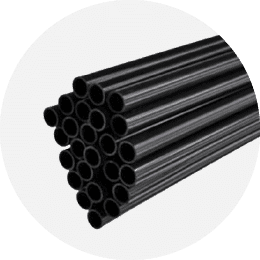
BS 6004-compliant PVC-insulated singles (commonly 1.5mm² for lighting, 2.5mm² for power) are the standard for UAE villa wiring, apartment fit-out, and residential sub-circuit distribution. They are installed inside conduit pipes embedded in blockwork or slab. Dubai Municipality and DEWA both reference BS wiring standards for residential electrical installations, and most UAE consultants specify BS 6004 or equivalent IEC 60227 singles for this application.
XLPE Insulated Cables — High Load and Outdoor Runs
XLPE-insulated cables (compliant with IEC 60502-1) are the preferred choice for UAE main distribution feeders, rooftop plant room feeds, and any run where ambient temperature or load density is high. The 90°C continuous conductor rating [IEC 60502-1] means they sustain higher current without derating compared to 70°C-rated PVC cables — a meaningful advantage on UAE sites where cable trays in plantrooms or rooftop routes regularly see ambient temperatures above 50°C.
Steel Wire Armoured (SWA) Cable — Underground and Exposed Runs
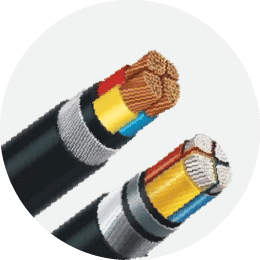
SWA cable adds a layer of galvanised steel wire armour between the inner sheath and outer sheath, providing mechanical protection against crushing, rodent damage, and accidental dig-through. For UAE underground cable installations — service trenches on villa compounds, campus distribution, industrial yard feeds — SWA is the standard specification. Browse armored cables for UAE-stocked SWA options in copper and aluminium conductors across multiple cross-sections.
Steel Tape Armoured (STA) Cable — Heavy Mechanical Protection
STA cables use flat steel tape rather than round wire for armour, providing excellent longitudinal crush resistance and making them suited to direct burial in rocky or heavily trafficked ground conditions. They are less flexible than SWA and are typically specified for static underground installations rather than those requiring frequent jointing or bending.
Fire Resistant and LSZH Cables for UAE High-Rise and Commercial Projects
What Makes a Cable Fire Resistant? CI vs CWZ Construction
Fire resistant cables maintain circuit integrity during a fire, keeping critical systems — emergency lighting, fire alarms, smoke extract fans, lifts — operational during evacuation. They achieve this through a mineral insulation layer (MI cable) or mica tape wrapping (circuit integrity construction) that survives flame exposure. UAE high-rise building codes and Dubai Civil Defence requirements mandate fire resistant cables for life safety circuits in buildings above a defined height threshold. Always verify the specific CI or E30/E90/E120 rating required by the project consultant or civil defence authority.
LSZH Cables: Why They Are Mandatory in Confined Spaces
LSZH (Low Smoke Zero Halogen) cables are compulsory in UAE metro systems, tunnels, data centres, hotel corridors, hospital wiring, and high-rise common areas. When PVC burns, it releases hydrochloric acid gas — toxic and corrosive. LSZH compounds emit minimal smoke and no halogen gases [IEC 60332], giving occupants more time to evacuate and reducing damage to sensitive equipment. Specifying standard PVC cables in a project that calls for LSZH will result in a consultant rejection during the material submittal review.
Data, Signal, and Coaxial Cables in UAE MEP Work
Cat6 and Cat6A Data Cables for UAE Commercial Fit-Out
Structured cabling in UAE commercial fit-out typically specifies Cat6 (supporting 10GBase-T up to 55m) or Cat6A (supporting 10GBase-T up to 100m) UTP or F/UTP data cables. Most UAE free zone offices, hotel rooms, and commercial towers now default to Cat6A for future-proofing. These cables are distinct from power cables and governed by TIA-568 and ISO/IEC 11801 standards rather than IEC 60502.
Coaxial and Structured Cabling in UAE High-Rise MEP
RG6 and RG11 coaxial cables are used for satellite TV distribution, CCTV, and MATV systems across UAE residential towers and villa compounds. MEP teams coordinating with specialist telecoms and ICT contractors must ensure adequate conduit sizing and separation from power cables during the rough-in stage — a detail frequently overlooked in fast-track fit-out programmes.
Key Standards and Approvals: DEWA, ESMA, BS, and IEC
DEWA Distribution Network Requirements
Dubai Electricity and Water Authority (DEWA) publishes wiring regulations and approved material lists that govern all electrical installations connected to its network. Cables used in DEWA-connected installations must meet DEWA's approved specifications, which reference IEC 60502, BS 6004, and BS 6346 depending on the application. Contractors must submit material submittals with test certificates and conformity declarations before installation. Using non-approved cables is a direct cause of DEWA connection refusal.
ESMA UAE.S GSO 2866 and IEC 60502 Compliance
The Emirates Authority for Standardisation and Metrology (ESMA) enforces conformity requirements for electrical cables sold in the UAE under scheme UAE.S GSO 2866, which references IEC 60502 for power cables and IEC 60227 for PVC-insulated wiring cables. Cables supplied to UAE projects should carry valid ESMA conformity marks or third-party test certificates from accredited laboratories. Visit the ESMA official website to verify current certification requirements and the list of approved cable manufacturers for the UAE market.
How to Choose the Right Cable by Application
Choosing the correct cable comes down to four questions: What voltage and load? What is the installation environment — indoor conduit, outdoor tray, direct burial, or moving application? What mechanical protection is required? And what regulatory or consultant specification must be met? The table in the Quick Selector Guide below maps these variables to specific cable types. For UAE villas, BS 6004 singles in conduit cover most branch circuit needs. For high-rise commercial, NYY multicore in trunking for sub-mains and LSZH cables on escape routes is the norm. Industrial sites and infrastructure projects default to XLPE-insulated SWA for feeder runs and direct burial.
Cable sizing — determining the correct cross-sectional area — follows IEC 60364-5-52 for current-carrying capacity with UAE-specific derating for ambient temperature. A 2.5mm² copper cable rated at 27A in a 30°C reference condition must be derated to approximately 18–20A in a 50°C UAE ambient when installed in a grouped conduit — a correction that must be applied at the design stage, not after the cable is pulled.
Top Electrical Cable Brands Available in the UAE Market
| Brand | Best Known For | Typical User | Strength |
|---|---|---|---|
| Ducab | LV and MV power cables, LSZH, fire resistant cables | Main contractors, MEP subcontractors, DEWA-connected projects | UAE-manufactured, DEWA approved, wide cross-section range |
| National Cables | Building wires, NYY, armoured cables | Residential and commercial contractors across UAE | Competitively priced, locally available, broad product range |
| Oman Cables | LV power cables, XLPE-insulated, SWA | Infrastructure, industrial, and utility contractors | GCC-manufactured, strong in heavy cross-section feeders |
| Prysmian | MV and HV cables, fire resistant, speciality cables | Major infrastructure, utility, and EPC contractors | International standard, broad technical portfolio |
| Nexans | XLPE MV cables, data cables, offshore cables | Industrial and energy sector EPC teams | Global manufacturing, MV and HV expertise |
| Southwire | Building wire, flexible cables, industrial cables | Commercial fit-out and industrial MEP | Consistent quality, competitive on large volume orders |
| Cellpack | Cable jointing and termination accessories | Electricians and cable installation teams | Specialist in cable accessories that complete the installation |
Note: Cellpack is primarily a cable accessories specialist — joints, terminations, and heat shrink — rather than a cable manufacturer, but is listed here because cable accessories are integral to any cable installation and Cellpack products are stocked on FEPY alongside the cables above.
Price Guide in AED (2026)
| Cable Type | Entry AED/m | Mid-Range AED/m | Premium AED/m |
|---|---|---|---|
| BS 6004 PVC single 1.5mm² | 0.80 | 1.20 | 1.80 |
| BS 6004 PVC single 2.5mm² | 1.20 | 1.80 | 2.60 |
| NYY 3-core 2.5mm² | 4.50 | 6.50 | 9.00 |
| NYY 4-core 10mm² | 14.00 | 19.00 | 26.00 |
| XLPE SWA 4-core 16mm² | 28.00 | 38.00 | 52.00 |
| XLPE SWA 4-core 95mm² | 130.00 | 175.00 | 220.00 |
| LSZH multicore 2.5mm² | 6.00 | 9.00 | 13.00 |
| Fire resistant (CI) 2-core 1.5mm² | 8.00 | 12.00 | 18.00 |
| Flexible H07V-K 1.5mm² | 0.90 | 1.40 | 2.00 |
Budget tip: Prices per metre drop significantly on drum quantities — typically 100m, 200m, or 500m drums. For villa projects, buying full drums rather than cut lengths can reduce cable cost by 15–25%. Always confirm whether the quoted price includes the drum deposit, which UAE suppliers frequently charge separately on large-section cables.
UAE Climate Effects on Electrical Cables
- Thermal derating is non-negotiable: Apply IEC 60364-5-52 ambient temperature correction factors for UAE conditions. A cable in a 50°C ambient requires significant derating from its 30°C rated ampacity — typically a factor of 0.71 or lower depending on installation method.
- UV degradation on rooftop trays: Standard PVC outer sheaths degrade under prolonged UV exposure. Specify UV-stabilised LSZH or HDPE-sheathed cables for rooftop cable ladder and tray installations exposed to direct UAE sunlight.
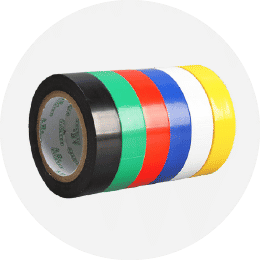
- Dust ingress in terminations: Fine desert dust entering cable terminations and gland entries increases contact resistance and promotes tracking. Use IP-rated glands and seal conduit entries properly — apply insulation tape and sealing compound at all trunking penetrations.
- Salt air corrosion at coastal sites: Abu Dhabi island, Dubai Marina, and Fujairah coastal projects expose cable armouring and glands to salt-laden air. Specify stainless steel or nickel-plated cable glands and check armour wire integrity at drum ends before installation.
- Ground temperature for buried cables: UAE soil temperature at 0.5m depth can exceed 35°C in summer. Apply the appropriate soil temperature correction from IEC 60287 when sizing underground cables — the standard 20°C soil reference used in European tables is not applicable in UAE conditions.
- Humidity cycling in plantrooms: Air-conditioned plantrooms in UAE buildings experience condensation when systems are shut down during maintenance. Cables in these spaces should have sheaths rated for damp conditions, and DB enclosures should be sealed against humidity ingress.
- Thermal expansion in long cable runs: High ambient temperatures cause significant thermal expansion in long feeder cables. Allow adequate expansion loops at tray entry points and within junction boxes, particularly on runs exceeding 30 metres in outdoor conditions.
- Chemical exposure in industrial zones: Jebel Ali, KIZAD, and Sharjah industrial areas expose cable sheaths to fuel, oils, and cleaning solvents. Specify chemical-resistant sheaths (EPR or HDPE) rather than standard PVC in these environments.
Safety & Compliance
ESMA Certification
All electrical cables imported or sold in the UAE must comply with ESMA conformity requirements under scheme UAE.S GSO 2866. This scheme mandates third-party testing and certification against IEC 60502 (power cables) and IEC 60227 (PVC-insulated wiring cables) by an ESMA-approved conformity assessment body. Cables without valid ESMA conformity marks or equivalent approved test certificates should not be accepted on UAE project sites. The ESMA official website provides the current list of approved certifiers and product conformity registers. Procurement officers should request conformity certificates with each cable delivery and cross-check against the ESMA database before accepting the goods.
Dubai Municipality and DEWA Standards
Dubai Municipality's building regulations reference IEE Wiring Regulations (BS 7671) and DEWA's own Regulations for Electrical Installations for LV work connected to DEWA's network. Key requirements include: use of DEWA-approved cable types and sizes, correct cable marking and colour coding per BS 7671, mandatory use of fire resistant cables for life safety circuits in buildings subject to Dubai Civil Defence review, and third-party inspection of major electrical installations before connection approval. For MEP teams working on Abu Dhabi projects, ADDC and AADC have parallel approval frameworks that reference similar IEC and BS standards. Always consult the authority having jurisdiction (AHJ) for the specific project emirate — requirements can differ between Dubai, Abu Dhabi, and the Northern Emirates.
Key safety features to verify on any UAE cable delivery:
- ESMA conformity mark or approved third-party test certificate
- Correct conductor cross-section and number of cores as specified
- Drum labelling with manufacturer name, cable type, length, and production batch
- IEC or BS standard reference printed on the cable outer sheath
- Conductor resistance and insulation resistance test reports for large drum orders
- Armour continuity confirmation for SWA cables before acceptance
Where to Buy Electrical Cables in the UAE
FEPY stocks a broad range of electrical cables for UAE construction, MEP, and fit-out projects — from 1.5mm² building wire through to large-section armoured feeders. Orders can be placed online with delivery to Dubai, Abu Dhabi, Sharjah, and other emirates, or collected from the warehouse for urgent site requirements. All cables listed on FEPY come from verified manufacturers and are supplied with conformity documentation suitable for UAE project material submittals.
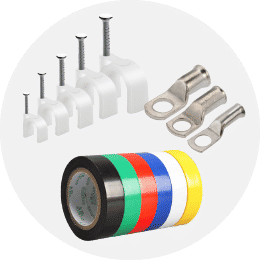
For contractors managing large project quantities, FEPY offers drum-quantity pricing and can source specific cable types on request. The procurement team can assist with cross-referencing consultant-specified cable types to available stock, which is particularly useful when a specification calls for a discontinued or region-specific cable designation. Pair your cable order with cable and wire accessories — including glands, lugs, and heat shrink — to complete the installation in a single order.
Browse the relevant cable categories directly:
- Electrical — full electrical product range on FEPY
- Cables and Wires — complete cable category
- Power Cables — LV power distribution cables
- Armoured Cables — SWA and STA cables for UAE
- Flexible Cables — panel wiring and portable applications
- Singlecore Cables — singles for conduit and switchboard work
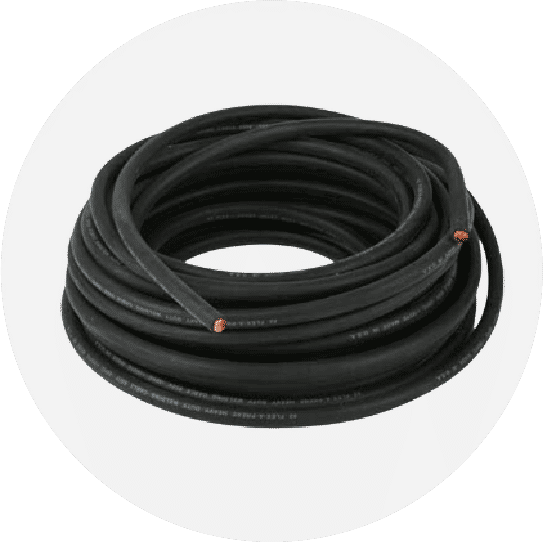
- Welding Cables — heavy-duty flexible cables for site welding
Maintenance Tips for UAE Electrical Cables
- Inspect cable trays annually for corrosion: Hot-dip galvanised trays in coastal or industrial UAE sites can corrode within 3–5 years. A corroded tray damages cable sheaths through abrasion and creates earthing continuity problems.
- Check terminations after summer shutdown: Thermal cycling over a UAE summer loosens screw terminals. Torque-check all LV connections after the first cool season using a calibrated torque screwdriver — loose terminations are a leading cause of fire in UAE distribution boards.
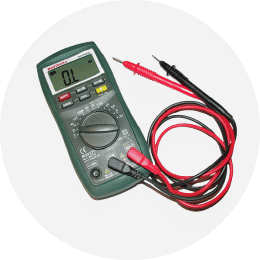
- Re-test insulation resistance every 5 years: Use a 500V or 1000V insulation resistance tester — available from the electrical testers and tools range — to verify cable insulation integrity, particularly on circuits installed in damp or high-temperature zones.
- Protect exposed cable runs during sandstorms: Cover temporarily exposed cable trench sections during shamal season. Fine desert sand that infiltrates conduit entries causes abrasion damage and tracking in damp conditions.
- Replace temporary site cables before handover: Flexible extension cables used during construction are not suitable for permanent installation. Replace all temporary wiring with specified permanent cables before MEP completion sign-off.
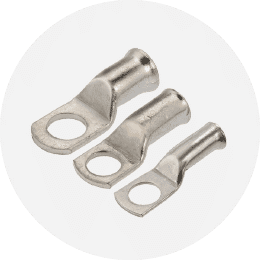
- Use correct cable lugs for large-section terminations: Undersized or incorrect lugs on 35mm² and above cables cause overheating at termination points. Match lug cross-section, conductor material (copper or aluminium), and crimping die size to the cable specification.
- Label all cable cores at both ends: In UAE projects with multiple sub-contractors and extended construction programmes, unlabelled cables cause identification errors during commissioning. Apply durable heat-shrink ferrule labels at both termination ends immediately after pulling — not retrospectively.
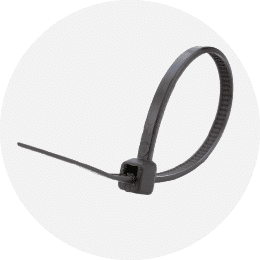
- Secure cables with correct cable ties and fixing spacing: Overtightened cable ties on PVC-sheathed cables cause sheath indentation and can damage conductors. Use appropriate tie tension and follow IEC 60364-5-52 recommended fixing spacings for the cable size.
Quick Selector Guide
| Application | Recommended Cable Type | Typical Size Range | Key Standard | Typical User |
|---|---|---|---|---|
| Villa branch circuit — lighting | BS 6004 PVC single in conduit | 1.5mm² | BS 6004 / IEC 60227 | Villa MEP contractor |
| Villa branch circuit — power sockets | BS 6004 PVC single in conduit | 2.5mm² | BS 6004 / IEC 60227 | Villa MEP contractor |
| Commercial fit-out sub-main | NYY PVC multicore | 10–50mm² | IEC 60502-1 | Fit-out MEP team |
| High-rise escape route / common area | LSZH multicore | 1.5–16mm² | IEC 60332 / IEC 60502 | High-rise M&E contractor |
| Fire alarm / emergency lighting circuit | Fire resistant (CI) cable | 1.5–2.5mm² | BS 5839 / IEC 60331 | Fire & life safety installer |
| Underground service trench | XLPE SWA armoured multicore | 16–300mm² | IEC 60502-1 | Infrastructure contractor |
| Outdoor rooftop feeder | XLPE UV-stabilised cable in conduit | 10–95mm² | IEC 60502-1 | MEP / solar EPC contractor |
| LV switchboard internal wiring | H07V-K flexible single | 1.5–16mm² | IEC 60227 / HD 21 | Panel builder / fit-out electrician |
| Industrial warehouse feeder | XLPE SWA copper multicore | 50–240mm² | IEC 60502-1 | Industrial MEP contractor |
| Site welding machine supply | Rubber-insulated welding cable | 35–95mm² | IEC 60245 | Site welding team |
Common Mistakes in UAE Cable Selection and Installation
- Using European ampacity tables without UAE derating: Applying 30°C reference ampacity values from IEC or BS tables in UAE 50°C ambient conditions overloads the cable and voids any warranty. Always apply the temperature correction factor before finalising cable size.
- Specifying PVC cables in LSZH-mandatory zones: Submitting PVC-sheathed cables for high-rise common areas, hotel corridors, or hospital wiring almost always results in consultant rejection. Confirm LSZH requirements with the project specification before ordering.
- Using unarmoured NYY cable for direct burial: NYY without armour is not suitable for direct burial in UAE ground conditions. Always use SWA or STA armoured cable for underground runs without the protection of a duct or concrete encasement.
- Ignoring conductor colour coding: UAE projects reference BS 7671 colour coding (brown/black/grey for phases, blue for neutral, green-yellow for earth). Using non-compliant colour coding fails inspection and creates maintenance hazards.
- Purchasing cables without ESMA conformity documentation: Low-cost cables supplied without valid ESMA certificates or IEC test reports are a significant project risk. They may fail consultant material submittals, DEWA inspection, or both — with no recourse against a non-certified supplier.
- Over-tightening cable glands on SWA cable: Incorrectly torqued SWA glands either allow moisture ingress (under-torqued) or damage the armour wires (over-torqued), both of which compromise the cable's mechanical protection and earthing continuity.
- Mixing aluminium and copper in the same termination without bimetallic lugs: Direct contact between aluminium and copper conductors causes galvanic corrosion, which rapidly increases termination resistance and generates heat. Always use bimetallic cable connectors at aluminium-to-copper transitions.
- Pulling cables without sufficient bending radius: Exceeding minimum bending radius during cable pulling — particularly in tight conduit bends in blockwork — damages XLPE insulation and armour wires. Follow the manufacturer's minimum bending radius data sheet and use appropriate cable pulling lubricant in long conduit runs.
Sources & References
- ESMA — UAE conformity requirements for electrical cables under GSO 2866
- IEC — IEC 60502 power cables, IEC 60227 PVC cables, IEC 60364-5-52 wiring installation standards
- BSI Group — BS 6004 PVC-insulated cables and BS 7671 IEE Wiring Regulations