






By Khalid Al Mansoori, Senior Procurement Specialist | Published: April 2026
Having sourced GI pipes for MEP and fire-fighting packages across projects in Al Quoz, Jebel Ali, and Abu Dhabi's industrial zone, I've seen firsthand how a wrong pipe class or non-compliant certificate can halt an entire floor's rough-in and trigger costly rework. Galvanised iron pipe remains the workhorse of UAE construction — specified for water supply risers, fire sprinkler mains, compressed air lines, and HVAC condensate systems in virtually every villa, high-rise, and industrial facility built in this country. This guide covers everything a procurement officer, MEP contractor, or site supervisor needs to specify, price, and procure GI pipe correctly in 2026.
What Are GI Pipes? Construction-Grade Galvanised Iron Explained
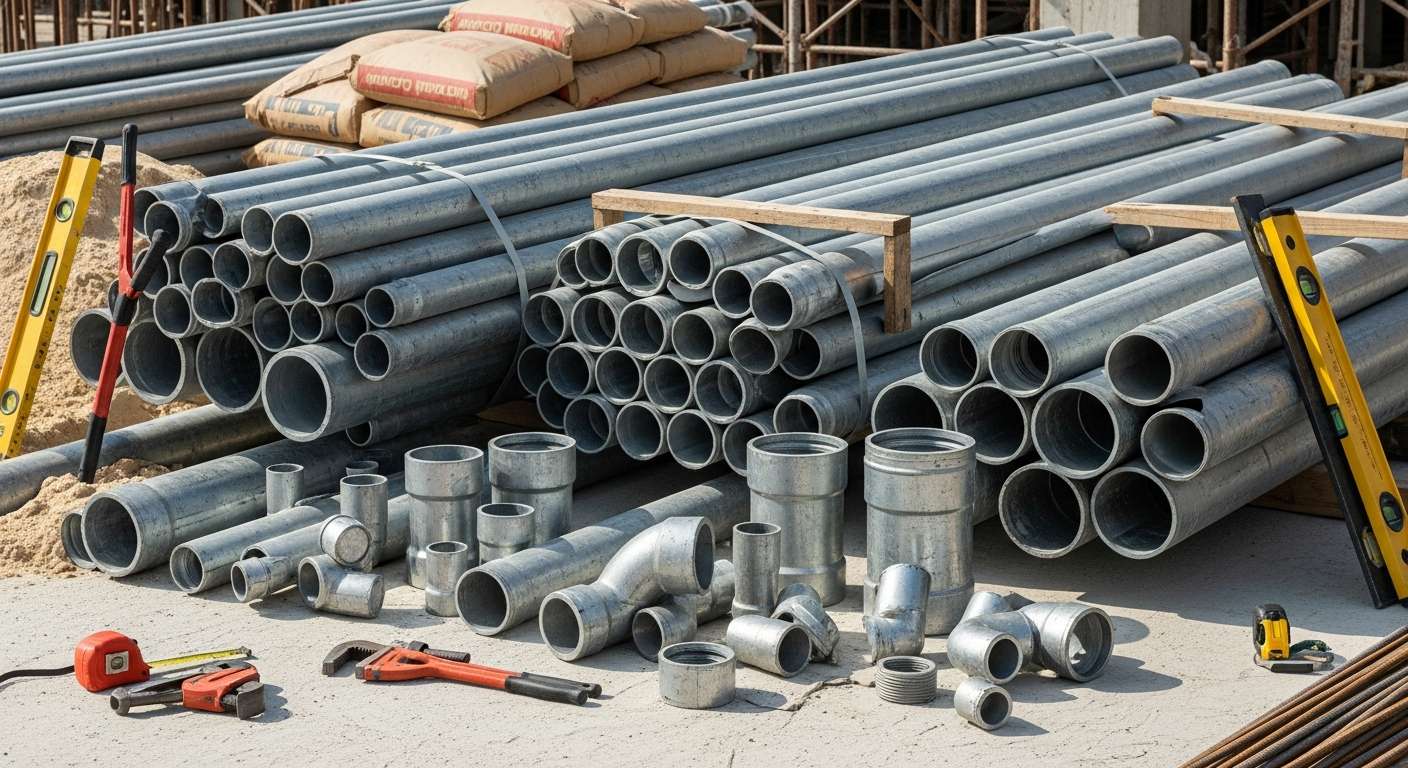
GI pipe is steel pipe — typically manufactured from low-carbon mild steel — that has been coated with a layer of zinc to resist corrosion. Despite the name "galvanised iron," modern product is galvanised steel, the term "iron" persisting from older trade usage. The zinc coating acts as both a physical barrier and a sacrificial anode: even if the coating is scratched, the surrounding zinc corrodes preferentially, protecting the underlying steel.
How Galvanisation Protects Against UAE's Coastal Salt Air and Humidity
In coastal cities like Dubai, Sharjah, and Abu Dhabi, bare steel pipe in exposed or partially exposed locations — plant rooms, rooftops, car park decks — will rust visibly within weeks during the high-humidity months of June to September. Salt-laden air accelerates corrosion further. A properly galvanised pipe with a zinc coating mass of at least 400 g/m² [BS EN ISO 1461] provides a service life measured in decades rather than years, even in these conditions.
Hot-Dip vs Electro-Galvanised: Which is Specified for UAE Projects?
Hot-dip galvanising (HDG) involves immersing the steel pipe in molten zinc at approximately 450°C, producing a metallurgically bonded, thick zinc-iron alloy layer. Electro-galvanising deposits zinc electrochemically in a much thinner layer. For structural, MEP, fire-fighting, and water supply applications on UAE projects, hot-dip galvanising is almost universally specified — the thicker coating and superior adhesion are required by BS 1387, ASTM A53, and local authority approval bodies. Electro-galvanised product is reserved for light-duty applications such as cable trays and furniture frames.
GI Pipe Standards in the UAE: BS 1387, ASTM A53 & ESMA Requirements
Two international standards dominate UAE project specifications for GI pipe:
- BS 1387:1985 (now largely superseded by BS EN 10255:2004) — the British Standard that defines Light (Class B), Medium (Class C), and Heavy (Class D) wall thickness classes. This is the most commonly cited standard on UAE MEP drawings.
- ASTM A53 / A53M — the American standard specifying seamless and welded steel pipe, used on projects following US codes or where Schedule 40/80 designations are referenced.
ESMA (Emirates Authority for Standardisation and Metrology) has adopted harmonised standards for steel pipe used in water supply and fire-protection systems. Pipes supplied on government and semi-government projects in Dubai and Abu Dhabi must carry third-party test certificates traceable to accredited labs. Always verify that mill certificates match the heat number stamped on the pipe — a check that's easy to overlook under site pressure but that Dubai Civil Defence inspectors will enforce for fire-sprinkler systems.
Reading a GI Pipe Certificate: What Site Supervisors Must Check
- Standard reference (BS EN 10255, ASTM A53, or equivalent)
- Pipe class / schedule and nominal bore (NB)
- Zinc coating mass (g/m²) — minimum 400 g/m² for hot-dip [BS EN ISO 1461]
- Hydrostatic test pressure — typically 50 bar for medium-class pipe [BS EN 10255]
- Heat / batch number matching physical markings on pipe
- Accredited laboratory stamp and date
GI Pipe Size Chart: Dimensions, Wall Thickness & Weight Per Metre
Nominal Bore vs Outside Diameter: Clearing Up the Confusion
Nominal bore (NB) or nominal pipe size (NPS) is a trade designation — it does not equal the actual inside or outside diameter. A ½" NB GI pipe has an outside diameter of 21.3 mm regardless of wall class. The inside diameter varies with wall thickness class. This matters when specifying fittings: all fittings are referenced by nominal bore, not actual OD.
GI Pipe Wall Thickness by Class: Light (Class B), Medium (Class C), Heavy (Class D)
The table below references BS EN 10255:2004 dimensions. Weight per metre values are approximate and include the zinc coating:
| Nominal Bore (NB) | OD (mm) | Light (B) Wall (mm) | Light Wt (kg/m) | Medium (C) Wall (mm) | Medium Wt (kg/m) | Heavy (D) Wall (mm) | Heavy Wt (kg/m) |
|---|---|---|---|---|---|---|---|
| ½" (15 mm) | 21.3 | 2.0 | 0.95 | 2.6 | 1.21 | 3.2 | 1.44 |
| ¾" (20 mm) | 26.9 | 2.3 | 1.39 | 2.6 | 1.56 | 3.2 | 1.87 |
| 1" (25 mm) | 33.7 | 2.6 | 2.00 | 3.2 | 2.41 | 4.0 | 2.93 |
| 1¼" (32 mm) | 42.4 | 2.6 | 2.55 | 3.2 | 3.10 | 4.0 | 3.79 |
| 1½" (40 mm) | 48.3 | 2.6 | 2.93 | 3.2 | 3.56 | 4.0 | 4.37 |
| 2" (50 mm) | 60.3 | 2.9 | 4.08 | 3.6 | 5.03 | 4.5 | 6.19 |
| 2½" (65 mm) | 76.1 | 3.2 | 5.71 | 3.6 | 6.42 | 4.5 | 7.93 |
| 3" (80 mm) | 88.9 | 3.2 | 6.72 | 4.0 | 8.36 | 5.0 | 10.3 |
| 4" (100 mm) | 114.3 | 3.6 | 9.75 | 4.5 | 12.2 | 5.4 | 14.5 |
| 5" (125 mm) | 139.7 | 4.0 | 13.4 | 5.0 | 16.6 | 5.4 | 17.9 |
| 6" (150 mm) | 165.1 | 4.0 | 15.9 | 5.0 | 19.8 | 5.4 | 21.3 |
Source: BS EN 10255:2004 — Non-alloy steel tubes suitable for welding and threading. Weights are approximate and may vary ±5% by manufacturer.
Types of GI Pipe: Light, Medium & Heavy Duty — Which Do You Need?
- Light Duty (Class B): Domestic cold water supply, low-pressure drainage, non-structural applications in villas and apartments. Not suitable for fire-fighting or compressed air.
- Medium Duty (Class C): The most common specification across UAE MEP projects. Suitable for potable water risers, general fire-sprinkler branch lines, chilled water secondary circuits, and compressed air up to 10 bar. Threaded ends standard.
- Heavy Duty (Class D): High-pressure applications — fire-sprinkler mains, industrial compressed air headers, pump discharge lines. Welded or flanged joints often preferred at larger diameters. Specified for systems above 12 bar working pressure.
GI Pipe Fittings: Every Type Used on UAE Job Sites
GI pipe fittings are malleable cast iron or forged steel, hot-dip galvanised, with BSP (British Standard Pipe) threads as standard on UAE projects. NPT (National Pipe Thread) fittings appear on American-standard projects but are less common. Key fitting types:
GI Elbows: 45° vs 90° — Selection Guide for UAE Site Conditions
- 90° Elbow (Street Elbow / Plain Elbow): Direction changes in tight risers, utility shafts, and wall penetrations. The most-used fitting on any GI installation.
- 45° Elbow: Gentler direction changes where flow velocity must be maintained — chilled water branches, fire-sprinkler drops. Reduces pressure drop compared to 90°.
Socket Fittings vs Flanged Fittings for High-Pressure Systems
- Tee (Equal & Reducing): Branch connections. Equal tee for same-diameter branches; reducing tee where branch is smaller than main.
- Union: Allows pipe sections to be disconnected without cutting — essential at valves, meters, and pump connections. Every isolation valve on a GI system should have a union on at least one side.
- Nipple (Barrel / Close / Long): Short threaded male connectors used to join two female fittings or extend a thread. Close nipples (no unthreaded section) are used where space is critical.
- Socket (Coupler): Joins two plain pipe ends with internal female threads both sides. Used for in-line extensions.
- Reducer (Hex Reducer / Bush): Steps down from a larger to a smaller bore. Hex reducers (bushings) screw into female fittings. Concentric and eccentric reducers available for flanged systems.
- Cap & Plug: Temporary or permanent pipe-end closures. Caps are female; plugs are male.
- Flanged Fittings: Required at pumps, vessels, and large-bore connections (typically 2½" and above) where disassembly for maintenance must be simple and leak-free.
Threading Standards: BSP vs NPT on UAE Worksites
BSP (British Standard Pipe Taper — BSPT, per BS 21 / ISO 7-1) is the UAE market default. NPT threads have a slightly different taper angle (60° vs 55° included thread angle) and are not interchangeable with BSP — forcing an NPT fitting onto a BSPT pipe thread will appear to engage but will leak under pressure. Always confirm thread standard when importing fittings from non-UK/non-European sources.
Common UAE Applications: MEP, Fire Fighting, HVAC, Water Supply & Structural
GI Pipe in Fire Sprinkler Systems: Pressure Ratings That Matter
Dubai Civil Defence requires fire-sprinkler pipe to be supplied with a minimum hydrostatic test pressure of 50 bar [BS EN 10255:2004] and system working pressure is typically 12–16 bar. Medium or heavy class GI pipe is mandatory; light class is not acceptable for fire-fighting use. Pipe must be clearly marked with class, standard, and batch/heat number for Civil Defence inspection.
- Potable water supply: GI medium class is widely used for cold water risers in villas and low-rise buildings. Note: for hot water lines above 60°C, GI is not recommended due to zinc leaching concerns — CPVC or PPR is preferred.
- Compressed air: GI medium/heavy class is the standard for workshop, garage, and industrial compressed air distribution at pressures up to 16 bar. Internally, the zinc coating is compatible with dry compressed air. Moisture-laden air accelerates internal white rust — air dryers are essential upstream.
- HVAC — chilled water secondary: GI is used for exposed secondary chilled water headers in plant rooms. Primary circuits operating below dew point are typically insulated; uninsulated GI in humid plant rooms will develop external condensation — insulation with vapour barrier is non-negotiable.
- Structural and framing: Light and medium GI tube used for handrails, safety barriers, scaffolding components, and temporary site structures.
GI Pipe vs PVC, MS Pipe & CPVC — When to Use Each
| Criterion | GI Pipe | MS Pipe | uPVC Pipe | CPVC Pipe |
|---|---|---|---|---|
| Corrosion resistance | High (zinc coat) | Low (bare steel) | Excellent | Excellent |
| Max working temp | ~260°C (structural) | ~400°C | 60°C | 93°C |
| Fire sprinkler use | ✅ Approved | ✅ Approved (painted) | ❌ Not approved | ❌ Not standard |
| Potable water (cold) | ✅ Approved | ❌ Requires lining | ✅ Approved | ✅ Approved |
| Potable water (hot) | ⚠️ Not ideal | ❌ | ❌ | ✅ Best choice |
| Compressed air | ✅ | ✅ | ⚠️ Pressure-dependent | ❌ |
| UAE price (2" pipe/m) | AED 28–45 | AED 18–30 | AED 8–16 | AED 22–38 |
| Installation method | Threaded / welded | Welded | Solvent cement | Solvent cement |
Why MS Pipe Is Not a Direct Substitute for GI in Exposed UAE Environments
Mild steel (MS) pipe without coating will rust aggressively in the coastal humidity found across Dubai, Abu Dhabi, and Sharjah's waterfront districts. Some contractors use MS pipe painted with epoxy or bituminous coating as an alternative on underground or concealed runs, but for exposed plant-room pipework, rooftop services, or any installation subject to condensation, GI pipe's zinc coating provides meaningfully longer service life without recurring maintenance costs.
GI Pipe Prices in UAE 2026: AED Ranges by Size & Grade
Prices below are indicative market ranges for standard medium-class (Class C) GI pipe, per 6-metre length, as of Q1 2026. Heavy-class pipe adds approximately 15–25% to these figures. Fitting prices are per piece at standard trade quantities.
| Pipe Size (NB) | Medium Class — Price per 6m length (AED) | Approx. Price per metre (AED) |
|---|---|---|
| ½" (15 mm) | 55–80 | 9–13 |
| ¾" (20 mm) | 65–95 | 11–16 |
| 1" (25 mm) | 90–130 | 15–22 |
| 1½" (40 mm) | 140–195 | 23–33 |
| 2" (50 mm) | 170–270 | 28–45 |
| 3" (80 mm) | 320–480 | 53–80 |
| 4" (100 mm) | 520–750 | 87–125 |
| 6" (150 mm) | 950–1,400 | 158–233 |
Prices vary with global steel pricing, zinc spot rates, and supplier terms. Confirm current rates with your supplier before submitting BOQ pricing.
Common fittings (medium class, BSP thread) indicative price ranges:
- ½" GI 90° elbow: AED 2–5 per piece
- 1" GI tee: AED 6–12 per piece
- 2" GI union: AED 35–65 per piece
- 2" GI socket: AED 10–18 per piece
- 4" GI flanged gate valve connection set: AED 120–220 per set
Top GI Pipe Brands Available in the UAE Market
| Brand | Origin | Key Strengths | Common UAE Specification |
|---|---|---|---|
| Emirates Steel | UAE (Abu Dhabi) | Locally manufactured, GCC-preferred, ESMA-compliant | BS EN 10255, medium & heavy class |
| Tata Steel (Tata Pipes) | India | Wide size range, consistent quality, widely stocked | BS 1387 / BS EN 10255 |
| APL Apollo | India | High-volume supply, competitive pricing for large projects | IS 1239 / BS EN 10255 |
| Jindal Steel | India | Heavy class availability, preferred for fire-fighting mains | BS EN 10255, ASTM A53 |
| Gulf Steel (Arkan) | UAE | Local availability, faster lead times for site top-ups | BS EN 10255 |
| Techno Steel | Saudi Arabia / GCC | GCC-manufactured, preferred by Saudi-linked consultants | SASO / BS EN 10255 |
| Pegler | UK | Premium valves and fittings, specified on high-spec MEP packages | BS 21, BS EN 10226 |
| ERA | China (export grade) | Wide fittings range, competitive on bulk fitting supply | BSP thread, ISO 7-1 |
| Gazelle | UAE / GCC | Tools and accessories for GI pipe installation | Site tools, cutters, wrenches |
Installation Tips for GI Pipes in UAE's Extreme Climate
Cutting, Threading and Joining GI Pipe on Site: Tools and Technique
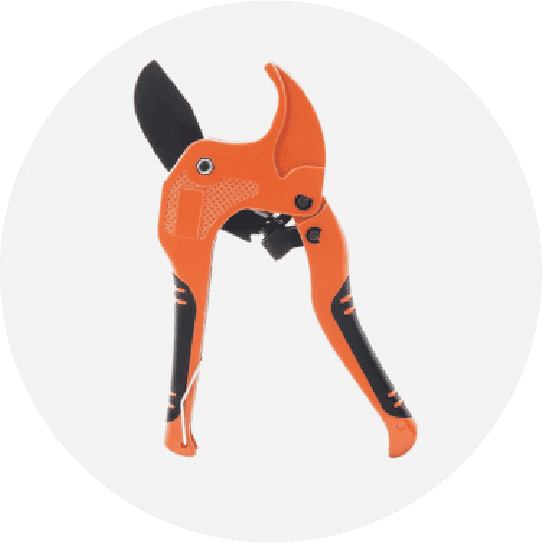
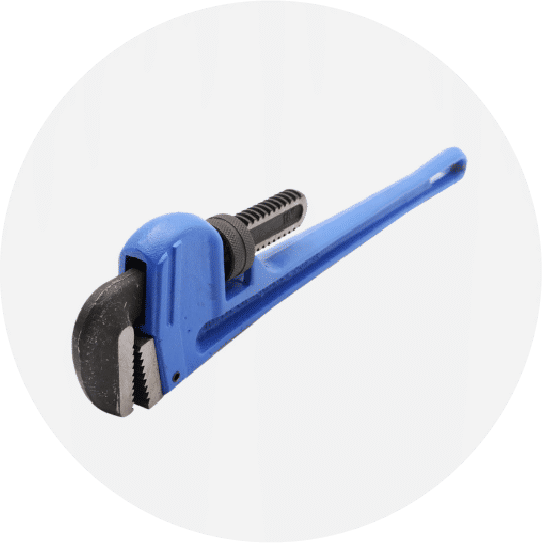
GI pipe is cut with a hacksaw, angle grinder with cutting disc, or a rotary pipe and tube cutter — the cutter produces a cleaner, square end ideal for threading. After cutting, all burrs must be reamed out to prevent flow restriction and turbulence. Threading is done with a ratchet die stock (manual) or electric threading machine — ½" to 2" pipes are commonly hand-threaded on site; 2½" and above typically use a powered threading machine. Use a proper pipe wrench rated for the pipe diameter — undersized wrenches slip and damage the fitting flats.
Anti-Corrosion Precautions at Cut Ends and Threaded Joints
Every cut and every threaded section removes the zinc coating, exposing bare steel. Apply one of the following immediately after cutting and threading:
- Cold zinc galvanising spray (zinc-rich aerosol)
- Zinc-rich epoxy primer brush-applied to the thread and 50 mm back from cut end
- PTFE thread tape (minimum 3 wraps) for sealing — not a substitute for zinc protection but standard for thread sealing on water and air systems
Storage of GI Pipes on UAE Construction Sites in Summer
At 45–50°C+, pipes stored directly on bare ground in direct sunlight develop white zinc oxide deposits on the surface from moisture cycling (condensation at night, baking by day). Store pipes on timber battens or rubber pads, off the ground, under a shade structure. Pipes stored in contact with concrete slabs absorb aggressive alkaline moisture from curing concrete, which accelerates zinc degradation at contact points.
Safety & Compliance: GI Pipe Regulations in the UAE
All GI pipe used in UAE building projects falls under the jurisdiction of local authorities: Dubai Municipality for Dubai projects, Abu Dhabi City Municipality, and Sharjah Municipality respectively. Fire-fighting pipe installations additionally require compliance with Dubai Civil Defence (DCD) or Abu Dhabi Civil Defence Agency (ADCDA) codes, which mandate third-party product listing for fire-sprinkler-rated pipe.
ESMA has published UAE.S standards adopting BS EN and ASTM requirements for steel pipe. Verify that pipe certificates reference an ESMA-accepted standard and that the testing laboratory is ESMA-accredited or internationally recognised (UKAS, A2LA). You can verify approved products and standards on the ESMA official portal.
For projects with international consultant involvement, the IEC standards library and BSI Group standards catalogue provide the full text of BS EN 10255 and related pipe standards referenced in UAE specifications.
Thread sealing compounds used on potable water systems must be certified as non-toxic and suitable for drinking water contact — WRAS approval (UK) or NSF/ANSI 61 certification is typically referenced in UAE consultant specifications for water supply pipework.
Where to Buy GI Pipes & Fittings in the UAE
For project procurement, FEPY stocks a broad range of GI pipe fittings, valves, and associated GI metal components suitable for MEP, fire-fighting, and water supply applications across the UAE. Browse the full range of pipes and pipe fittings for current stock and pricing.
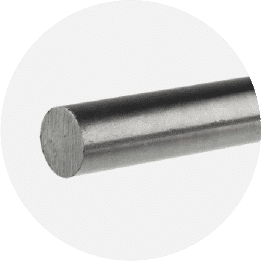
For related plumbing materials, the plumbing category covers additional pipe systems, fittings, and accessories. Structural steel sections and flat bar are available under metal rod, shapes and sheets, and reinforcement steel under steel rebar and accessories.
Frequently Asked Questions About GI Pipes in the UAE
1. What is the difference between GI pipe and PVC pipe, and which should I use?
GI pipe is galvanised steel — it handles high pressure, fire-sprinkler duty, compressed air, and mechanical impact. PVC pipe is lighter, cheaper, and easier to install but cannot be used for fire-fighting systems, compressed air above 6 bar, or applications requiring impact resistance. For cold water supply in concealed locations, PVC is cost-effective. For exposed plant rooms, fire-sprinkler systems, or compressed air, specify GI.
2. What are the standard GI pipe sizes available in the UAE in mm?
Standard UAE stock sizes run from 15 mm NB (½") through 20, 25, 32, 40, 50, 65, 80, 100, 125, to 150 mm NB (6"). Larger diameters (200 mm / 8" and above) are available but typically on indent order with 3–6 week lead time from mill. Outside diameters follow BS EN 10255 — for example, 25 mm NB pipe has a 33.7 mm OD regardless of wall class.
3. What is the typical GI pipe price per metre in the UAE (2026)?
For medium-class GI pipe: ½" runs AED 9–13/m; 1" approximately AED 15–22/m; 2" approximately AED 28–45/m; 4" approximately AED 87–125/m. Heavy-class pipe is 15–25% higher. Prices fluctuate with global steel and zinc spot rates — always get a current quote before finalising BOQ pricing.
4. Can GI pipe be used for fire sprinkler systems in Dubai?
Yes — medium and heavy class GI pipe conforming to BS EN 10255 with a hydrostatic test pressure of 50 bar is approved for fire-sprinkler systems in Dubai, subject to Dubai Civil Defence review of the product certificate. Light-class (Class B) pipe is not acceptable for fire-fighting applications. All pipe must carry traceable mill certificates with heat number matching the physical pipe markings.
5. What is the difference between medium class and heavy class GI pipe?
Both conform to BS EN 10255 but differ in wall thickness. For a 2" (50 mm NB) pipe: medium class (Class C) has a 3.6 mm wall and weighs approximately 5.03 kg/m; heavy class (Class D) has a 4.5 mm wall and weighs approximately 6.19 kg/m. Heavy class is required for high-pressure applications (above 12 bar working pressure) — fire-sprinkler mains, industrial compressed air headers, and pump discharge headers. Medium class covers the majority of MEP and water supply applications.