











By Khalid Al Mansoori, Senior Procurement Specialist — 12+ years in UAE construction supply chain | Published: April 2026
Having specified and sourced water tanks for villa compounds in Dubai Hills, apartment towers in Business Bay, and labour accommodation in Al Quoz, I've seen firsthand how a poorly sized or incorrectly specified tank creates pressure failures, contamination complaints, and costly retrofits that could have been avoided at the procurement stage. In a climate where summer temperatures regularly exceed 48°C and coastal humidity accelerates material degradation, water tank selection is a structural and hygiene decision — not just a budget line item.
This guide covers every tank type sold in the UAE market, how to calculate the right capacity for your specific project, what ESMA compliance actually requires, and what you should expect to pay in 2026.
Water Tank Types & Materials: Polyethylene, Fibreglass & Stainless Steel
Polyethylene Water Tanks: Cost-Effective & Lightweight
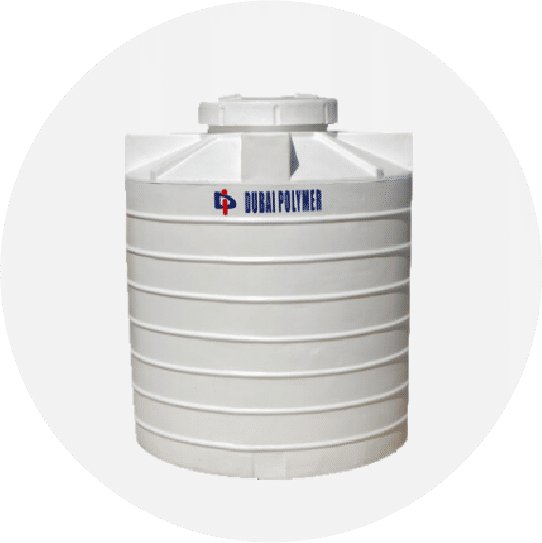
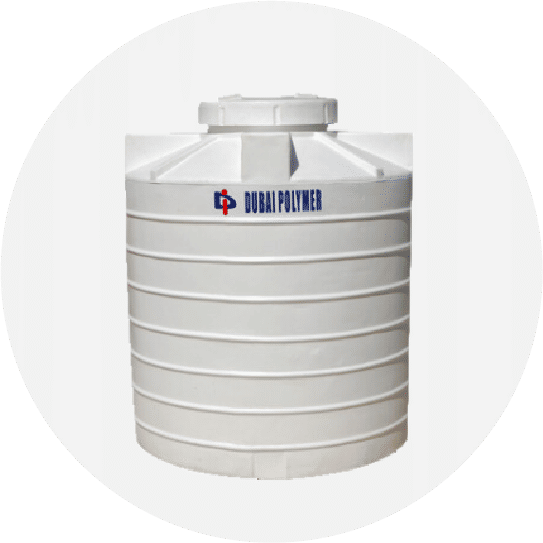
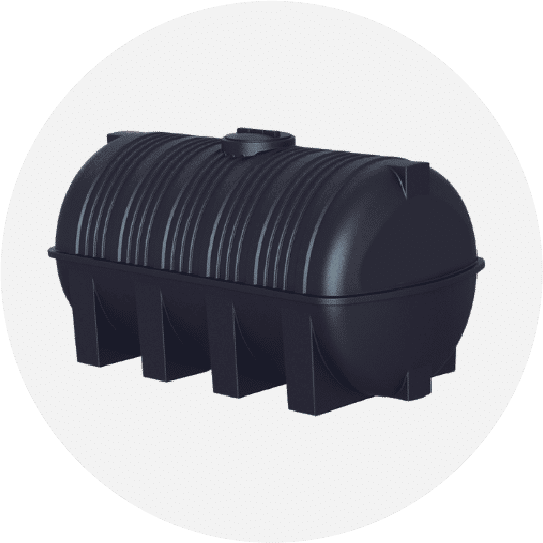
Polyethylene (PE) — commonly called polymer tanks locally — dominates the UAE residential and light-commercial market. They are rotationally moulded, UV-stabilised, and food-grade certified. The critical distinction buyers must understand is layer construction:
- Single-layer tanks: Lower cost, typically used for non-potable water, irrigation, or short-term storage. Wall thickness is uniform and thinner — not suitable for direct overhead sun exposure over extended periods.
- 3-layer tanks: The standard for potable water in UAE residential and commercial projects. The inner layer is white (food-grade, UV-reflective), the core layer is black (UV-blocking), and the outer layer is coloured. This sandwich construction prevents algae growth and significantly reduces heat transfer to stored water. In UAE summer conditions, a 3-layer tank keeps water temperatures meaningfully lower than a single-layer equivalent. Most UAE municipal inspectors and MEP consultants will only accept 3-layer tanks for potable overhead storage [ESMA UAE.S GSO 1431].
PE tanks are available across a full range of capacities — from 200 litres for domestic rooftop use to 20,000 litres for labour camps and industrial sites. They are lightweight enough for two workers to handle most sizes below 2,000L, which cuts crane or lifting equipment costs during rooftop installation on UAE villas.
Fibreglass Water Tanks: Durability in Extreme Heat
Fibreglass reinforced plastic (FRP) tanks are the preferred choice for large-capacity commercial and industrial applications — typically 5,000L and above. They are manufactured in panels and assembled on-site, making them practical for basement plant rooms and rooftop installations where access is restricted. FRP offers excellent chemical resistance and a longer structural lifespan than PE under continuous UV and thermal stress. The trade-off is a higher unit cost and the need for specialist assembly. For underground sump applications in high-water-table areas (common in coastal Abu Dhabi and Ajman), FRP tanks with proper anti-buoyancy anchor design outperform polymer alternatives.
Stainless Steel Water Tanks: Premium Food-Grade Option
Grade 304 and 316 stainless steel tanks deliver the highest food-grade standard and are specified on luxury residential projects, hospitals, hotels, and any application where water quality certification is non-negotiable. SS316 is mandatory in coastal zones where salt air accelerates oxidation. These tanks are fully recyclable, carry no plastic leaching risk, and are approved under all major UAE authority health guidelines. The cost premium is significant — expect 3–4× the price of an equivalent PE tank — but the lifespan of 25–30 years under normal UAE conditions makes the lifecycle cost competitive for permanent commercial installations.
Concrete vs Plastic Water Tanks
In-ground concrete tanks, once common in older UAE villa construction, are now largely avoided on new projects due to permeation risk, cracking in expansive soils, and difficulty achieving food-grade interior compliance without specialist epoxy lining. When an existing concrete sump is in use, a GRP or HDPE liner insert is the standard remediation approach. For new underground storage, precast GRP or moulded polyethylene sumps are the practical choice on most UAE sites today.
Water Tank Sizing: How to Calculate the Right Capacity for Your Project
Daily Water Consumption Per Person (UAE Standards)
The Dubai Municipality and DEWA technical guidelines reference a standard domestic consumption figure of 200–250 litres per person per day for residential projects [Dubai Municipality Technical Guidelines for Water Supply Systems]. For labour accommodation, this figure reduces to 135–150 litres per person per day under MOHRE facility standards. For commercial office buildings, the figure is typically calculated at 45 litres per person per day.
Peak Demand Calculation for Residential Projects
For a standard UAE villa, the sizing formula applied by most MEP consultants is:
Tank Capacity = (Number of occupants × Daily consumption) × Storage days required
For a typical 3-bedroom UAE villa with 6 occupants requiring 1 day's emergency backup storage:
- 6 persons × 250 L/day = 1,500 L minimum
- With a 20% safety margin: 1,800 L recommended
Most villa MEP specifications in Dubai and Abu Dhabi settle on a 2,000L overhead tank paired with a 3,000–5,000L underground sump for this household size. A 1,000 litre water tank is adequate for a studio or 1-bedroom apartment with 2 occupants on municipal pressure, with no sump backup.
Sizing for Commercial & Industrial Applications
For commercial projects — retail units, offices, and light industrial — the approach shifts to peak flow demand rather than daily consumption averaging. MEP engineers calculate peak simultaneous fixture demand, then size the tank to sustain that flow for a minimum 4-hour period without municipal refill. High-rise towers typically combine large underground GRP sump tanks (20,000–100,000L+) with rooftop break tanks and pressure booster sets. On these projects, tank sizing is inseparable from water pump and motor selection — a tank sized without reference to the pump system will either overflow or run dry under normal operation.
Overhead vs Underground Water Tanks: Installation Placement & Benefits
Rooftop vs Ground-Level Installation
Overhead tanks use gravity to deliver water pressure — typically 0.5–1.0 bar depending on installation height. On a UAE villa with a single rooftop tank, this gravity pressure is usually adequate for ground and first-floor fixtures but insufficient for high-pressure showers and modern sanitary fittings above the second floor without a booster pump. Overhead PE tanks must be seated on a structural steel or reinforced concrete cradle rated for the full water weight (1 litre = 1 kg), plus a dynamic load factor. A 5,000L tank holds 5 tonnes of water — this load must be engineered into the roof slab, particularly on older villa construction.
Basement & Underground Tank Considerations
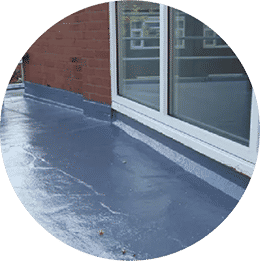
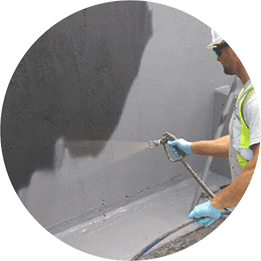
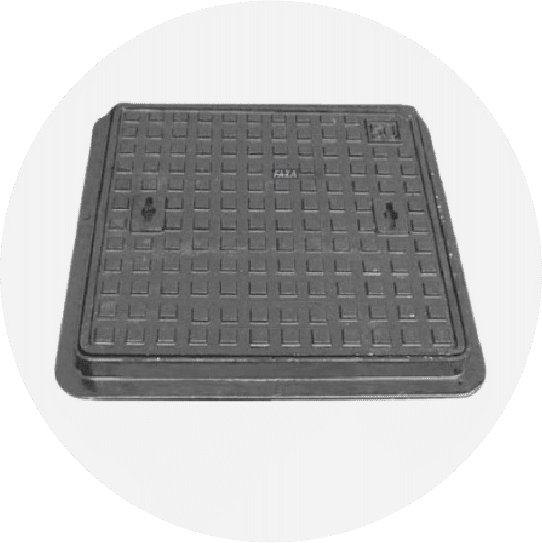
Underground sumps are the workhorse of UAE water storage — they are protected from direct UV and thermal stress, which extends tank life significantly. The primary challenges are waterproofing the surrounding structure, managing water table pressure (critical in coastal areas), and ensuring adequate access manholes for inspection and cleaning. Any underground tank on a UAE project should have a minimum 600mm inspection opening and be specified alongside a waterproofing system for the surrounding civil structure. Underground sumps always require a transfer pump to push water to overhead tanks or directly into the distribution system via a pressure set.
Municipal Connection & Backup Storage Rules
Dubai Municipality regulations require that all residential buildings maintain a minimum of 24 hours' water storage independent of municipal supply [Dubai Municipality Circular No. 196]. For buildings above G+4, this typically means a combination of underground sump and rooftop break tanks. Abu Dhabi (ADDC) and Sharjah (SEWA) have similar backup storage requirements embedded in their infrastructure connection standards. Contractors proceeding without confirming local authority requirements risk failed inspections and remedial civil works.
Water Tank Brands Available in the UAE Market
The UAE market has a well-established group of manufacturers and distributors. The table below reflects the actual brands you will encounter when specifying or sourcing tanks locally:
| Brand | Tank Type | Key Strength | Made/Distributed in UAE |
|---|---|---|---|
| Raktherm | PE (3-layer, vertical, horizontal) | UAE-manufactured, widely specified on RERA projects | Yes — RAK |
| Dubai Polymer | PE (3-layer, vertical) | Strong Dubai market presence, competitive pricing | Yes — Dubai |
| Aquatherm | PE & PP-R tanks and systems | German engineering, premium food-grade compliance | Distributed UAE |
| Hydroplex | PE (vertical, horizontal, sump) | Wide capacity range, good contractor pricing | Yes — UAE |
| Italco | PE tanks & fittings | Italian-origin technology, regional manufacturing | Distributed UAE |
| Wefatherm | PP-R pipe systems & storage | Thermal-resistant PP-R, suited for hot water systems | Distributed UAE |
| Atlas | PE tanks (residential & commercial) | Value-for-money, strong Northern Emirates distribution | Yes — UAE |
| Polycon Gulf | PE & FRP (vertical, underground) | One of the largest UAE tank manufacturers, broad SKU range | Yes — Dubai |
| Kingspan | GRP sectional & steel tanks | International specification, large commercial/industrial | Distributed UAE |
| Balmoral | GRP sectional tanks | UK-specification, commonly used on hospital & hotel projects | Distributed UAE |
Note: Polycon Gulf, Kingspan, and Balmoral are not currently available directly on FEPY. Brands with hyperlinks above can be sourced and ordered via FEPY.
Installation Requirements & Regulatory Compliance for Dubai & Abu Dhabi
Dubai Municipality Water Tank Regulations
All water tanks used for potable water storage in Dubai must comply with ESMA standard UAE.S GSO 1431, which governs food-grade plastic containers and storage tanks. Tanks must carry the Emirates Conformity Mark (ECAS) where applicable. The ESMA certification confirms that tank materials do not leach harmful substances into stored water under UAE temperature conditions — a non-negotiable requirement given that rooftop water in summer can reach 50°C+ before the tank's insulation layers moderate it. For full details on conformity marking requirements, refer to the Emirates Authority for Standardisation and Metrology (ESMA).
Abu Dhabi & Northern Emirates Requirements
ADDC (Abu Dhabi Distribution Company) and the relevant Northern Emirates utilities (SEWA, FEWA) each maintain their own infrastructure connection requirements. In practice, tank specification compliance follows the same ESMA and GSO framework. Inspecting engineers in Abu Dhabi additionally scrutinise tank access hatches — they must be lockable and tamper-evident to prevent deliberate or accidental contamination, particularly in multi-tenant residential buildings.
Building Code Compliance & Inspection
On any project requiring a DEWA or ADDC infrastructure connection, water storage capacity is reviewed at the infrastructure NOC stage. MEP consultants must submit tank schedules and specifications as part of the working drawings package. Tanks that are not ESMA-listed or that lack visible certification markings are routinely rejected. If you are procuring tanks for a project under a main contractor, get the ESMA certificate number from the supplier before ordering — it will be required at inspection.
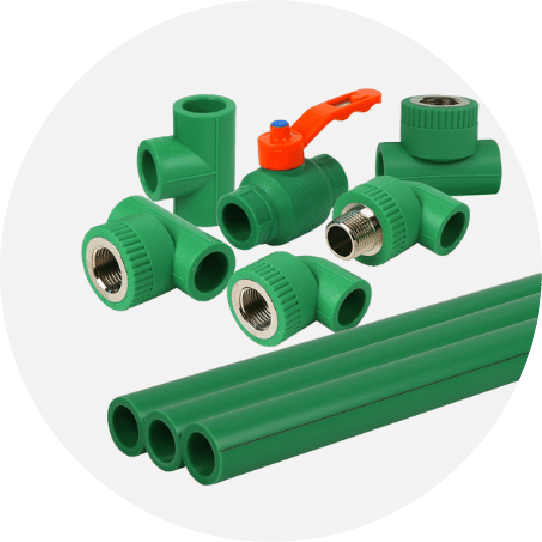
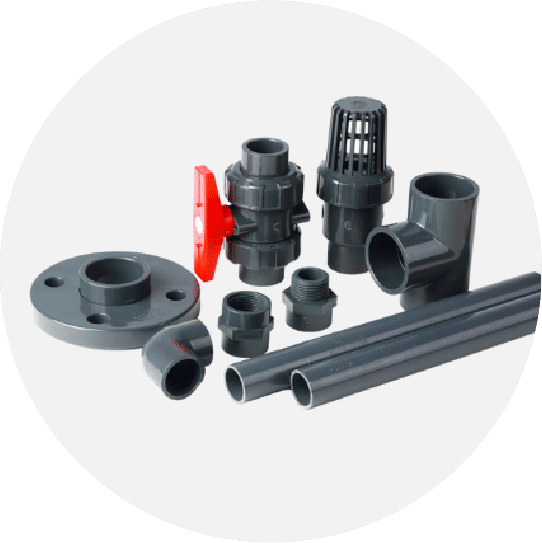
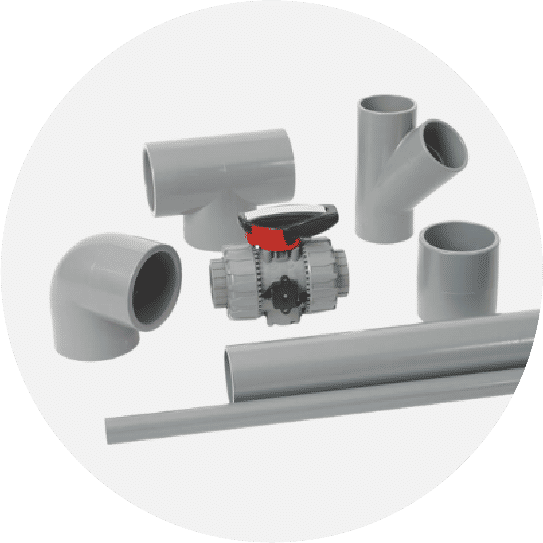
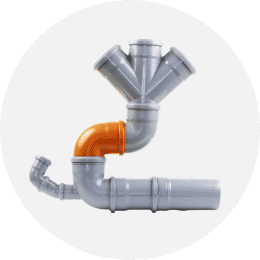
Pipe connections to tanks must use compatible fittings — mixing PE tank outlets with incompatible metal fittings without transition adaptors is a common site error that leads to thread failures and leaks. Explore pipe and pipe fittings options that are compatible with your tank brand and connection type.
Water Tank Pump & Motor Selection for Pressure & Flow
Submersible vs Centrifugal Pumps
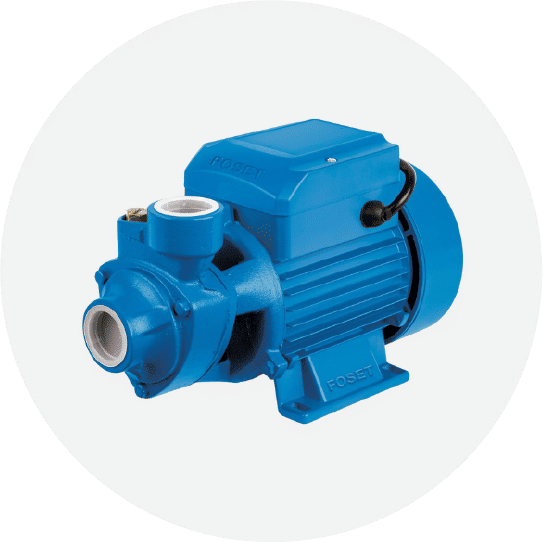
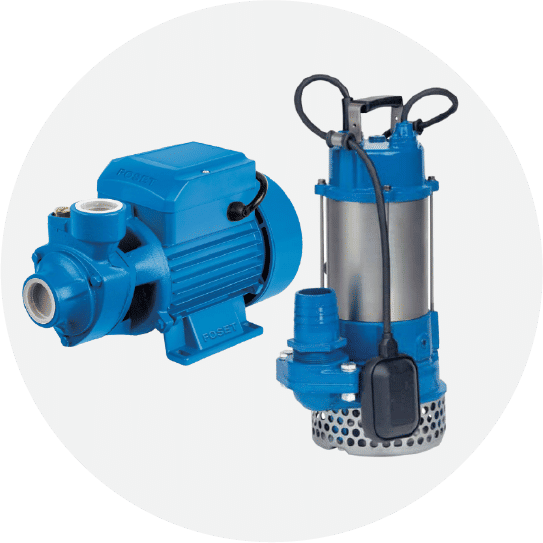
Underground sumps require a submersible transfer pump to move water to overhead tanks or directly to the distribution system. Centrifugal surface pumps are used where suction lift is minimal — typically for boosting pressure from rooftop break tanks into high-rise distribution. The pump selection must be matched to the tank capacity and the system's peak flow demand. An undersized pump allows the sump to refill slower than it empties under peak demand; an oversized pump causes pressure surges and premature valve wear.
For a standard 3,000L residential sump paired with a 2,000L overhead tank on a UAE villa, a 0.5–1.0 kW submersible transfer pump with an automatic float switch is the standard specification. Booster sets for high-rise applications are engineered separately. Correct pump selection starts with understanding the system's static head (vertical height from pump to highest outlet) and friction losses in the pipework. Browse the full range of water pumps available in the UAE to match your system's flow and head requirements.
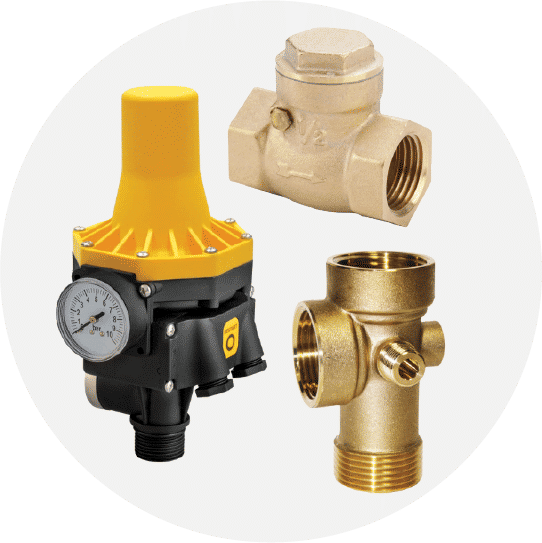
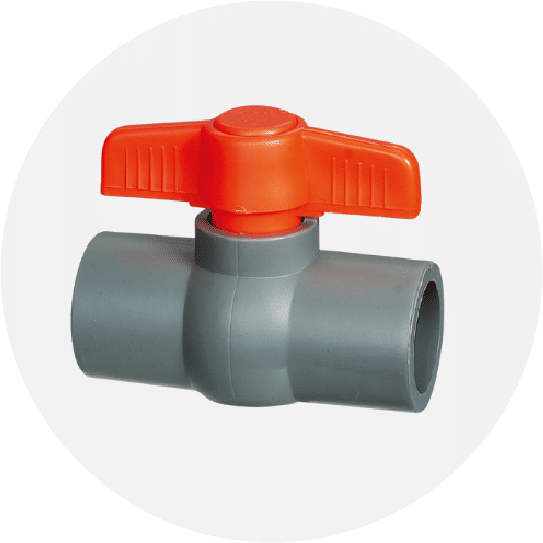
Pump inlet valves and isolation valves must be specified alongside the pump — never install a submersible pump in a sump without an accessible isolation valve and a non-return valve on the discharge line.
Maintenance, Cleaning & Longevity in UAE Climate
Tank Emptying & Professional Cleaning Services
Dubai Municipality guidelines recommend cleaning potable water tanks every 6 months [Dubai Municipality Health & Safety Circular on Water Quality]. In practice, most well-managed residential buildings in UAE clean tanks annually at minimum, with a second inspection during summer when bacterial growth rates are highest. Cleaning involves draining, manual scrubbing with food-grade disinfectant solution (typically sodium hypochlorite at approved concentrations), rinsing, and a post-clean water quality test before refilling.
Algae Control & Water Quality
Algae growth in water tanks is a direct consequence of light penetration — which is why the black core layer in 3-layer PE tanks matters. Single-layer tanks in direct sunlight will develop algae within weeks in UAE summer conditions. If you are inheriting an older single-layer tank on a renovation project, apply an opaque UV-wrap and schedule cleaning frequency at every 3 months during summer.
Rust Prevention in Coastal Areas (Abu Dhabi, Ajman)
PE and FRP tanks do not rust — they are the correct choice for coastal UAE environments. Stainless steel tanks in coastal zones must use SS316 grade minimum, as SS304 will show surface oxidation within 2–3 years in salt-air conditions near the coast. Any steel structural supports for overhead tanks should be hot-dip galvanised or epoxy-coated and inspected annually. Tank inlet and outlet fittings in stainless steel applications should also be SS316 — mixing grades creates galvanic corrosion at connection points.
Warranty & Durability Expectations
A quality 3-layer PE tank from a UAE-manufactured brand should carry a 10-year manufacturer warranty and realistically last 15–20 years in UAE conditions if installed correctly (shaded where possible, supported uniformly, not exposed to chemical contamination). Fibreglass tanks typically carry 10–15 year warranties with 25+ year design lives. Single-layer tanks carry shorter warranties and shorter practical lifespans — factor this into total cost of ownership when comparing prices.
Water Tank Pricing & Where to Buy in the UAE
Indicative 2026 AED pricing for PE 3-layer tanks from UAE manufacturers:
| Tank Capacity | Type | Approx. Price (AED) | Typical Application |
|---|---|---|---|
| 500 litres | PE 3-layer vertical | 300 – 500 | Studio / 1-bed apartment, irrigation |
| 1,000 litres | PE 3-layer vertical | 450 – 750 | 2-3 bed apartment, small villa |
| 2,000 litres | PE 3-layer vertical | 800 – 1,300 | 3-5 bed villa overhead tank |
| 3,000 litres | PE 3-layer vertical | 1,200 – 1,800 | Villa sump / small commercial |
| 5,000 litres | PE 3-layer vertical | 1,800 – 2,800 | Mid-size commercial, labour accommodation |
| 10,000 litres | PE 3-layer / FRP | 3,500 – 6,000+ | Commercial building sump, industrial |
Prices vary by brand, layer count, and fittings included. Delivery and crane costs for large tanks are additional. Bulk contractor pricing is available on request.
Bulk Pricing for Contractors & Developers
For contractors supplying multiple units — villa compounds, labour camps, or apartment block installations — volume pricing from UAE manufacturers typically activates at 5+ units and becomes significant at 20+ units. Always request the ESMA certificate and country of origin declaration alongside the commercial offer. Some imported tanks are marketed under UAE-sounding names but manufactured outside the GCC — verify the factory location if local authority approval is required for your project.
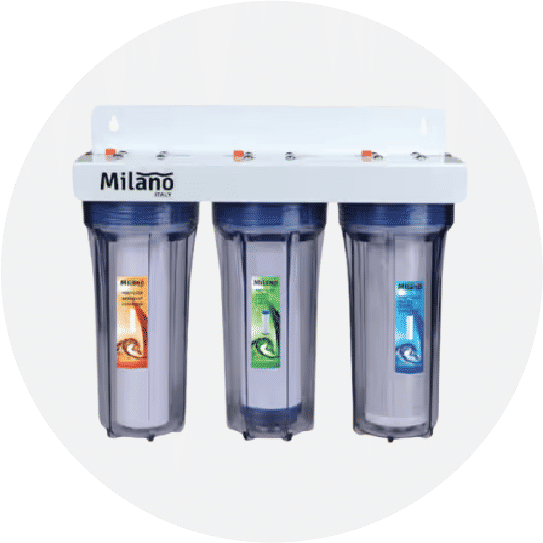
Browse the full range of water tanks available on FEPY, including vertical water tanks from verified UAE brands, with ESMA-compliant options for residential and commercial projects. For complete plumbing system procurement, explore the plumbing category and water filtration systems to ensure clean delivery from tank to tap.
Common Water Tank Problems & Solutions on Site
- Tank not filling / low pressure at inlets: Check float valve operation and municipal supply pressure at the tank inlet. If supply pressure is below 1 bar, the float valve may not open fully. Install a pressure-independent fill valve.
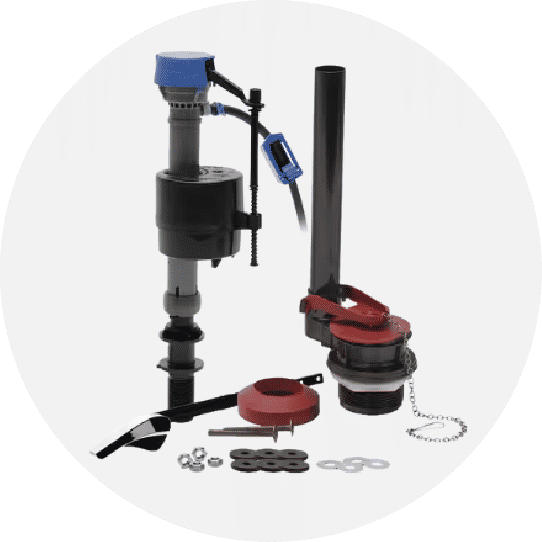
- Overflow running continuously: Float valve failure or float arm set too high. Replace the float valve assembly — do not tie off the float as a temporary fix, as this leads to tank overpressure and roof slab saturation.
- Discoloured or odorous water: Immediate sign of contamination or algae growth. Take the tank offline, drain, and clean before returning to service. Do not attempt to chlorinate in-situ without draining first.
- Tank deforming or bulging: Occurs when a PE tank is installed without a flat, continuous base support — concentrated point loads cause stress cracking. Always install on a flat concrete plinth or full-contact steel cradle. Also occurs when tanks are filled with hot process water above rated temperature.
- Fittings leaking at tank outlets: PTFE tape alone is insufficient on large-bore PE tank outlets. Use purpose-made tank connector fittings with EPDM gaskets and back-nuts, tightened to the manufacturer's specified torque.
FAQ: Water Tank Selection & Installation
What size water tank do I need for a 3-bedroom villa in UAE?
For a 3-bedroom UAE villa with 4–6 occupants, the standard MEP specification is a 2,000L overhead tank combined with a 3,000–5,000L underground sump. The sump provides backup storage and feeds the overhead tank via a transfer pump. Using Dubai Municipality's consumption guideline of 250 litres per person per day, 6 occupants require 1,500L/day minimum — the 2,000L overhead tank provides just over one day's gravity-fed emergency supply while the sump holds additional reserve.
What is the price of a 1,000 litre water tank in UAE (2026)?
A 1,000 litre 3-layer PE water tank from a UAE-manufactured brand costs approximately AED 450–750 in 2026, depending on the brand, wall thickness, and whether fittings are included. Budget brands or single-layer tanks may be priced lower at AED 300–400, but are not suitable for potable overhead storage under UAE regulatory standards. Delivery costs are additional and vary by emirate.
How long does a polyethylene (polymer) water tank last in UAE heat?
A quality 3-layer PE tank from a reputable UAE manufacturer will typically last 15–20 years under normal UAE conditions. Manufacturer warranties are generally 10 years. Key factors that extend tank life: correct base support (flat concrete plinth), partial shading from direct midday sun, regular 6-monthly or annual cleaning, and use of EPDM-gasket fittings rather than threaded metal connections. Single-layer tanks in direct UAE sun have a realistic lifespan of 5–8 years before UV degradation becomes visible.
What is the difference between a Polycon water tank and a fibreglass tank?
Polycon-type (polyethylene, rotationally moulded) tanks are one-piece, lightweight, and cost-effective — ideal for residential overhead and underground sump applications up to around 10,000L. Fibreglass (FRP/GRP) tanks are assembled from panels on-site, making them practical for large-capacity installations (10,000L+) where transport of a single moulded unit is impractical. FRP offers higher structural rigidity and better performance under continuous thermal stress, but at a higher cost and with the need for specialist installation. For most UAE villa and low-rise residential applications, a 3-layer PE tank is the practical and compliant choice.
Are there specific ESMA or Dubai Municipality regulations for water tanks in UAE?
Yes. Potable water storage tanks in the UAE must comply with ESMA standard UAE.S GSO 1431, which governs food-grade plastic storage containers. Tanks must carry ESMA/ECAS conformity markings where mandated. Dubai Municipality additionally requires a minimum 24-hour backup storage capacity for residential buildings (per Dubai Municipality Circular No. 196). Tanks used in buildings connected to DEWA, ADDC, or other utility authorities are inspected at the infrastructure NOC stage — non-compliant tanks will result in a rejected inspection and must be replaced before connection approval is granted.
Sources & References
- Emirates Authority for Standardisation and Metrology (ESMA) — UAE.S GSO 1431 Water Tank Standards & ECAS Certification
- Dubai Municipality — Technical Guidelines for Water Supply, Storage & Quality in Buildings
- International Electrotechnical Commission (IEC) — Referenced for system component ratings in MEP water installations