














By Khalid Al Mansoori, Senior Procurement Specialist — 12+ years in UAE construction supply chain | Published: April 2026
Having sourced cement for structural pours across villa compounds in Al Ain, high-rise podium slabs in Dubai Marina, and coastal infrastructure in Ras Al Khaimah, I've watched projects go sideways simply because the wrong cement type was specified — or the right type was stored incorrectly in 48°C heat. Cement selection in the UAE is not a formality. It is one of the most consequential procurement decisions on any build, and the local environment makes it significantly more demanding than most international markets.
This guide covers every cement type used in UAE construction, how to read grade markings, what ESMA approval actually means on site, realistic 2026 pricing, and practical mixing and curing guidance for extreme heat conditions.
Why Cement Selection Matters More in the UAE Than Anywhere Else
The UAE combines three of the harshest conditions concrete can face: ambient temperatures regularly exceeding 45°C in summer, fine airborne dust that accelerates surface drying, and coastal humidity with chloride-laden salt air across Abu Dhabi, Dubai, Sharjah, and RAK waterfronts. Sulphate concentrations in UAE groundwater and soil are among the highest documented globally, particularly in sabkha zones across the Abu Dhabi coast and southern Emirates.
Each of these factors degrades standard cement differently. Selecting the correct type — and specifying the correct grade — is the first line of defence against premature cracking, spalling, and reinforcement corrosion. On federally funded or municipality-supervised projects, using a non-approved cement brand can trigger material rejection and work stoppages.
Types of Cement Used in UAE Construction
Ordinary Portland Cement (OPC)
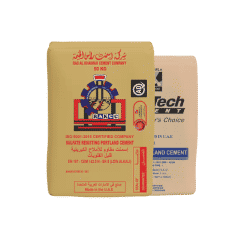
OPC remains the most widely used cement type on UAE sites. It is produced to BS EN 197-1 and the equivalent UAE/ESMA standard, and is available in Grade 42.5 and 52.5 across the market. OPC suits general structural concrete, columns, beams, slabs, and precast elements where sulphate exposure is not a primary risk. It gains strength rapidly, which matters when formwork strike times are tight — a common pressure on fast-track fit-out and tower projects. You can browse OPC cement options on FEPY to compare available grades and brands.
Sulphate Resistant Portland Cement (SRPC)
SRPC is the mandatory choice for any below-grade work in sulphate-bearing soils or groundwater — which includes most foundation and basement work across Abu Dhabi, the Eastern Ring Road corridor, and coastal sabkha zones. It is defined by its low C₃A (tricalcium aluminate) content [BS 4027 / ASTM C150 Type V], which limits the chemical reaction that causes sulphate attack and expansion cracking. On large infrastructure projects, structural consultants will often mandate SRPC in the specification before a single pile is bored. Explore available sulphate resistant cement products for UAE groundworks.
Rapid Hardening Cement
Rapid hardening cement (RHC) achieves at 3 days what standard OPC achieves at 28 days [BS EN 197-1, CEM I 52.5 R class]. This makes it valuable for repair works, precast panel production, road reinstatement, and any scenario where early load-bearing capacity is critical. On UAE toll roads and airport taxiway repairs, RHC is routinely specified to minimise lane closure windows. Note: rapid strength gain also means rapid heat of hydration — curing discipline is non-negotiable in summer.
White Cement
White cement is OPC manufactured with low-iron raw materials to achieve a bright white colour [BS EN 197-1]. In UAE construction it is used extensively for decorative plasterwork, architectural facades, tile grout, terrazzo flooring, and swimming pool finishes on luxury villa and hospitality projects. It performs structurally similarly to grey OPC of equivalent grade but commands a price premium. Browse white cement products available in the UAE market.
Blended / Pozzolanic Cement (PPC)
Portland Pozzolana Cement (PPC) incorporates fly ash or natural pozzolans as a partial clinker replacement [BS EN 197-1, CEM II/A or B-V]. The pozzolanic reaction is slower, producing less heat of hydration — a genuine advantage for mass concrete pours in UAE summer. PPC also improves long-term durability against chloride ingress, which is why it appears frequently in marine structure specifications. However, it gains strength more slowly than OPC 52.5, so early stripping of formwork requires careful planning.
Low Heat Cement
Low heat cement (LHC) is engineered specifically for mass concrete applications — dam walls, large raft foundations, and thick transfer slabs — where thermal cracking from high heat of hydration is a structural risk [ASTM C150 Type IV / BS EN 14216]. In UAE high-rise construction, raft slabs for supertall towers can exceed 4 metres in depth; LHC or blended cements with ice/chilled water batching are typically specified to keep peak core temperatures below the 70°C threshold [ACI 305R Hot Weather Concreting].
Cement Grades Explained: 32.5, 42.5, and 52.5
What Does Cement Grade Mean on Site?
The number refers to the minimum compressive strength (in MPa) the cement paste achieves at 28 days [BS EN 197-1]. A higher grade cement produces stronger concrete at equivalent mix proportions — but it also generates more heat and costs more per bag. Grade selection should match the structural requirement, not default to "strongest available."
Grade 32.5 — General Purpose & Masonry
Grade 32.5 is suited for non-structural applications: mortar for blockwork, screed beds, render coats, and masonry cement applications. It is the most economical grade and is widely used by fit-out and finishing subcontractors. Not appropriate for structural RCC without a structural engineer's specific sign-off.
Grade 42.5 — Standard Structural Use
The workhorse of UAE construction. Grade 42.5 OPC or SRPC covers the majority of structural concrete requirements: columns, beams, shear walls, suspended slabs. Most ready-mix plants in Dubai, Abu Dhabi, and Sharjah batch with 42.5 as their standard binder.
Grade 52.5 — High-Strength & High-Rise
Grade 52.5 is used where high early strength or high-performance concrete (C50 and above) is specified — supertall tower cores, precast stressed elements, and post-tensioned slabs. It is more expensive per tonne and generates significant heat of hydration, so thermal management during pouring is critical in UAE summer months.
Sulphate Resistant Cement: When and Why UAE Sites Demand It
Groundworks, Piling & Basement Slabs
UAE soil sulphate concentrations in certain zones exceed 0.5% by mass — the threshold above which standard OPC concrete is at meaningful risk of sulphate attack over its service life [BS 8500-1]. Any structural element permanently in contact with aggressive ground or groundwater — piles, pile caps, ground beams, basement retaining walls, and raft slabs — should be formed with SRPC unless a geotechnical report specifically clears the site as low-sulphate.
Coastal and Marine Exposure Zones
Chloride-induced corrosion is a separate but compounding risk in coastal UAE. For marine exposure (XS classification [BS EN 206]), the specification typically combines SRPC with a low water-cement ratio (≤0.40), minimum cover of 50–75 mm to reinforcement, and admixtures such as corrosion inhibitors or crystalline waterproofing. Concrete admixtures play a critical role in extending durability in these environments.
Top Cement Brands in the UAE Market
The following table reflects the real UAE market. Brands with verified FEPY pages are linked; others are listed as plain text.
| Brand | Origin | Key Products | Common UAE Applications |
|---|---|---|---|
| National Cement | UAE (Dubai) | OPC 42.5, SRPC 42.5 | General structural, foundations, high-rise |
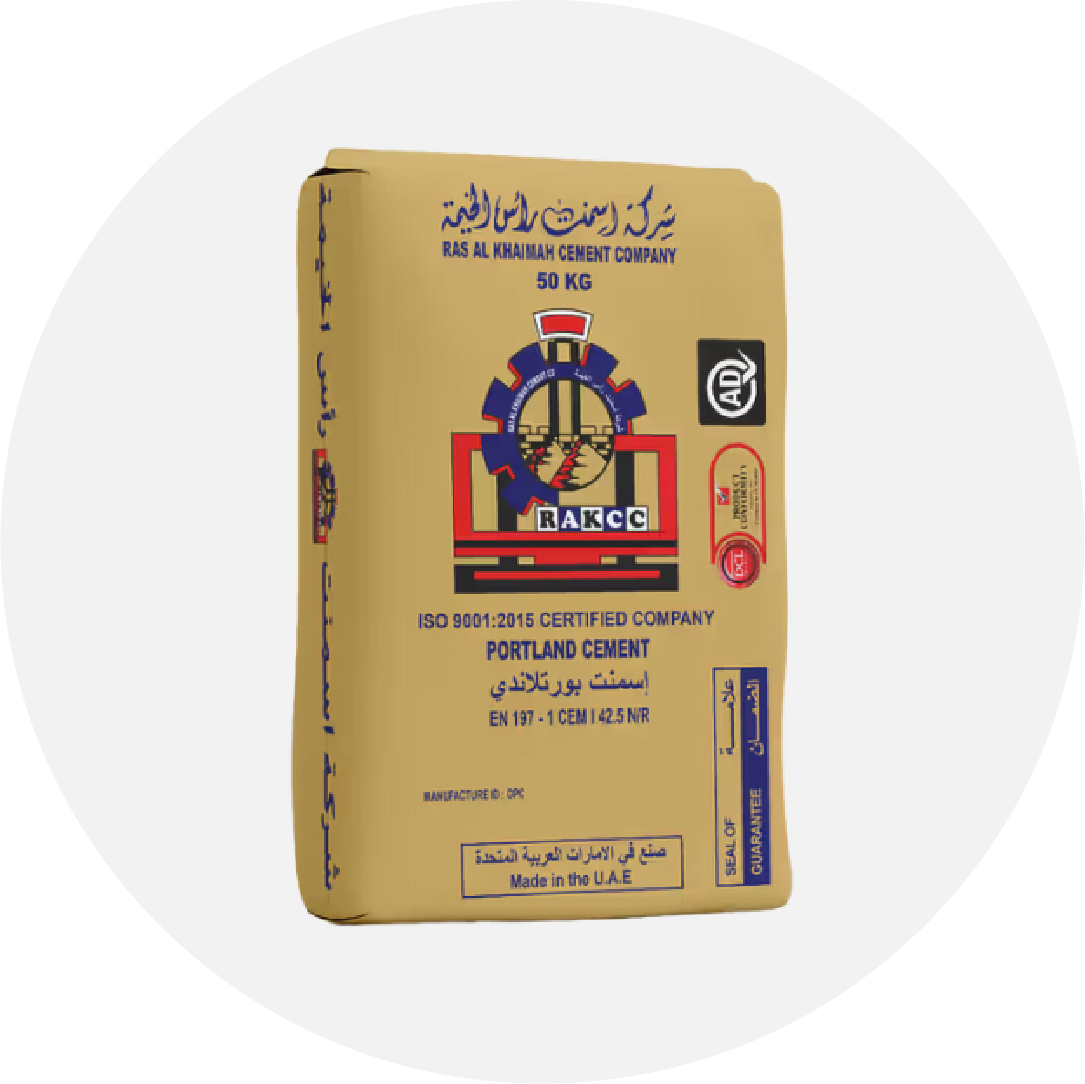
| RAK Cement | UAE (RAK) | OPC 42.5, SRPC, PLC | Structural concrete, coastal projects, ready-mix |
| UltraTech Cement | India (GCC distributed) | OPC 53, PPC, SRPC | High-strength structural, precast, infrastructure |
| Birla White | India (GCC distributed) | White Cement 53 grade | Decorative plaster, tile grout, pool finishes |
| Emirates Cement | UAE (Abu Dhabi) | OPC 42.5, SRPC | Infrastructure, government projects |
| Fujairah Cement | UAE (Fujairah) | OPC 42.5, SRPC, Masonry | General construction, block manufacturing |
| ARKAN (Abu Dhabi) | UAE (Abu Dhabi) | OPC, SRPC | Abu Dhabi structural and infrastructure projects |
| Holcim (Aggregate Industries) | Switzerland (UAE operations) | OPC, Blended cements | Ready-mix supply, large infrastructure |
ESMA note: All cement sold in the UAE must carry ESMA conformity marking under UAE.S GSO 1914 and related standards. Buying from ESMA-certified brands protects you from liability on regulated projects. Check the ESMA product register for current certified products.
Cement Prices in the UAE: What to Expect in 2026
Cement Price by Brand and Grade
| Cement Type / Grade | Pack Size | Approx. Price (AED) | Notes |
|---|---|---|---|
| OPC 42.5 (UAE brands) | 50 kg bag | 18 – 24 AED | National Cement, RAK Cement, Fujairah |
| OPC 52.5 / 53 grade | 50 kg bag | 22 – 30 AED | UltraTech, imported brands |
| SRPC 42.5 | 50 kg bag | 22 – 28 AED | National Cement, RAK Cement |
| White Cement 53 grade | 50 kg bag | 45 – 65 AED | Birla White, RAK White |
| Masonry Cement 32.5 | 50 kg bag | 15 – 20 AED | General-purpose blockwork and render |
| Bulk OPC (per tonne, ex-plant) | Bulk | 180 – 250 AED/tonne | Minimum order quantities apply; ready-mix plants |
Prices are indicative for 2026 and vary by order volume, supplier relationship, and emirate. Bulk cement purchased through a ready-mix plant is typically 30–40% more cost-effective per cubic metre of concrete than site-batched bagged cement for volumes above 20 m³.
Bulk vs Bagged Cement: Cost Comparison
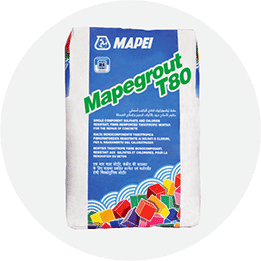
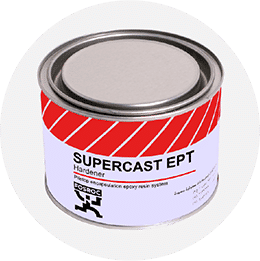
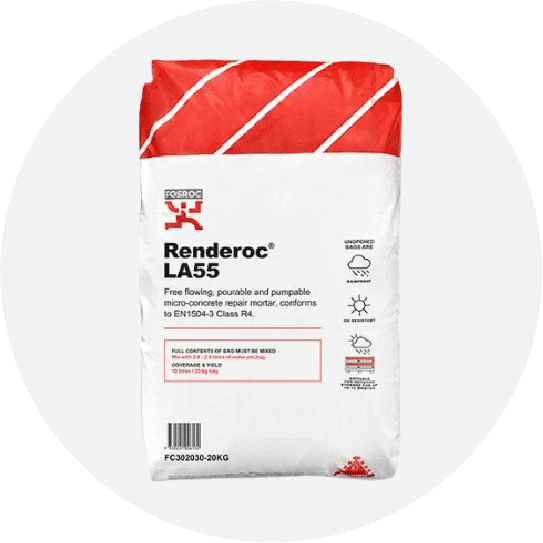
For projects pouring more than 20 m³ of concrete, ready-mix supplied by truck is almost always more economical and more consistent in quality than site batching. Below that threshold — small villa swimming pools, repair patches, screed beds, blockwork mortar — bagged cement gives you control over mix design and eliminates minimum-order constraints. For finishing and repair work, consider pre-blended products from Fosroc, Mapei, or Saint-Gobain Weber, which offer factory-controlled cement-based mortars, grouts, and repair systems that outperform site-mixed equivalents in consistency.
Safety, Standards & Regulatory Compliance in the UAE
ESMA Certification Requirements
The Emirates Authority for Standardization and Metrology (ESMA) mandates conformity certification for cement sold in the UAE under UAE.S GSO EN 197-1 and related Gulf Standardization Organisation standards. Uncertified cement cannot legally be sold for construction use. Each bag must display the ESMA conformity mark, the cement type, grade, and manufacturer details. As a procurement professional, I always cross-check batch certificates — particularly for imported cement — against the ESMA register before accepting delivery on government or semi-government projects.
UAE Municipality Approved Cement List
Dubai Municipality and Abu Dhabi Municipality both maintain approved material lists for contractor use on regulated projects. Specifying a cement brand not on the approved list — even if ESMA certified — can cause a material hold during inspection. Check the Dubai Municipality building materials portal for current approved product schedules before finalising procurement on DM-supervised projects.
How to Choose the Right Cement for Your Project
| Project Type | Recommended Cement | Grade |
|---|---|---|
| Villa slab / beam / column | OPC | 42.5 |
| Below-grade foundations (sulphate soil) | SRPC | 42.5 |
| High-rise core / post-tensioned slab | OPC or Rapid Hardening | 52.5 |
| Mass raft / transfer slab | PPC / Low Heat Cement | 42.5 |
| Blockwork mortar / render / screed | Masonry Cement or OPC | 32.5 – 42.5 |
| Decorative plaster / pool finish / grout | White Cement | 52.5 / 53 |
| Precast panels / road reinstatement | Rapid Hardening Cement | 52.5 R |
| Marine / coastal structures | SRPC + admixtures | 42.5 – 52.5 |
Cement Curing in Extreme UAE Heat: Practical Site Guidance
Water-Cement Ratio in Hot Weather Concreting
In UAE summer conditions, surface evaporation rates can exceed 1.0 kg/m²/h — the threshold above which plastic shrinkage cracking becomes highly probable [ACI 305R-10 Hot Weather Concreting]. Maintaining a water-cement ratio at or below 0.45 for structural work is critical. Adding water to concrete on site to improve workability is one of the most damaging practices I see repeated across projects; it reduces strength and increases permeability. Use plasticiser admixtures instead to achieve the required workability without compromising the w/c ratio.
Curing Compounds and Anti-Evaporation Measures
On exposed horizontal surfaces in summer, curing must begin within 20–30 minutes of finishing — not at end of shift. Wet hessian covered with polythene, membrane-forming curing compounds, and aluminised reflective blankets are all used effectively on UAE sites. Curing duration should be a minimum of 7 days for OPC concrete and 10–14 days for SRPC or PPC mixes, where the pozzolanic reaction continues longer [BS 8110 / BS EN 13670]. For concrete repair and patching works, proprietary curing and bonding systems from XCHEM offer site-ready solutions suited to UAE temperatures.
Common site practices that improve curing outcomes in UAE conditions:
- Chill mixing water or use ice to reduce fresh concrete temperature below 32°C at point of discharge
- Schedule large pours for night or early morning hours (April–October)
- Shade freshly poured surfaces immediately where possible
- Use evaporation retarder spray during finishing operations
- Pre-wet formwork and subgrades before pouring to reduce moisture loss from fresh concrete
Cement Mix Ratios: Quick Reference for UAE Site Teams
| Application | Mix Ratio (Cement:Sand:Aggregate) | Typical Strength |
|---|---|---|
| RCC structural concrete | 1:2:4 | ~M20 (20 MPa) |
| High-strength structural | 1:1.5:3 | ~M25–M30 |
| Plastering / render coat | 1:3 (cement:sand) | — |
| Blockwork mortar | 1:4 to 1:6 (cement:sand) | — |
| Floor screed | 1:3 to 1:4 (cement:sand) | — |
| Tile bedding mortar | 1:4 (cement:sand), semi-dry | — |
How Many Bags per Cubic Metre?
A standard 1:2:4 mix requires approximately 6–7 bags of 50 kg OPC cement per cubic metre of finished concrete, accounting for bulking of aggregates and compaction. For a 1:3 plaster mix, you will use roughly 7–8 bags per cubic metre of mortar. These are site rule-of-thumb figures — for structural work, always confirm with a mix design from your ready-mix plant or structural engineer.
Where to Buy Cement in the UAE
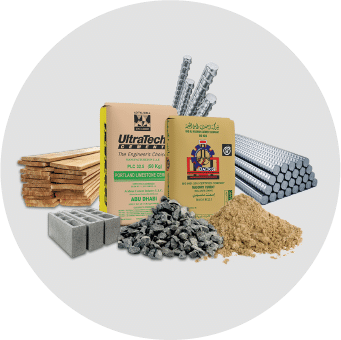
For site quantities of bagged cement and specialist cement types, FEPY supplies across the UAE with trade accounts available for contractors, MEP firms, and fit-out companies. Browse the full cement range on FEPY or explore the wider cement and concrete category including aggregates, admixtures, and concrete repair systems.
Additional categories relevant to your procurement:
- Sulphate Resistant Cement (SRC) — for foundations, basements, and coastal works
- White Cement UAE — for decorative and finishing applications
- Masonry Cement — for blockwork, render, and screed
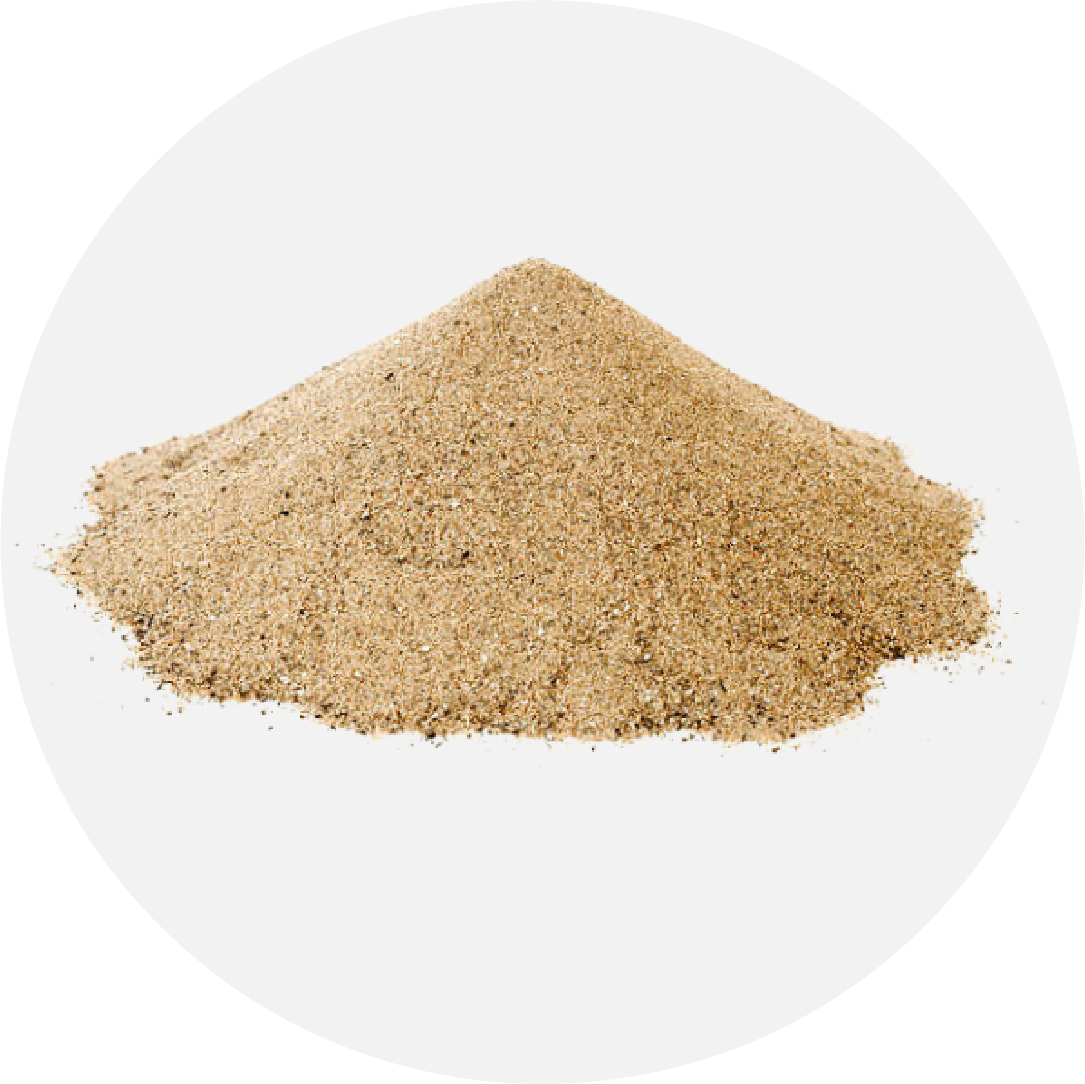
- Concrete Aggregates — washed sand, coarse aggregate, and graded materials
- Cement Additives — waterproofing agents, hardeners, and bonding agents
- Building Materials UAE — full construction materials catalogue

