









By Khalid Al Mansoori, Senior Procurement Specialist — 12+ years in UAE construction supply chain | Published: April 2026
Having specified and sourced PVC piping for villa plumbing, high-rise drainage stacks, and irrigation networks across Abu Dhabi and Sharjah, I've watched site engineers waste days because someone ordered the wrong OD or confused a Class 4 with a Schedule 40. This chart exists so you don't have to make that call from a dusty site office with an unreliable signal. Bookmark it, print it, pin it to the site hut wall — it's the one reference that covers every common PVC size used in UAE construction.
What's the Real Difference Between PVC and UPVC Pipes?
Standard PVC (polyvinyl chloride) contains plasticisers that make it more flexible but reduce its chemical and temperature resistance. UPVC — unplasticised PVC — has no plasticisers, giving it higher rigidity, better pressure retention at elevated temperatures, and superior resistance to chlorinated water and coastal salt air. In the UAE, where ambient temperatures regularly exceed 45°C and water supply lines can see fluid temperatures well above 30°C, UPVC is the default choice for pressure and potable water applications. Standard PVC is still used for low-pressure drainage, conduit, and irrigation at low pressures.
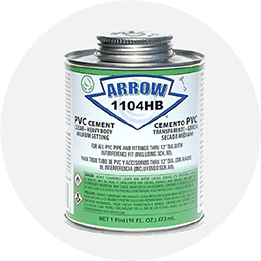
Both materials are joined using solvent cement for PVC and UPVC pipes, but solvent formulations differ — always match cement type to pipe material. Mechanical couplings and rubber-ring push-fit joints are also widely used, especially for larger drainage diameters where thermal movement must be accommodated.
PVC Pipe Specifications: Size, Pressure Rating & Wall Thickness
How to Read the Size Chart
- Nominal Size (inch / DN) — the trade designation, not an actual dimension
- OD (Outside Diameter, mm) — the fixed external dimension used for fitting compatibility
- ID (Inside Diameter, mm) — varies with wall thickness/schedule; governs flow capacity
- Wall Thickness (mm) — increases with schedule or class; governs pressure rating
- Pressure Rating (bar @ 20°C) — derate by ~50% at 60°C for UPVC [ISO 1452]
- Weight (kg/m) — critical for logistics in high-rise riser shafts and long-haul desert sites
Chemical Composition and Manufacturing Process
UAE-market PVC and UPVC pipes are manufactured to ISO 1452 (UPVC pressure pipes for water supply) and ISO 3633 (UPVC soil and waste discharge pipes). Some schedule-rated pipes also comply with ASTM D1785 (Schedule 40/80). Confirm which standard applies before specifying — Dubai Municipality drainage projects typically require ISO 3633 compliance, while Abu Dhabi utility projects reference ADDC and ADSSC specifications that align with ISO 1452.
Understanding Schedule 40, Schedule 80 & Class Pressure Ratings
Difference Between Class 1 to Class 5 Pressure Ratings
The Class system (British Standard / ISO) rates pipes by maximum working pressure in bar at 20°C:
| Class | Pressure Rating (bar @ 20°C) | Typical Application |
|---|---|---|
| Class B (Class 3) | 3 bar | Gravity drainage, vent stacks |
| Class C (Class 4) | 4 bar | Low-pressure irrigation, waste lines |
| Class D (Class 6) | 6 bar | Cold water supply, building services |
| Class E (Class 9) | 9 bar | Mains distribution, riser pipework |
| Class F (Class 12) | 12 bar | High-pressure mains, industrial |
The Schedule system (ASTM) defines wall thickness as a proportion of OD regardless of pressure rating. Schedule 40 is the standard for most plumbing; Schedule 80 adds wall thickness for mechanical strength and higher pressures. At UAE site temperatures, always apply a temperature derating factor — a Schedule 40 pipe rated at 13.8 bar at 23°C drops to approximately 6.2 bar at 60°C [ASTM D1785 / Uni-Bell PVC Pipe Association derating tables].
Full PVC & UPVC Pipe Size Chart — ½ inch to 6 inch
All dimensions are nominal. OD values follow ISO 1452 / EN 1452 series. Schedule 40 wall thicknesses follow ASTM D1785. Pressure ratings are at 20°C water; apply temperature derating for UAE service conditions [ISO 1452-2].
| Nominal Size | DN | OD (mm) | Sch 40 Wall (mm) | Sch 40 ID (mm) | Sch 80 Wall (mm) | Sch 80 ID (mm) | Sch 40 Pressure (bar @ 20°C) | Sch 80 Pressure (bar @ 20°C) | Sch 40 Weight (kg/m) |
|---|---|---|---|---|---|---|---|---|---|
| ½ inch | DN 15 | 21.3 | 2.77 | 15.8 | 3.73 | 13.8 | 26.2 | 38.6 | 0.16 |
| ¾ inch | DN 20 | 26.7 | 2.87 | 20.9 | 3.91 | 18.8 | 22.1 | 32.4 | 0.22 |
| 1 inch | DN 25 | 33.4 | 3.38 | 26.6 | 4.55 | 24.3 | 18.6 | 27.6 | 0.32 |
| 1¼ inch | DN 32 | 42.2 | 3.56 | 35.1 | 4.85 | 32.5 | 15.2 | 22.1 | 0.43 |
| 1½ inch | DN 40 | 48.3 | 3.68 | 40.9 | 5.08 | 38.1 | 13.8 | 20.7 | 0.51 |
| 2 inch | DN 50 | 60.3 | 3.91 | 52.5 | 5.54 | 49.3 | 11.0 | 17.2 | 0.70 |
| 2½ inch | DN 65 | 73.0 | 5.16 | 62.7 | 7.01 | 59.0 | 12.4 | 18.6 | 1.08 |
| 3 inch | DN 80 | 88.9 | 5.49 | 77.9 | 7.62 | 73.7 | 10.3 | 15.9 | 1.43 |
| 4 inch | DN 100 | 114.3 | 6.02 | 102.3 | 8.56 | 97.2 | 8.6 | 13.8 | 2.05 |
| 6 inch | DN 150 | 168.3 | 7.11 | 154.1 | 10.97 | 146.4 | 6.9 | 11.7 | 3.56 |
Sources: ASTM D1785, ISO 1452-2, Uni-Bell PVC Pipe Association dimensional tables. Weights are approximate for UPVC at standard density ~1.40 g/cm³.
Pressure Rating Chart: Matching Pipe Size to Flow Requirements
How to Read a PVC Pressure Rating Table
Pressure rating in the table above is for water at 20°C. For UAE site conditions:
- Cold water supply at 40°C: multiply rated pressure by 0.75
- Hot water at 60°C: multiply by 0.45 (UPVC only — standard PVC should not carry water above 45°C)
- Buried mains: apply surge (water hammer) allowance — typically add 30% to operating pressure and confirm the selected class or schedule still has adequate margin
Flow Rate Calculations for Sizing Pipes
For quick site sizing, use the Hazen-Williams formula. For a 4-inch (DN 100) Schedule 40 UPVC pipe with C=150 and a head loss of 5 m per 100 m of pipe, the flow rate is approximately 15–18 L/s — adequate for a mid-rise residential riser. For smaller diameter lines: a 1-inch Schedule 40 pipe at 3 bar will carry approximately 0.5–0.7 L/s at typical UAE municipal supply pressures. Always confirm with a hydraulic engineer for critical systems.
UPVC Pipes: Temperature Resistance & UV Performance in UAE Climate
Durability in Extreme UAE Heat (45–50°C)
UPVC maintains structural integrity up to approximately 60°C continuous service temperature, but mechanical strength reduces progressively above 40°C [ISO 1452-2]. For outdoor exposed pipework in UAE summer conditions — plant rooms, rooftop plant, façade-mounted services — insulation or protective cladding is mandatory. Uninsulated UPVC pipe surfaces in direct July sun in Dubai can reach 70°C+, which causes deformation and joint failure within one season.
UV Degradation and Outdoor Exposure Limits
Standard grey or white UPVC degrades under prolonged UAE UV exposure, becoming brittle and discoloured within 12–18 months if unprotected. Pipes intended for above-ground outdoor use must be either UV-stabilised (check manufacturer datasheet for UV additive confirmation) or wrapped with UV-resistant lagging. Buried pipes are unaffected by UV — this is only a concern for exposed sections.
Resistance to Saltwater and Coastal Corrosion
One of the strongest arguments for UPVC in coastal UAE projects — Abu Dhabi Island, Palm Jumeirah, Jebel Ali industrial zones — is its complete immunity to salt corrosion. Unlike galvanised steel or copper, UPVC does not pit, rust, or develop dezincification under salt air or saline groundwater contact. For buried coastal installations, ensure pipe bedding sand is clean and free of shell debris that can cause point loading and cracking.
Choosing the Right Pipe: Application Guide for Contractors
| Application | Recommended Type | Minimum Class / Schedule | Notes |
|---|---|---|---|
| Potable cold water supply | UPVC (food-grade additive) | Class 9 / Sch 40 | Confirm NSF/WRAS or ESMA mark |
| Drainage & waste (soil stacks) | UPVC or PVC | Class 3 / ISO 3633 | 3 & 4 inch most common |
| Underground irrigation | PVC | Class 4–6 | Typically 1–2 inch, UV not a concern buried |
| Pressure irrigation mains | UPVC | Class 9–12 | 3–6 inch, solvent cement + rubber ring joints |
| Rainwater downpipes | UPVC | Class 3 | UV-stabilised grade for exposed sections |
| Industrial chemical lines | CPVC or UPVC | Sch 80 minimum | Check chemical compatibility by fluid |
| MEP conduit (non-pressure) | Standard PVC conduit | N/A | Not interchangeable with pressure pipe |
| Chilled water (supplementary) | UPVC | Class 9+ | Confirm temperature range with design engineer |
Installation Standards & Compatibility Across UAE Projects
Solvent Cement Joining vs. Mechanical Fittings
Solvent cement joints are permanent and achieve full pipe pressure rating within 24 hours at UAE ambient temperatures. Use only cement matched to the pipe material — a UPVC-rated solvent cement on standard PVC, or vice versa, produces a weak joint that fails under pressure cycling. For diameters above 110 mm (4 inch), rubber-ring push-fit joints are standard, allowing thermal expansion movement of 10–20 mm per joint [ISO 1452-3]. This is critical in UAE where daily temperature swings of 20°C+ in exposed pipework create significant linear movement.
Burial Depth and External Load Requirements
Dubai Municipality green infrastructure and civil engineering guidelines specify minimum burial depths for PVC pressure mains under trafficked areas: typically 900 mm cover under footpaths, 1,200 mm under vehicle roads. For UPVC drainage under roads, bedding class and compaction is critical — pipe deflection must not exceed 5% of OD [EN 1401-1]. Always use granular bedding (10–20 mm clean aggregate) and compact haunching in 150 mm lifts.
Common Installation Mistakes That Cause Failure
- Applying solvent cement to wet or dirty pipe surfaces — joint strength drops by up to 60%
- Not deburring cut ends, which creates turbulence, erosion, and debris ingress
- Over-tightening mechanical fittings on UPVC — the material cracks; torque to manufacturer spec only
- Storing pipe bundles horizontally unsupported on site in UAE summer heat — long lengths sag and take a permanent set
- Using standard PVC where UPVC is specified — they look identical on a pallet but perform very differently under pressure
Testing and Certification Requirements
Pressure pipe systems in UAE buildings must be hydraulically tested at 1.5× operating pressure for a minimum of 1 hour before concealment [Dubai Municipality Building Code requirements — refer to Dubai Municipality official portal for current project-specific requirements]. Record test pressure, duration, and any pressure drop in the site quality register. ESMA certification is required for pipes used in potable water applications — verify the ESMA mark on pipe barrel or coil label. Full ESMA product standards are listed on the Emirates Authority for Standardisation & Metrology (ESMA) website.
Major PVC & UPVC Manufacturers in UAE Market
| Brand | Country of Origin / Production | Key Product Range | Standards |
|---|---|---|---|
| Raktherm | UAE (Ras Al Khaimah) | UPVC pressure & drainage, fittings | ISO 1452, ISO 3633 |
| Dubai Polymer | UAE (Dubai) | PVC & UPVC pressure pipes, drainage | ISO 1452, EN 1401 |
| ERA | China (widely distributed UAE) | UPVC fittings, valves, pressure pipe | ISO 1452, ASTM D1785 |
| Vini | India / UAE distribution | PVC & UPVC pipes and fittings | IS 4985, ISO 1452 |
| Astral Pipes | India (UAE import) | CPVC, UPVC, PVC-O pipes | ISO 1452, ASTM D2846 |
| Supreme Industries | India (UAE import) | PVC & UPVC pressure and drainage | IS 4985, ISO 1452 |
| Prince Pipes | India (UAE import) | CPVC, UPVC hot & cold water systems | ASTM D2846, ISO 1452 |
| Wavin | Netherlands (regional supply) | UPVC drainage, soil & waste, mains | EN 1401, EN 1329 |
For solvent cement and pipe joining accessories, Tangit and Oatey are the two dominant brands on UAE sites — both produce UPVC-rated and PVC-rated formulations. Always specify the correct grade on your materials requisition.
Where to Buy PVC & UPVC Pipes in UAE
Procurement for UAE construction projects increasingly runs through trade-focused online platforms that carry verified stock with datasheets and ESMA certification documentation. For site teams, the ability to cross-reference OD and pressure class before ordering eliminates the most common sizing errors.
Browse the full range on FEPY:
- PVC Pipes — full size range by diameter and class
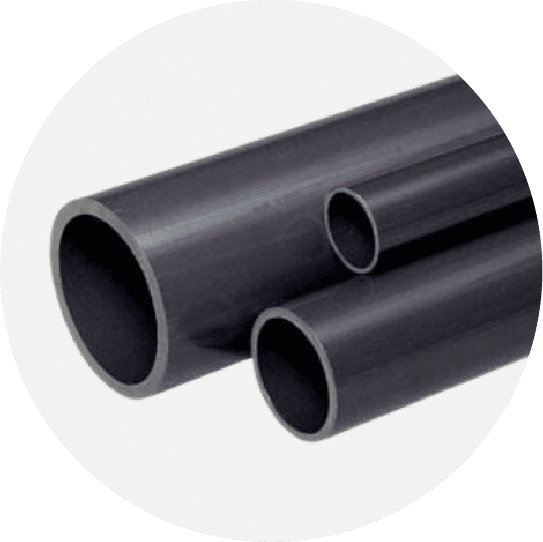
- UPVC Pipes — pressure and drainage grades
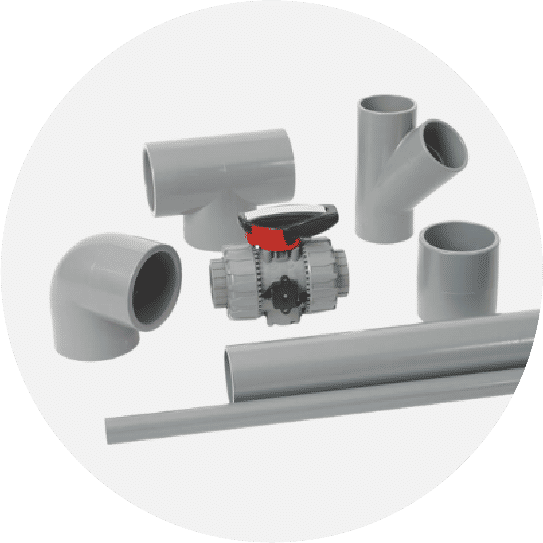
- PVC Pipes & Fittings — complete system components
- UPVC Pipes & Fittings — system packages
- Pipe & Pipe Fittings — all materials and diameters
- Plumbing — full category including valves, accessories
- PVC Cement & Solvent Adhesives
- Pipe & Tube Cutters for clean site cuts
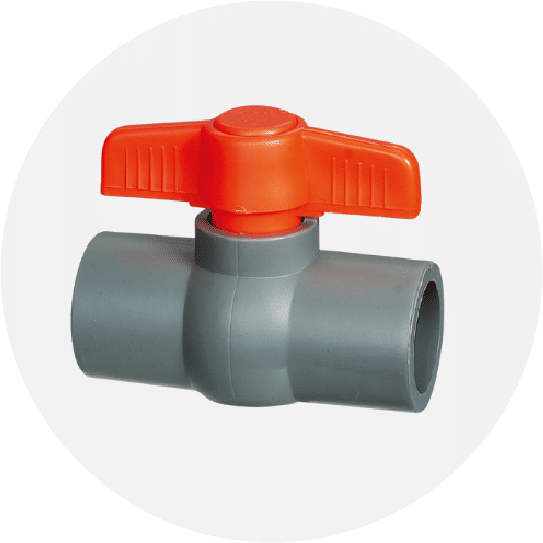
- Valves — compatible with PVC & UPVC pressure systems
Typical AED pricing ranges (2026 market): DN 25 (1 inch) UPVC Schedule 40 pipe per 6 m length runs AED 18–35 depending on brand and pressure class. DN 100 (4 inch) Class 9 UPVC costs AED 95–160 per 6 m length. Get live pricing and current stock availability directly on fepy.com.
FAQ: Common Questions on PVC & UPVC Pipe Sizing
What size PVC pipe should I use for drainage in a UAE villa?
For standard UAE villa drainage: use 4 inch (DN 100) UPVC for soil and waste stacks serving WCs, 2 inch (DN 50) for hand basins and shower waste, and 3 inch (DN 80) for branch connections. Rainwater downpipes are typically 3 or 4 inch depending on roof catchment area. All should comply with ISO 3633 for soil and waste applications. Dubai Municipality drainage requirements typically mandate minimum 100 mm for any connection to the public sewer.
What is the difference between Schedule 40 and Schedule 80 PVC pipe?
Both have the same outside diameter — fittings are interchangeable — but Schedule 80 has a thicker wall, giving a smaller inside diameter and significantly higher pressure rating. For a 2-inch pipe: Schedule 40 rates at approximately 11 bar at 20°C; Schedule 80 rates at approximately 17.2 bar. Schedule 80 also provides better mechanical impact resistance, making it preferred in exposed industrial locations or where pipe is subject to physical damage risk. The trade-off is higher cost and reduced flow area [ASTM D1785].
Can UPVC pipes be used for hot water in UAE buildings?
Standard UPVC is rated to approximately 60°C but with significant pressure derating — a Class 9 pipe at 60°C effectively operates at around Class 4 capacity [ISO 1452-2]. For UAE domestic hot water systems where flow temperatures can reach 55–60°C, CPVC (chlorinated PVC) is the correct specification — it maintains higher pressure ratings up to 93°C. Do not use standard PVC (with plasticisers) for any hot water application above 45°C.
How do I calculate what size PVC pipe I need for a given flow rate?
Use the Hazen-Williams formula or pipe sizing tables from your hydraulic design software. As a practical guide: for flows up to 0.5 L/s, a 1-inch (DN 25) UPVC pipe is adequate at standard UAE municipal pressures (2–4 bar). For 1–3 L/s, size up to 1½ or 2 inch. For 5–15 L/s (irrigation mains, riser headers), 3 to 4 inch. Always design for velocity between 0.6 and 2.0 m/s to prevent sedimentation at low velocity or erosion and noise at high velocity. Consult a qualified MEP engineer for any system serving more than 10 fixtures or operating above 6 bar.
How much does PVC pipe cost per metre in the UAE?
In 2026, UAE market pricing for UPVC pressure pipe (Class 9 / ISO 1452) runs approximately: ½ inch — AED 2–4/m; 1 inch — AED 4–7/m; 2 inch — AED 10–18/m; 4 inch — AED 18–30/m; 6 inch — AED 40–60/m. Standard PVC drainage pipe (ISO 3633) is typically 15–25% cheaper than equivalent pressure-rated UPVC. Prices vary by brand, order volume, and current polymer resin market rates. Bulk project orders (full truck quantities) typically attract 10–20% discount from list price.
