






By Khalid Al Mansoori, Senior Procurement Specialist | Published: April 2026
Having specified and sourced thermocol sheets for insulation works across villa projects in Meydan, fit-out jobs in Business Bay, and MEP rough-ins on high-rise towers in Abu Dhabi, I've seen firsthand how the wrong density selection — or simply grabbing the cheapest board on the shelf — leads to thermal failure, delamination, and costly rework within a single UAE summer. This guide cuts through the noise and gives you what you actually need to know before placing an order.
What Is Thermocol and Why It Matters in UAE Construction
What Is EPS (Expanded Polystyrene) — The Technical Definition
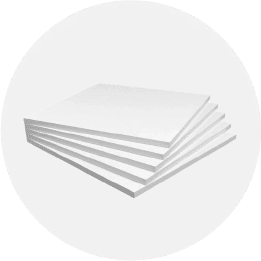
Thermocol is the common trade name for Expanded Polystyrene (EPS) — a rigid, closed-cell foam manufactured by expanding polystyrene beads using steam, then moulding them into boards, blocks, or custom shapes. The result is a material that is roughly 98% air by volume, giving it excellent thermal resistance at a low weight and cost. In UAE construction, thermocol and EPS are used interchangeably across procurement documents, BOQs, and site delivery notes.
EPS is distinct from XPS (Extruded Polystyrene), which uses a different manufacturing process and delivers higher compressive strength and moisture resistance — a distinction that matters enormously on UAE flat roofs and below-grade applications. More on that comparison below.
How UAE Heat and Humidity Affect Insulation Performance
The UAE building envelope faces one of the most demanding thermal environments on the planet. Summer ambient temperatures regularly exceed 45°C in Dubai and Abu Dhabi, with radiant roof surface temperatures climbing above 70°C on unshaded flat roofs. Coastal projects — JBR, Palm Jumeirah, Yas Island, Corniche Road — add salt-laden humidity that can degrade poorly protected insulation over time.
In this context, insulation is not optional — it is a load-bearing element of your building's energy system. An under-specified insulation layer means higher chiller loads, higher electricity costs, and potential non-compliance with Dubai Green Building Regulations. A correctly specified thermocol sheet, installed at the right thickness and density, performs reliably for the life of the structure.
Types of Insulation Materials Used in UAE Buildings
Before narrowing down to thermocol, it is worth mapping the full landscape of insulation materials active on UAE sites:
- EPS (Expanded Polystyrene / Thermocol): Lightweight, low cost, good thermal resistance, widely available. Best for general wall, ceiling, and void-forming applications.
- XPS (Extruded Polystyrene): Higher density, superior moisture resistance, better compressive strength. Preferred for inverted flat roofs and below-slab applications.
- Mineral Wool / Glasswool: Non-combustible, fire-rated, used in walls, ceilings, and HVAC duct wrapping where fire codes require it.
- Polyurethane (PU) Foam: Spray-applied or in board form; very high R-value per mm, used in cold rooms and specialist envelope applications.
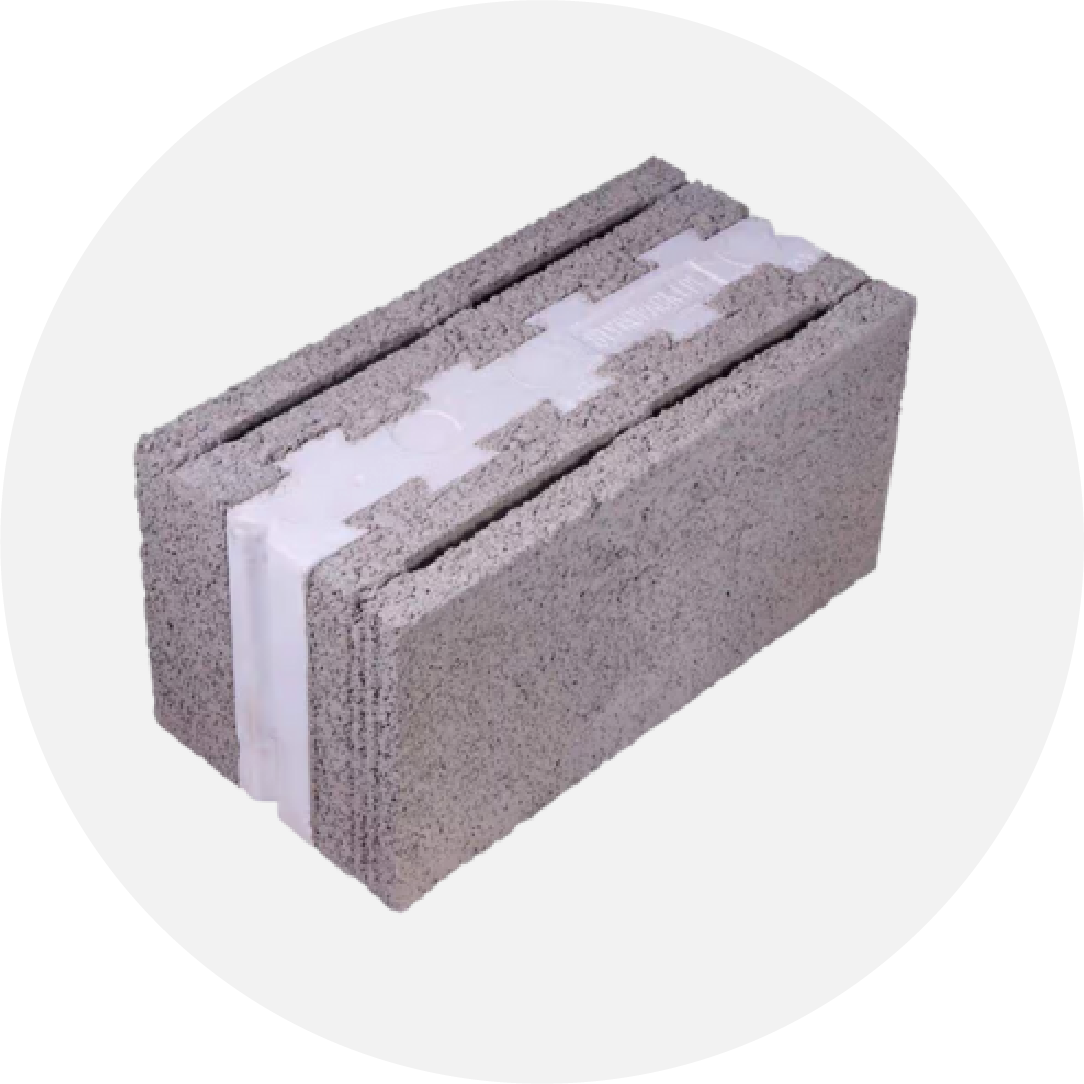
- Thermal Blocks: Insulated masonry units that replace standard concrete block, eliminating the need for a separate insulation layer in many wall constructions.
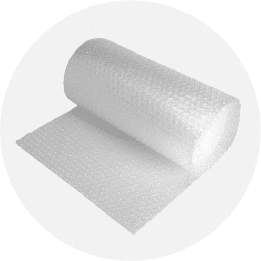
- Reflective Foil / Bubble Foil: Used under metal deck roofing or as secondary vapour barriers in UAE villa roofs.
For most contractors running standard residential or commercial fit-out projects in the UAE, thermocol (EPS) remains the default choice for non-structural insulation due to its price-to-performance ratio and local availability.
Thermocol Sheet Sizes, Densities, and Specifications
Standard Thermocol Sheet Sizes Available in UAE
UAE suppliers typically stock thermocol sheets in the following standard formats:
| Dimension (L × W) | Common Thicknesses | Typical Application |
|---|---|---|
| 2400 × 1200 mm | 25 mm, 50 mm, 75 mm, 100 mm | Roof insulation, wall boards, ceilings |
| 1000 × 500 mm | 20 mm, 25 mm, 50 mm | Packaging, void forming, small-area fit-out |
| 1200 × 600 mm | 30 mm, 50 mm, 75 mm | Wall cavity fill, ceiling tiles, MEP blocking |
| Custom cut | Any from 10 mm to 200 mm+ | Architectural void forming, specialised insulation |
The 2400 × 1200 mm sheet at 50 mm is the most common specification on UAE construction sites — it aligns with standard sheathing dimensions and minimises cutting waste on flat roof pours. Browse the full range of available thermocol sheets on FEPY to compare current stock and pricing.
Density Grades: 10, 15, 20, 25 kg/m³ — What Each Is Used For
Density is the single most important specification when ordering thermocol for construction. It determines compressive strength, thermal resistance, and long-term durability under load. Here is a practical breakdown:
| Density | Compressive Strength (approx.) | R-Value (per 25 mm) | Recommended Use |
|---|---|---|---|
| 10 kg/m³ | ~40 kPa | ~0.88 m²K/W | Packaging, temporary formwork, lightweight void fill |
| 15 kg/m³ | ~70 kPa | ~0.95 m²K/W | Ceiling insulation, non-load-bearing wall cavities |
| 20 kg/m³ | ~100 kPa | ~1.00 m²K/W | Roof insulation (under screed), external wall boards |
| 25 kg/m³ | ~130 kPa | ~1.05 m²K/W | Inverted roofs, high-traffic floor zones, load-bearing insulation |
Note: R-values are indicative based on EPS thermal conductivity of approximately 0.033–0.038 W/mK [ASTM C518 / EN 12667]. Always verify with supplier datasheet for the specific product grade.
A common site mistake I've seen repeatedly: specifying 10 kg/m³ EPS under roof screed to save cost, then watching it crush under foot traffic during the pour. Use a minimum of 20 kg/m³ for any application where the board will carry load — even temporarily.
EPS vs XPS vs Mineral Wool: Which Insulation for UAE Climate?
XPS Insulation: When to Upgrade from Standard Thermocol
XPS boards — manufactured by companies such as Dow (Styrofoam), BASF (Styrodur), and Ravago — deliver compressive strengths of 200–500 kPa and near-zero water absorption, making them the correct specification for:
- Inverted flat roofs where the insulation sits above the waterproof membrane and is exposed to drainage water
- Below-slab and basement perimeter insulation
- Podium deck insulation in mixed-use towers
- Cold room and chiller room walls where moisture ingress would degrade EPS over time
For a standard protected flat roof (insulation under the screed, above the waterproofing), 20–25 kg/m³ EPS performs adequately and costs significantly less than XPS. On an inverted roof detail — which is common in UAE high-rise construction — XPS is non-negotiable.
Mineral Wool and Glasswool: Fire-Rated Applications
EPS and XPS are both combustible materials. In applications where UAE fire codes mandate non-combustible insulation — external wall cladding systems (EIFS), fire-rated partition infill, MEP duct wrapping in escape routes — mineral wool or glasswool is the correct specification. Products from brands like Knauf and Rockwool are widely used across UAE high-rise and hospitality projects for precisely these applications. Knauf insulation products cover a range of glasswool and mineral wool boards suited to UAE fire-rated construction.
Key Applications: Roof, Wall, Floor, and MEP Insulation
Roof Insulation: Flat Roof vs Pitched Roof Considerations
The vast majority of UAE residential and commercial buildings use flat roof construction. The standard build-up on a Dubai villa or low-rise office block typically runs: structural slab → primer → waterproofing membrane → EPS insulation board → protection screed → tile finish. In this configuration, a 50–75 mm EPS board at 20 kg/m³ density is the most common specification.
For villas with pitched or sloped roof forms — increasingly common in premium residential projects in Arabian Ranches, Damac Hills, and similar communities — insulation is typically installed between or below the rafter/purlin system, often using mineral wool batts or cut EPS boards.
External Wall Insulation in UAE High-Rise Projects
External thermal insulation composite systems (ETICS) on UAE towers typically use EPS boards of 50–100 mm thickness, mechanically fixed and adhesively bonded to the structural wall, then rendered or clad. Density requirements for ETICS are typically 15–20 kg/m³. The system eliminates thermal bridging at the structural frame — a critical detail in a climate where every thermal bridge means additional condensation risk and chiller load.
Insulation for HVAC Ducts and Pipes in MEP Works
MEP contractors in the UAE use glasswool duct wrap, pre-formed pipe sections, and flexible foam tubes for HVAC insulation — not EPS boards, which are too rigid for duct wrapping. However, EPS is widely used in MEP works for: pipe chase void forming, equipment plinths, vibration isolation pads under pumps and AHUs, and temporary protection of installed pipework during construction. For broader MEP materials procurement, the building materials category on FEPY covers relevant products across multiple trades.
Underfloor Insulation for Villa Fit-Out
Underfloor insulation in UAE villas is gaining traction — particularly in projects targeting Green Building rating (Estidama, LEED) and in properties with underfloor heating systems. A 25–50 mm EPS board at 25 kg/m³ is typically laid below the screed layer to reduce downward heat loss and thermal mass lag. In ground-floor slabs directly on fill, EPS also provides capillary break function. Complement this with a polythene sheet as a vapour barrier below the insulation layer — standard practice on UAE ground slabs.
UAE Regulatory Requirements and Dubai Municipality Standards
Dubai Green Building Regulations and Insulation Compliance
Dubai's Green Building Regulations and Specifications, issued by Dubai Municipality, set minimum thermal performance requirements for building envelopes. Compliance is mandatory for all new building permit applications in Dubai. The regulations specify maximum U-values (heat transfer coefficients) for roofs, walls, and glazing — which directly drives the minimum insulation thickness and R-value required on any compliant project.
For roofs, the Dubai Green Building Regulations require a maximum U-value of 0.30 W/m²K for residential buildings [Dubai Municipality Green Building Regulations, 2023 edition]. Achieving this with EPS insulation at a thermal conductivity of 0.038 W/mK typically requires a minimum 75–100 mm EPS layer, depending on the roof construction type.
Contractors and engineers should consult the official Dubai Municipality website for the latest version of the Green Building Regulations applicable to their project type and zone. Abu Dhabi projects fall under Estidama Pearl Building Rating System requirements, which carry equivalent or stricter thermal envelope criteria.
R-Value Requirements for UAE Buildings
R-value (thermal resistance) is the primary metric used to specify insulation thickness. In the UAE, the relevant international standard for EPS thermal conductivity measurement is IEC and ISO-aligned EN 13163, which governs EPS factory production control and declared performance values. Always request a product datasheet with a declared lambda (λ) value when sourcing thermocol for a compliance-critical application — do not rely on generic density-based estimates alone.
How to Choose the Right Insulation for Your Project
How to Calculate Insulation Thickness for UAE Projects
The calculation is straightforward: R = thickness (m) ÷ thermal conductivity (W/mK). For a 50 mm EPS board with λ = 0.038 W/mK: R = 0.050 ÷ 0.038 = 1.32 m²K/W. To meet a roof U-value of 0.30 W/m²K, the total R-value of the roof construction (including concrete slab, screed, and surface resistances) must equal or exceed 1/0.30 = 3.33 m²K/W. Once you subtract the R-values of the other construction layers, the residual R required determines your EPS thickness.
Compressive Strength vs Thermal Performance Trade-Off
Higher density EPS delivers marginally better thermal resistance but primarily delivers significantly better compressive strength. The thermal conductivity difference between 15 kg/m³ and 25 kg/m³ EPS is small — roughly 0.038 vs 0.033 W/mK. The compressive strength difference, however, is approximately 3× — which is why density selection is driven by structural loading requirements, not thermal ones, in most UAE applications.
Storage and Handling of Thermocol on UAE Sites
EPS degrades under prolonged UV exposure — a real problem on UAE sites where boards may sit exposed for weeks between delivery and installation. Store thermocol sheets flat, in shade, covered with opaque polythene sheeting. Do not stack more than 1.5 m high unless the bottom boards are rated for the compressive load. Keep away from petroleum-based solvents, bitumen primers, and diesel — these dissolve EPS on contact. Always use EPS-compatible adhesives (water-based or polyurethane foam adhesive) when bonding boards to substrates.
Top Insulation Brands in the UAE Market
| Brand | Product Type | Notes |
|---|---|---|
| Hard Block Factory | EPS thermocol sheets, thermal blocks | UAE-based manufacturer; wide range of densities and sizes |
| Knauf | Glasswool, mineral wool, EPS systems | Global brand; fire-rated and thermal insulation for UAE high-rise |
| Armstrong | Ceiling tiles, acoustic insulation panels | Widely specified in UAE commercial fit-out and hospitality |
| Atlas | EPS and XPS insulation boards | Available through FEPY; multiple density grades |
| Dow (Styrofoam) | XPS insulation boards | Premium XPS for inverted roofs and below-grade applications |
| BASF (Styrodur) | XPS insulation boards | High compressive strength XPS; used in podium decks and cold stores |
| Rockwool | Stone wool insulation | Non-combustible; fire-rated partitions and façade systems |
| Isover (Saint-Gobain) | Glasswool, mineral wool | HVAC duct wrap and acoustic wall insulation across UAE projects |
| Emirates EPS | EPS thermocol sheets and shapes | Local UAE manufacturer; competitive pricing on large volume orders |
Price Guide: Thermocol and Insulation Boards in AED
Prices in the UAE thermocol market fluctuate with raw material (styrene monomer) costs and logistics. The following ranges reflect typical 2026 market pricing for standard-grade EPS boards purchased through UAE suppliers:
| Product | Specification | Approx. Price (AED) |
|---|---|---|
| EPS Sheet (standard) | 2400 × 1200 × 50 mm, 15 kg/m³ | AED 18–28 per sheet |
| EPS Sheet (high density) | 2400 × 1200 × 50 mm, 20–25 kg/m³ | AED 28–42 per sheet |
| EPS Sheet (thick) | 2400 × 1200 × 100 mm, 20 kg/m³ | AED 45–65 per sheet |
| XPS Board | 1200 × 600 × 50 mm | AED 35–55 per sheet |
| Glasswool Slab | 1200 × 600 × 50 mm, 48 kg/m³ | AED 22–35 per slab |
| Thermal Block | 400 × 200 × 200 mm, insulated CMU | AED 8–14 per block |
Volume pricing on palletised orders typically yields 10–20% discount from the per-sheet rates above. Confirm current pricing and availability for thermal blocks and insulation boards directly on FEPY, as stock and pricing update regularly.
Thermocol in Packaging Applications
Beyond construction, thermocol is the most widely used protective packaging material for fragile goods across UAE logistics, retail, and e-commerce operations. Its low density, shock absorption, and custom mouldability make it the default choice for:
- Electronics packaging: TVs, appliances, sensitive instruments
- White goods: refrigerators, washing machines — corner and edge protectors
- Industrial equipment: pumps, motors, precision instruments shipped to and from UAE ports
- Food logistics: pre-formed EPS fish boxes, cold-chain packaging for perishables
- Construction materials: protecting tiles, sanitary ware, and fixtures during transit on UAE sites
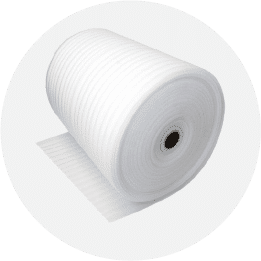
For packaging-grade thermocol and protective materials, FEPY stocks a range of packaging protectors and complementary products including bubble wrap and foam rolls for wrapping and void fill applications.
Where to Buy Thermocol and Insulation in UAE
For contractors, procurement teams, and fit-out companies, FEPY provides a centralised platform to compare and order thermocol sheets, insulation boards, and related building materials across multiple verified UAE suppliers — with delivery to Dubai, Abu Dhabi, Sharjah, and other emirates.
Browse by category: