








By Khalid Al Mansoori, Senior Procurement Specialist | Published: April 2026
Having specified and sourced drainage access covers for infrastructure projects across Sharjah Industrial Area, Dubai South, and multiple Abu Dhabi villa communities, I've seen firsthand what happens when the wrong load class gets installed in a traffic-bearing zone — cracked frames, sunken covers, and municipality stop-work notices within six months. Choosing the right manhole cover in the UAE is not an afterthought; it's a structural and compliance decision that carries project-liability implications. This guide cuts through the noise so contractors, engineers, and procurement teams can make the right call the first time.
What Are Manhole Covers and Why They Matter in UAE Projects
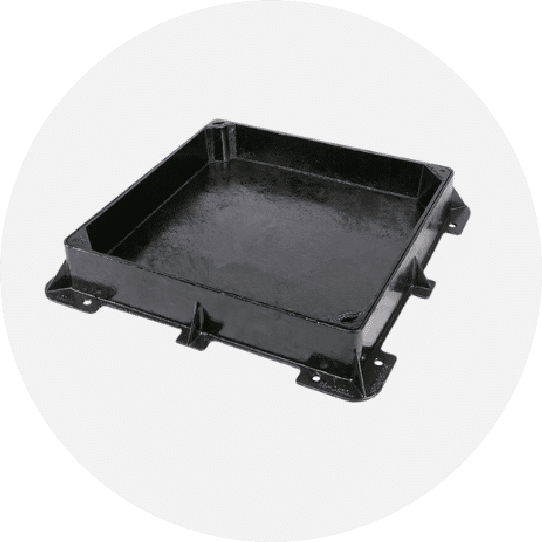
A manhole cover — also called an access cover or inspection cover — is the removable surface plate that seals the entry point of underground drainage, sewer, utility, and stormwater infrastructure. In UAE construction, these covers appear across every project type: villa drainage networks, high-rise MEP shafts, road drainage in commercial zones, and utility corridors in industrial estates.
The stakes are high. A cover underspecified for its load environment becomes a hazard — both to vehicles and to workers accessing the chamber below. A cover overspecified for a pedestrian walkway wastes project budget. Getting the specification right means matching material, load class, size, and sealing configuration to the actual site condition.
In UAE projects, manhole covers must comply with EN 124, the European Standard for gully tops and manhole tops, which is the accepted reference standard across Dubai Municipality and Abu Dhabi infrastructure specifications. All covers installed in public areas must carry load class certification.
Material Types: Cast Iron vs Composite vs Ductile Iron
Why Cast Iron Remains the Standard in UAE Construction
Grey cast iron has been the go-to material for manhole covers in the Gulf for decades — and for good reason. It offers excellent compressive strength, dimensional stability under load, and is well understood by municipality inspectors. Cast iron covers are available across all load classes from B125 through D400 and are routinely specified for road and driveway applications in UAE residential and commercial projects.
The trade-off is weight. A 600mm round cast iron cover and frame in D400 class typically weighs 35–55 kg, which affects handling on upper-floor MEP installations and in confined retrofit scenarios. Cast iron is also susceptible to surface corrosion in coastal environments — Abu Dhabi Corniche, Dubai Marina, and Palm Jumeirah projects should account for salt-spray degradation and specify bitumen-coated or epoxy-treated units.
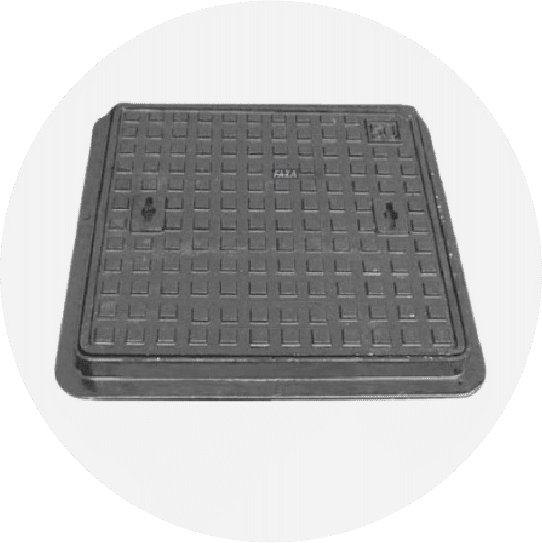
Browse the full range of cast iron solid top manhole covers for standard road and driveway applications, or explore cast iron recessed covers for tiled or paved finish areas where flush aesthetics are required.
Composite Covers: Lightweight Alternative for Fit-Out Projects
Composite (polymer concrete or glass-fibre reinforced polymer — GRP) manhole covers have grown in adoption across UAE fit-out and landscaping work. Their primary advantages are low weight (often 40–60% lighter than equivalent cast iron), non-corrosive performance, and non-conductive properties relevant to electrical utility chambers.
Composite covers do not corrode in salt air, making them well suited to beachfront villas, coastal infrastructure, and marine-adjacent developments. They are also theft-resistant since they carry no scrap-metal value — a real operational benefit in areas where cast iron covers are occasionally targeted.
Their limitation is heat deflection. UAE summer temperatures regularly exceed 50°C ambient, and road surface temperatures can climb far higher. Not all composite formulations maintain dimensional stability at sustained surface temperatures above 60°C — always verify the manufacturer's heat deflection temperature (HDT) data before specifying composite covers for blacktop road installations. For pedestrian zones, landscaped areas, and covered parking, composite is a strong performer.
Ductile Iron: Strength Without the Weight
Ductile (spheroidal graphite) iron sits between grey cast iron and composite in terms of strength-to-weight ratio. It offers significantly higher tensile and impact strength than grey cast iron, making it the preferred material for D600 and E600 heavy-load applications — port access roads, logistics hubs, and heavy industrial zones such as Jebel Ali and Khalifa Industrial Zone Abu Dhabi (KIZAD).
Ductile iron covers cost more per unit than grey cast iron, but they resist cracking under impact and cyclic heavy-vehicle loading — a worthwhile premium in high-traffic commercial zones where cover replacement is operationally disruptive.
EN 124 Standards & Load Rating Classifications
The EN 124:2015 standard defines six load classes for manhole and gully covers [BSI Group — EN 124 Gully Tops and Manhole Tops for Vehicular and Pedestrian Areas]. Each class specifies the minimum load (in kilonewtons) the cover must withstand without failure:
| Load Class | Test Load | Typical UAE Application |
|---|---|---|
| A15 | 15 kN | Pedestrian zones, interior floors, landscaped areas |
| B125 | 125 kN | Footways, pedestrian areas, car parks (light vehicles only) |
| C250 | 250 kN | Kerb lanes, slow-speed vehicle areas, villa driveways |
| D400 | 400 kN | Carriageways, roads, public highways — standard for most UAE road projects |
| E600 | 600 kN | Airports, docks, heavy-goods vehicle zones |
| F900 | 900 kN | Extreme industrial — aircraft aprons, heavy industrial plants |
D400 Load Rating: The Dominant Specification in UAE Roads
D400 is the default specification for any manhole cover installed in or adjacent to a UAE public road. Dubai Municipality and Abu Dhabi's Department of Municipalities and Transport (DMT) both require D400 certification for covers in carriageway positions. If you are tendering for road infrastructure, stormwater, or sewer projects in any emirate, D400 is the baseline — not an upgrade.
B125 Load Rating: Residential Footways & Interior Areas
B125 is appropriate for villa footpaths, podium-level drainage access in high-rise towers, and indoor utility rooms. It is not suitable for driveway use unless vehicle access is demonstrably impossible — a determination that must be documented for municipality submission.
D600 & E600: Heavy-Traffic & Industrial Zones
For logistics parks, container yards, and airside infrastructure, D600 and E600 ductile iron covers are the correct specification. Projects in Jebel Ali Free Zone, Dubai Industrial City, and Abu Dhabi port areas frequently call for these classes. Under-specifying in these environments leads to rapid cover failure and significant operational cost.
Manhole Cover Sizes & Specifications for UAE Drainage Systems
| Clear Opening | Shape | Common UAE Application |
|---|---|---|
| 450mm | Round / Square | Residential drainage, villa sewer access, low-traffic service areas |
| 600mm | Round / Square | Standard road drainage, stormwater chambers — the most commonly specified size in UAE municipal projects |
| 750mm | Round | Deep access manholes, large-diameter sewer mains |
| 900mm | Round / Rectangular | Primary trunk sewer access, major stormwater infrastructure, utility substations |
Square covers are often preferred for utility and MEP applications because they allow directional installation alignment and are easier to reposition during fit-out without rotating the frame. Round covers are the standard for public road drainage because a round cover cannot fall through its circular frame regardless of orientation — an inherent safety property of circular geometry.
Frame depth is equally important. Standard frame heights range from 50mm to 100mm. In asphalt road reinstatement, a 100mm frame depth allows full bedding in the binder course. For concrete-slab installations, flush-frame designs with adjustable-height ring systems accommodate slab tolerance variations common in UAE high-rise podium decks.
Durability in UAE Climate: Heat, Humidity & Salt Air Resistance
Heat Deflection & UV Stability in 50°C+ Temperatures
Road surface temperatures in the UAE regularly exceed 70°C in July and August — significantly above ambient air temperature. Cast iron and ductile iron covers are unaffected by these temperatures. Composite covers must be specified with an HDT above 100°C to maintain shape integrity under UAE road surface conditions. Always request the manufacturer's HDT data sheet before accepting composite covers for any trafficked external surface.
Salt Spray Resistance for Coastal Projects
Projects within 500 metres of the coast — across Dubai Marina, Jumeirah, Abu Dhabi Corniche, and the Northern Emirates coastline — are exposed to salt-laden air that accelerates ferrous metal corrosion. For cast iron covers in these zones, specify units with a factory-applied bituminous or cold-applied epoxy coating. Ductile iron with galvanised finish is also available. Composite covers sidestep this issue entirely and are worth the cost premium in beachfront villa and resort projects.
Dust Infiltration Prevention in Arid Climates
Fine desert dust infiltrates utility chambers and accelerates wear on internal fittings, valves, and cable runs. Covers specified with elastomeric gaskets or tongue-and-groove frame-to-cover seating significantly reduce dust ingress. For electrical and telecom utility chambers, gasketed covers are effectively mandatory. Pair these covers with proper waterproofing membrane systems at the chamber walls and base slab to prevent both water and dust infiltration through the structure itself.
Installation & Frame Alignment: Site Best Practices
Frame Setting & Leveling on Asphalt & Concrete
The most common installation failure on UAE sites is frame misalignment — covers set 5–15mm proud of or below the finished road surface. This creates a trip hazard on footways and a kerb shock on roads that rapidly loosens the frame bedding. On asphalt roads, frames must be set to the finished road level with bedding mortar of sufficient compressive strength (minimum 25 MPa) to resist dynamic vehicle loads without settlement.
On concrete slab installations — common in basement car parks and podium decks of UAE high-rise towers — use adjustable frame risers to accommodate the as-cast slab tolerance. Do not grout-pack frames on green concrete; allow the slab to reach full cure (minimum 28 days or 75% of design strength) before final frame bedding.
Gasket Installation & Sealing Standards
Where gasketed covers are specified (utility chambers, electrical ducts, telecom access), the elastomeric gasket must be seated uniformly around the full frame perimeter before the cover is lowered. Pinched or kinked gaskets create leak paths that defeat the sealing purpose. In coastal UAE projects, use EPDM (ethylene propylene diene monomer) gaskets rather than natural rubber — EPDM resists UV, ozone, and salt water degradation significantly better in outdoor conditions.
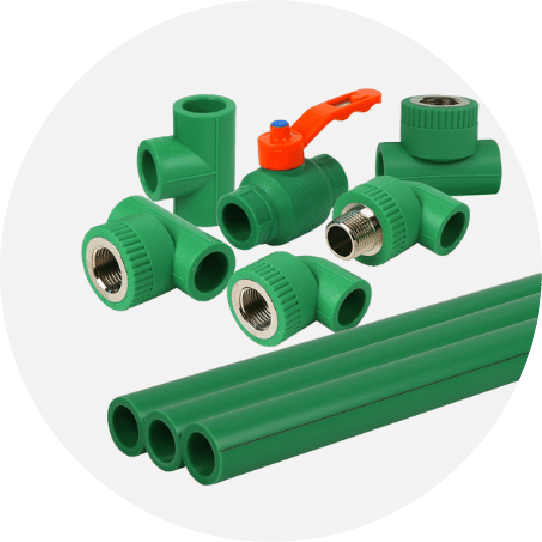
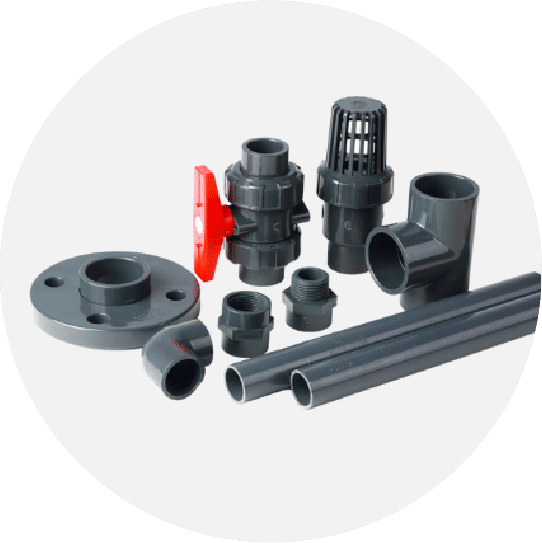
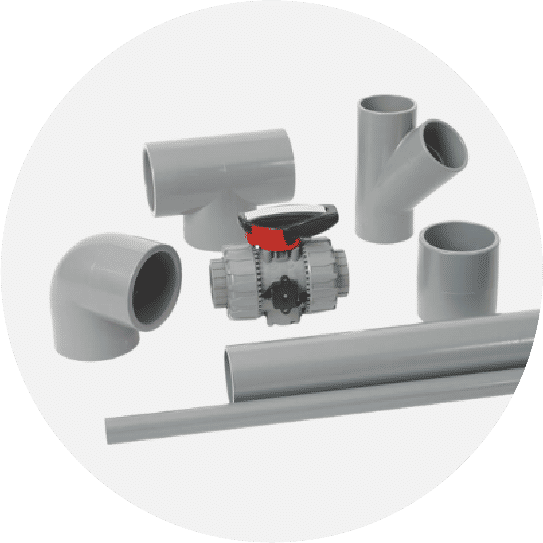
For underground drainage works, ensure all chamber construction follows compatible pipe and pipe fitting specifications — mismatched pipe and chamber materials are a recurring source of joint failures in UAE sewer projects.
Safety Features: Anti-Slip Surfaces, Lock Mechanisms & Ventilation
Anti-Slip Tread Patterns & Safety Compliance
EN 124 requires that manhole covers in pedestrian areas carry a non-slip surface [BSI Group — EN 124:2015]. In UAE construction, this is enforced by municipality inspection on any cover accessible to pedestrians. Covers with chequer-plate, diamond, or radial rib patterns provide adequate slip resistance when dry. However, in areas subject to water pooling — ground-level podium decks, fountains, or landscaped plaza areas — specify covers with deeper tread profiles or abrasive-aggregate surface treatment for wet-condition performance.
Locking Mechanisms for High-Security Applications
Lockable manhole covers are increasingly specified in UAE telecom infrastructure, electrical substations, and public utility networks to prevent unauthorised access and vandalism. Standard locking mechanisms include quarter-turn key locks and T-bar systems. Some municipality contracts now mandate tamper-evident covers for all public road utility chambers. Confirm locking requirements with the relevant authority before procurement — retrofitting locks post-installation is possible but adds cost.
Ventilation Holes & Gas Escape Design
Sewer manholes accumulate hydrogen sulphide (H₂S) and methane gases from organic decomposition. Covers installed on sewer chambers must allow controlled gas escape to prevent pressure build-up and explosive gas accumulation. Ventilated covers have small-diameter holes (typically 10–25mm) that allow gas exchange while preventing foreign object entry. Do not install sealed or gasketed covers on sewer chambers unless a separate forced-ventilation system is in place — this is a safety violation that UAE municipality inspectors will flag immediately.
Comparing Costs: Material Selection & Total Project Value
Price Comparison: AED/Unit for Common Sizes (2026)
| Material | Size | Load Class | Approx. Price (AED/set) |
|---|---|---|---|
| Grey Cast Iron | 600mm Round | D400 | AED 180 – 380 |
| Grey Cast Iron | 450mm Square | B125 | AED 90 – 160 |
| Ductile Iron | 600mm Round | D400 | AED 280 – 480 |
| Ductile Iron | 900mm Round | D600 | AED 600 – 950 |
| Composite (GRP) | 600mm Round | D400 | AED 220 – 450 |
| Composite (GRP) | 450mm Square | B125 | AED 130 – 220 |
These are indicative market prices for 2026. Frame-and-cover sets cost more than cover-only units — always clarify what is included in the quoted price. For villa projects requiring 10–30 units, prices are broadly retail. Contractors placing orders of 50+ units should negotiate project pricing directly with suppliers — typical bulk discounts range from 10% to 20%.
Upfront Material Cost vs Long-Term Maintenance
Grey cast iron is cheapest upfront but may require replacement or recoating within 10–15 years in coastal zones without protective treatment. Ductile iron costs 30–50% more per unit but delivers longer service life under heavy-traffic loading. Composite covers cost similarly to ductile iron in mid-range sizes but require zero anti-corrosion maintenance over their service life — a meaningful saving in coastal projects where recoating cast iron involves traffic management and labour costs.
For large-scale infrastructure projects, a whole-life cost model across 20–25 years almost always favours ductile iron or composite over grey cast iron in UAE coastal and high-traffic environments.
Manhole Covers for Different Applications: Sewer, Stormwater & Utility
Application-specific selection matters beyond load class and material. Here is a quick reference for the most common UAE project contexts:
- Sewer manholes: Ventilated covers, D400 minimum for any road-adjacent chamber, ductile iron preferred for deep-access chambers on major mains. Coordinate with plumbing and drainage system design for chamber sizing.
- Stormwater drainage: Grated or perforated covers to allow surface water ingress. D400 for road channels. Coordinate cover invert level with stormwater pipe gradients.
- Utility (electrical/telecom): Sealed, gasketed, lockable covers. Composite preferred for non-conductivity. A15 or B125 for indoor chambers; D400 for any externally accessible cover.
- Landscaped areas / villa driveways: Recessed covers with infill tray for tile or paving finish — these allow the surface material to continue across the cover, maintaining aesthetic continuity. B125 to C250 depending on vehicle access possibility.
- High-rise podium decks: Lightweight composite B125 covers for ease of handling at height. Coordinate with waterproofing layer — the frame bedding must not compromise the waterproofing system continuity at the slab penetration.
Where to Buy Manhole Covers in UAE: Brands & Suppliers
The UAE market is served by a mix of locally manufactured and imported manhole covers. Major brands active in the UAE in 2026 include:
| Brand | Origin | Key Products | Notes |
|---|---|---|---|
| Italco | UAE / Italy | Cast iron covers, ductile iron covers, frame and cover sets | Strong municipal project presence across UAE |
| Emirates Steel | UAE (Abu Dhabi) | Steel and iron construction products for UAE infrastructure | Local manufacturer; preferred for government and municipal projects |
| EJ (East Jordan Ironworks) | USA / International | Full EN 124 range — cast iron and ductile iron, all load classes | Widely distributed in UAE through local agents |
| Saint-Gobain PAM | France | Ductile iron covers, D400 and D600 road-grade products | Specified on large UAE infrastructure contracts |
| Hydrotec | UK / International | Composite GRP covers, recessed and solid top | Available through UAE drainage specialists |
| Novatek / ACO | Germany | Composite and polymer concrete covers for landscaping and fit-out | Strong in UAE hospitality and commercial fit-out |
For project procurement, explore the full manhole covers UAE range on FEPY, including certified EN 124 products available for delivery across all emirates.
Related category pages for your project specification:
- Cast Iron Solid Top Covers — Road and driveway standard covers
- Cast Iron Recessed Covers — Flush-finish covers for tiled and paved surfaces
- Pipes & Pipe Fittings — Drainage pipe systems to complete the chamber installation
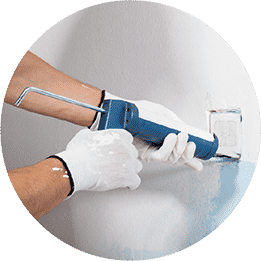
- Construction Chemicals — Bedding mortars, grouts, and frame-setting compounds
FAQ: Common Questions from Contractors & Site Supervisors
What is the difference between D400 and B125 manhole covers?
D400 and B125 refer to load classes defined in EN 124. A B125-rated cover is tested to withstand 125 kN and is suitable for pedestrian footways, car parks, and areas with light vehicle access only. A D400-rated cover is tested to 400 kN and is required for any cover installed in a public road carriageway or area subject to regular vehicle traffic. In the UAE, D400 is the default specification for all road-adjacent drainage and sewer manhole covers as required by Dubai Municipality and Abu Dhabi DMT infrastructure standards. Using a B125 cover in a trafficked road position is a compliance failure and will result in rapid cover damage.
Cast iron vs composite manhole covers — which lasts longer in UAE conditions?
Both can deliver long service life when correctly specified. Grey cast iron covers have a proven track record of 20–30 years in road applications, but are susceptible to surface corrosion in coastal UAE environments without protective coating. Composite (GRP or polymer concrete) covers are inherently corrosion-resistant and perform well in coastal areas like Dubai Marina and Abu Dhabi Corniche. However, composite covers must be specified with a heat deflection temperature above 100°C for outdoor UAE road surfaces where asphalt surface temperatures can exceed 70°C in summer. For heavy-traffic roads, ductile iron generally offers the best combination of durability and longevity. For pedestrian and landscaped areas in coastal projects, composite is a low-maintenance choice.
What are standard manhole cover prices in UAE in 2026?
Prices vary by material, size, and load class. As a general market guide for 2026: a 600mm round grey cast iron D400 cover and frame typically ranges from AED 180 to AED 380 per set. Composite 600mm D400 units range from AED 220 to AED 450. Ductile iron D600 covers in 600mm start from approximately AED 400 and can exceed AED 800 for 900mm units. Bulk project pricing from suppliers typically offers 10–20% reductions on orders above 50 units. Always request unit and frame prices separately, as some suppliers quote cover-only pricing that excludes the frame.
Do manhole covers in UAE need to comply with EN 124?
Yes. EN 124:2015 is the internationally recognised standard for manhole and gully covers and is referenced in Dubai Municipality infrastructure specifications and Abu Dhabi DMT project requirements. Any cover installed in a public road, footway, or municipal drainage system must carry EN 124 load class certification with third-party test documentation. Covers without EN 124 certification will not pass municipality inspection and cannot be used in approved infrastructure works. Always request the EN 124 test certificate and load class marking from your supplier before purchase.
Can I use the same manhole cover for sewer, stormwater, and utility applications?
Not always. While the physical cover dimensions and load class may be the same, the frame configuration, sealing, and ventilation requirements differ. Sewer manhole covers often require ventilated designs to allow gas escape and prevent pressure build-up. Stormwater covers are typically non-sealed to allow surface water entry. Utility (electrical, telecom) covers generally require gasketed, dust-sealed, and sometimes lockable designs to protect internal equipment. Always specify cover type by application — not just by size and load class. Consult the project drainage engineer or MEP consultant to confirm the correct cover type for each chamber.