















By Khalid Al Mansoori, Senior Procurement Specialist — 12+ years in UAE construction supply chain | Published: April 2026
Having specified and sourced waterproofing systems for podium decks in Dubai Marina, basement tanks in Abu Dhabi, and rooftop terraces across Business Bay, I've watched firsthand what happens when the wrong system meets UAE summer conditions — bubbling membranes by July, delaminated slurries after the first humidity spike, and torch-on sheets that crack before the defects liability period ends. This guide is written for contractors, engineers, and procurement teams who need to get the selection right the first time.
Why Waterproofing Fails Faster in the UAE Than Anywhere Else
Extreme UV and Thermal Cycling: The #1 Enemy of Rooftop Membranes
Rooftop surface temperatures in the UAE regularly exceed 80°C in summer [Dubai Municipality Technical Guidelines for Buildings]. Coupled with a daily thermal swing of 20–30°C between night and day, exposed membranes undergo constant expansion and contraction. Elastomeric membranes that lack sufficient elongation at break — typically below 300% [ASTM D412] — crack within one or two seasons. This is why generic acrylic coatings sold for mild European climates routinely fail on UAE flat roofs within 18 months.
How Coastal Humidity and Salt Air Degrade Waterproofing Bonds
Dubai, Abu Dhabi, Sharjah, and Ras Al Khaimah are all coastal or near-coastal environments. Relative humidity peaks between 85–95% during winter months and during the Shamal season. Salt-laden air accelerates bond failure between bituminous membranes and concrete substrates, particularly where priming is inadequate. For below-grade and podium applications within 500m of the coastline, specifiers consistently push toward cementitious or crystalline systems that form an integral bond with the concrete rather than relying on adhesion.
Fine Desert Dust and Its Impact on Adhesion and Joint Integrity
Haboob events deposit micron-level silica dust across exposed surfaces within hours. Any membrane applied over a dusty substrate — even a substrate that looks clean — will delaminate under hydrostatic pressure. Surface preparation discipline is non-negotiable on UAE sites. This point is covered in full in the application section below.
Types of Waterproofing Systems Used in UAE Construction
UAE projects deploy five core waterproofing technologies. Each has a specific performance envelope; none is universally applicable across all areas.
Bituminous Sheet Membranes (Torch-On and Self-Adhesive)
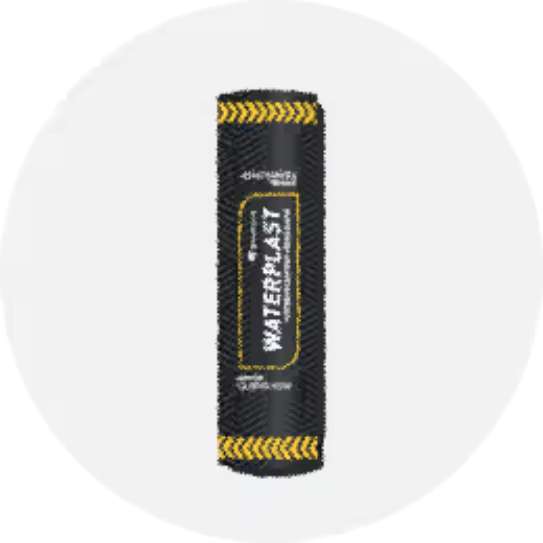
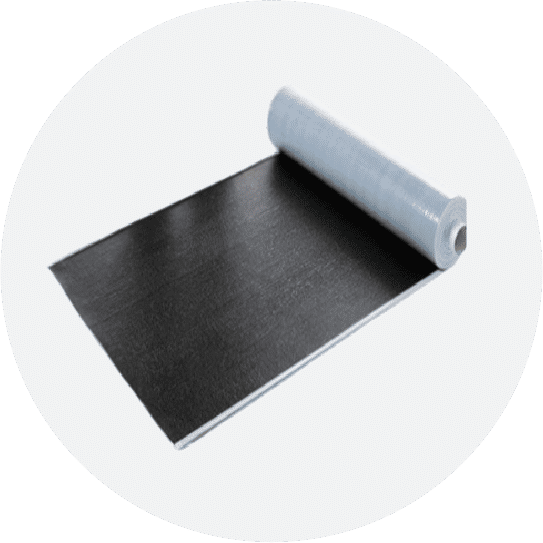
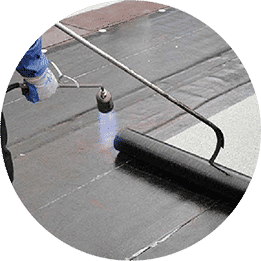
APP- and SBS-modified bitumen sheets remain the workhorse of UAE roof waterproofing. APP (Atactic Polypropylene) modification improves UV and heat resistance, making it the preferred chemistry for UAE exposed roofs [EN 13707]. SBS (Styrene-Butadiene-Styrene) modification adds elasticity, better suited for areas with movement. Torch-on application demands trained operatives and fire-safe site conditions — a significant consideration on occupied high-rise towers. Self-adhesive sheets eliminate the torch hazard and are increasingly specified for internal waterproofing on occupied floors. Browse the full range of torch-on membranes and self-adhesive membranes available in the UAE market.
Liquid Applied Polyurethane (PU) Waterproofing Coatings
Single- and two-component polyurethane membranes are the go-to solution for UAE balconies, terraces, wet rooms, and complex roof geometries where sheet membranes cannot easily negotiate detailing around drains, pipes, and upstands. PU systems typically achieve elongation at break of 400–600% [ASTM D412], accommodating the structural movement common in high-rise concrete frames. They are applied cold, which is a significant advantage during UAE summer when hot-work permits are restricted. The liquid waterproofing membrane category covers both PU and hybrid systems available from major UAE suppliers.
Cementitious Waterproofing Slurries and Renders
Two-component cementitious waterproofing — a blend of cement, graded aggregates, and polymer — bonds chemically with concrete and masonry. It tolerates negative-side water pressure, making it reliable for water tanks, swimming pool shells, lift pits, and basement walls. It does not crack under UAE thermal movement when applied at correct thickness (typically 2–3 mm in two coats). It is also NSF 61-compliant in its potable-water grades [NSF International], which is a mandatory requirement for drinking water tanks in UAE buildings. Explore the cementitious waterproofing range for tank and basement applications.
Crystalline Waterproofing Admixtures and Coatings
Crystalline systems — either added as an admixture to fresh concrete or applied as a surface slurry — react with water and cement particles to form insoluble crystals that block capillary pores [ACI 212.3R]. The advantage in UAE is self-sealing behaviour: if a hairline crack forms under thermal movement, the crystals regrow in the presence of moisture. This is particularly valued for basement tanking, raft foundations, and water-retaining structures where access for future repair is impossible. Sika (Sika® WT-200 P), Fosroc (Nitoproof Crystalline), and BASF (MasterLife series) are the established crystalline suppliers in the UAE; Xypex and Penetron also have regional distribution.
EPDM and TPO Waterproofing Membranes
EPDM (Ethylene Propylene Diene Monomer) and TPO (Thermoplastic Polyolefin) single-ply membranes have a smaller but growing market share in UAE for large commercial roof projects. They are typically mechanically fastened or fully adhered, with heat-welded seams (TPO) or chemical/tape-bonded seams (EPDM). Their primary advantage is long service life — 20–30 years when properly installed — and light reflectance values above 0.65 that reduce building cooling loads [ASHRAE 90.1-2022]. However, they require skilled installation teams and are sensitive to UAE dust contamination during seaming.
Acrylic Waterproofing Coatings
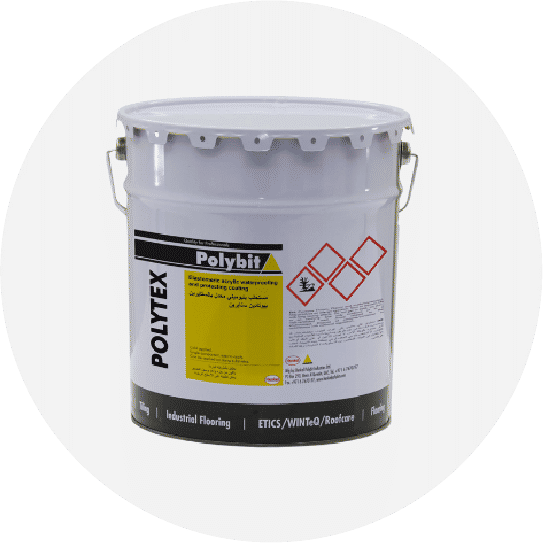
Water-based acrylic coatings are cost-effective for low-movement, above-grade, non-ponding applications such as parapet walls, tiled terrace overlays, and light-duty balconies. They are not suitable as the primary waterproofing layer on UAE flat roofs under direct ponding or sustained UV. Primarily used as maintenance top-coats or as part of a hybrid system over existing membranes. See the acrylic waterproofing range for maintenance-grade options.
Choosing the Right Waterproofing System by Application Area
| Application Area | Recommended System | Key Requirement |
|---|---|---|
| Flat / inverted roof (exposed) | APP torch-on + protection board, or PU liquid with UV-stable topcoat | UV resistance, elongation ≥300% |
| Podium deck / landscaped terrace | Root-resistant bitumen membrane + drainage composite | Root barrier certification [FLL guidelines] |
| Bathroom / wet room / kitchen | 2-component PU or cementitious slurry | Flexibility, negative-side resistance, VOC compliance |
| Swimming pool / water tank | 2-component cementitious (potable-water grade) | NSF 61 or equivalent approval |
| Basement / lift pit / raft slab | Crystalline admixture + cementitious membrane, or bentonite panels | Self-sealing, negative-side hydrostatic pressure |
| Retaining walls (below grade) | SBS torch-on + protection membrane, or crystalline coating | Hydrostatic resistance, soil compatibility |
| Balconies (occupied building) | 1K or 2K PU liquid membrane | No hot-work, fast return to service |
Top Waterproofing Brands Available in the UAE Market
The UAE waterproofing market is well-supplied. Below is an honest brand comparison covering all major players — not just those with the biggest marketing budgets.
| Brand | Origin | Strongest System Type | Key UAE Product Lines | Typical Project Type |
|---|---|---|---|---|
| Fosroc | UK / Global | Cementitious, crystalline, PU | Nitoproof, Proofex, Renderoc | Infrastructure, high-rise, water tanks |
| Dr. Fixit | India (Pidilite) | PU liquid, cementitious, acrylic | Dr. Fixit Pidiproof, Roofseal, Fastflex | Residential, villas, wet areas |
| Mapei | Italy / Global | PU, cementitious, epoxy | Mapelastic, Purtop, Aquaflex | Fit-out, commercial, pools |
| Henkel Polybit | UAE (local manufacture) | Bituminous sheet membranes | Polyflex APP/SBS, Polyguard | Roofing, podium, infrastructure |
| Awazel | UAE / KSA | Bituminous membranes, HDPE | Awazel APP/SBS torch-on, self-adhesive sheets | Roofing, below grade |
| Dermabit | UAE | Bituminous membranes | Dermabit APP, SBS modified sheets | Roofing, podium |
| Saint-Gobain Weber | France / Global | Cementitious, liquid applied | Webertec flex, Weberdry elastic | Wet areas, facades, pools |
| Bostik | France / Global | PU sealants, liquid membranes | Bostik Cempatch, Hydroment | Joints, detail work, wet rooms |
| XCHEM | UAE | Cementitious, crystalline | XCHEM Crystalline, XCHEM Flex | Tanks, basements, infrastructure |
| Sika | Switzerland / Global | Full range — PU, crystalline, bitumen | Sikalastic, SikaTop, Sika WT series | All sectors — landmark projects |
| BASF (Master Builders) | Germany / Global | Crystalline admixtures, PU | MasterLife, MasterSeal | Infrastructure, marine, water structures |
| Tremco | USA / Global | Sheet membranes, sealants | TREMproof, Paraseal bentonite | Below grade, commercial roofing |
Dr. Fixit vs Fosroc vs Sika — Quick Comparison for UAE Roof Projects:
- Dr. Fixit: Strong price-to-performance ratio for villa and low-rise residential. Wide availability across UAE hardware and trade channels. Best suited for PU liquid membranes and wet area cementitious systems.
- Fosroc: Preferred on engineered infrastructure and high-rise projects with consultant-specified systems. Strong technical support and Qatar/Dubai municipality-accepted product files.
- Sika: Full system warranty offering, often required on developer-backed projects (Emaar, Aldar, Meraas). Premium priced but delivers documented system performance data.
Key Performance Standards and Compliance for UAE Projects
Dubai Municipality's Technical Guidelines for Waterproofing (under the Dubai Building Code) reference international standards including EN 13707 for bituminous sheets, ASTM D6134 for self-adhesive membranes, and ASTM C836 for high-solids sealants. For potable water contact surfaces, the relevant compliance path is typically NSF/ANSI 61 [NSF International] or BS 6920 [BSI Group]. ESMA (Emirates Authority for Standardisation and Metrology) maintains UAE-specific conformity requirements for construction products sold in the country — contractors should verify that products carry the required conformity marks before specifying on public-sector or municipality-supervised projects.
For authoritative regulatory guidance, refer directly to the Emirates Authority for Standardisation and Metrology (ESMA) and the Dubai Municipality Building Code portal.
Application Best Practices for UAE Site Conditions
Surface Preparation: The Step Most Contractors Get Wrong
No waterproofing system compensates for a poorly prepared substrate. On UAE sites, the preparation sequence for concrete roofs is: mechanical grinding or scarifying to remove laitance → high-pressure air blowing to remove dust → wet vacuum or clean water wash → drying to surface-dry condition. In practice, the dust removal step is skipped or rushed on the majority of UAE sites, and it is the single biggest driver of premature delamination.
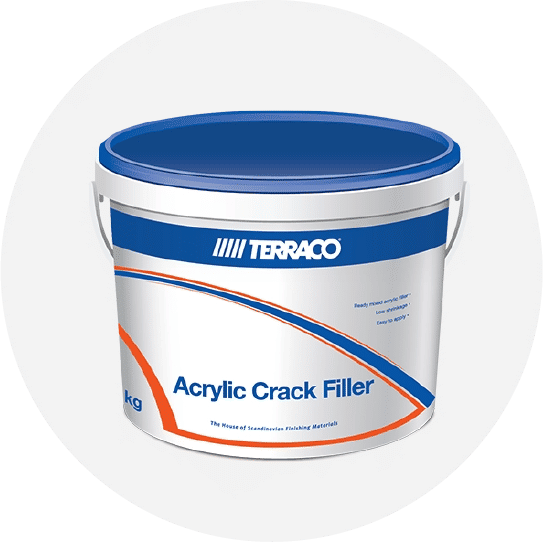
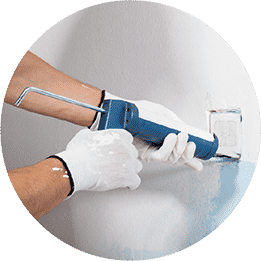
Cracks wider than 0.3mm must be chased out, primed, and filled with a flexible sealant or crack filler before membrane application. The crack filler range covers appropriate products for UAE concrete substrates.
Temperature Windows for Application in UAE Summer
Substrate temperature must be below 50°C for most PU and cementitious systems — check individual product datasheets. In UAE summer (June–September), substrate temperatures above 70°C are common by 10:00 AM. Practical application windows are: before 07:00 AM or after 05:00 PM, or on shaded/covered areas only. Torch-on application requires additional fire-watch protocols when ambient temperature exceeds 45°C and hot-work permit conditions become more stringent under UAE civil defence regulations.
Primer Selection and Coverage Rates
Bitumen-based primers (solvent or water-borne) are mandatory under torch-on and self-adhesive sheet systems. Epoxy primers are used under PU systems on non-absorbent or contaminated substrates. Coverage rates on UAE concrete (which tends to be porous due to aggregate composition) often run 20–30% below manufacturer nominal rates — budget accordingly. Proper priming products are available through the primers and sealers category.
Detail Work: Upstands, Drains, Penetrations, and Expansion Joints
Over 70% of roof waterproofing failures in UAE audit studies originate at details — not at the field membrane. Upstand height must be minimum 150mm above finished floor level per Dubai Building Code. All pipe penetrations require pre-formed waterproof collars or a liquid membrane reinforced with polyester fleece. Expansion joints require pre-formed movement joint covers; never bridge an expansion joint with a rigid membrane. For joint detailing, bitumen tapes and compatible sealants are essential ancillary products.
Inspection, Testing, and Flood Testing Before Handover
Flood testing — ponding water to a depth of 50mm for 24–48 hours — is the standard acceptance test for UAE roof waterproofing before screed or protection board is installed. Any seepage visible on the soffit constitutes a failure. Electronic leak detection (ELD) methods using vector mapping are increasingly used on high-value projects as a non-destructive alternative.
Estimating Waterproofing Costs in the UAE (AED Per m²)
The following are indicative 2026 market rates for supplied-and-applied waterproofing in the UAE. Rates vary by contractor, project scale, access conditions, and material specification.
| System | Material Cost (AED/m²) | Applied Cost incl. Labour (AED/m²) | Typical Warranty Period |
|---|---|---|---|
| Bituminous torch-on (2-layer APP) | 18–32 | 45–75 | 5–10 years |
| Self-adhesive bitumen membrane | 22–38 | 50–80 | 5–10 years |
| PU liquid membrane (2-coat) | 25–50 | 60–100 | 5–10 years |
| Cementitious 2-component slurry | 15–28 | 40–65 | 5 years (structural) |
| Crystalline coating (surface applied) | 30–55 | 65–110 | Lifetime (integral to concrete) |
| EPDM / TPO single-ply (large roofs) | 55–90 | 120–180 | 15–25 years |
Note: These are indicative ranges only. Obtain contractor quotations for project-specific pricing. Rates for high-rise towers with restricted access will be 25–40% higher than ground-level work.
Common Waterproofing Failures on UAE Sites — and How to Prevent Them
Ponding Water Due to Inadequate Drainage Design
UAE flat roofs are required to achieve minimum 1:80 falls to outlets per Dubai Building Code. In practice, many roofs pond water because the screed is laid flat. Waterproofing membranes rated for intermittent water exposure are not designed for permanent ponding. If drainage cannot be improved, specify a system with confirmed hydrostatic pressure resistance — cementitious or crystalline, not standard PU acrylic.
Delamination from Poor Surface Preparation or Wrong Primer
Using a bitumen primer under a PU system, or a water-based primer on a damp substrate, guarantees adhesion failure within one wet season. Always match primer chemistry to membrane chemistry — verify with the manufacturer's system datasheet, not just the product TDS.
Joint and Detail Failure at Penetrations and Upstands
Pre-formed pipe collars, corner fillets, and reinforcing strips at all change-of-plane details are not optional extras — they are mandatory elements of any warranted system. A compatible sealant at all terminations is equally critical to prevent water tracking behind the membrane edge.
UV Degradation and Thermal Cracking of Exposed Membranes
Any membrane left exposed to UAE UV without a UV-stable topcoat or protection layer will degrade. APP-modified bitumen has better UV resistance than SBS, but even APP requires a mineral-granule surface or a reflective aluminium foil facing for long-term exposed installation. PU membranes require a UV-stable aliphatic topcoat — polyester-based PU yellows and degrades rapidly under UAE solar intensity.
Where to Source Waterproofing Products in the UAE
FEPY supplies the full range of waterproofing systems for UAE contractors, engineers, and fit-out teams — from bituminous membranes through liquid PU coatings to crystalline admixtures. All major brands stocked are available for delivery across Dubai, Abu Dhabi, Sharjah, and the Northern Emirates.
Browse by product category:
- Full waterproofing product range
- Bituminous membrane products
- Construction chemicals and admixtures
- Protection membranes and drainage composites
Frequently Asked Questions About Waterproofing in the UAE
What is the best waterproofing membrane for flat roofs in UAE?
For UAE flat roofs, APP-modified torch-on bitumen membrane (2-layer system) or a 2-component polyurethane liquid membrane with a UV-stable aliphatic topcoat are the most reliable choices. The selection depends on roof geometry, access for hot-works, and whether the membrane will be exposed or protected by screed/tiles. PU liquid systems are preferred for complex geometries; torch-on bitumen suits large, simple roof planes on new builds.
How long does waterproofing last in UAE heat?
A properly specified and applied waterproofing system in UAE conditions should achieve 10–15 years service life for bituminous systems with protection layers, and 5–10 years for exposed PU liquid membranes (subject to UV topcoat maintenance). EPDM/TPO single-ply systems can reach 20+ years. Poorly applied or underspecified systems commonly fail within 2–3 UAE summers due to UV degradation and thermal cycling stress.
Is cementitious waterproofing suitable for water tanks in UAE?
Yes — 2-component flexible cementitious waterproofing is the standard system for potable water tanks, swimming pools, and irrigation tanks in UAE. Ensure the product carries NSF/ANSI 61 or WRAS approval for potable water contact. It bonds integrally with concrete, resists negative-side pressure, and is not affected by UAE humidity or chlorinated water.
What is crystalline waterproofing and when should I use it in UAE projects?
Crystalline waterproofing uses reactive chemicals that form insoluble crystals within concrete pores and hairline cracks when exposed to moisture. In UAE, it is most valuable for basement raft slabs, pile caps, lift pits, and water-retaining structures where future access for repair is impossible. Its self-sealing property is particularly useful given the thermal movement cracking that occurs in UAE concrete structures. It can be applied as a surface slurry coat or added as an admixture to fresh concrete during batching.
What does waterproofing cost per m² in UAE?
Indicative 2026 rates for supplied-and-applied waterproofing in UAE range from AED 40–75/m² for standard bitumen torch-on systems, AED 60–100/m² for PU liquid membranes, and AED 120–180/m² for EPDM/TPO single-ply on large commercial roofs. Rates increase by 25–40% for high-rise or restricted-access locations. Always obtain project-specific quotations — these figures are market benchmarks, not fixed prices.

