
















Author: Khalid Al Mansoori, Senior Procurement Specialist — 12+ years in UAE construction supply chain | Published: April 2026 | Updated: April 2026
Having sourced construction adhesives and sealants for fit-out projects across Dubai Marina, Business Bay, and Abu Dhabi's commercial corridors, I've seen firsthand how the wrong product spec leads to debonding, cracking, or full joint failure within a single UAE summer. Construction adhesives and sealants UAE procurement is not a commodity decision — it is a technical one with real cost consequences on-site.
This guide covers every major product type used on UAE job sites in 2026: silicone sealants (sanitary vs. neutral cure), polyurethane sealants, PU foam, epoxy adhesives, contact adhesives, tile adhesives, and MS polymer hybrids. You'll find cure times, substrate compatibility, brand comparisons, and a price guide in AED — all calibrated to UAE site conditions.
Why This Matters for UAE Job Sites
UAE construction environments push adhesives and sealants to their performance limits daily. Ambient temperatures routinely exceed 45°C between May and September, with substrate surface temperatures on south-facing walls and rooftops reaching 70°C or above. Coastal zones in Dubai, Sharjah, Abu Dhabi, and Ajman add salt-laden humidity that accelerates adhesive bond degradation and silicone chalking. Fine desert dust infiltrates joints before cure is complete if application timing is mismanaged. On high-rise towers with curtain wall systems, the wrong sealant chemistry allows water ingress that damages interior fit-out worth multiples of the sealant cost. MEP teams working on penetrations through fire-rated walls need sealants that meet specific intumescent standards — not just anything that fills a gap. Getting the product right at specification stage saves significant rework cost downstream.
Types & Categories of Construction Adhesives & Sealants
General Purpose Silicone Sealant — Wet Areas and Glazing
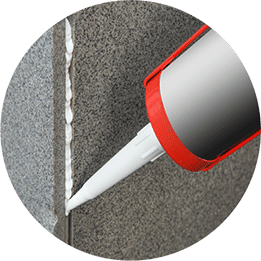
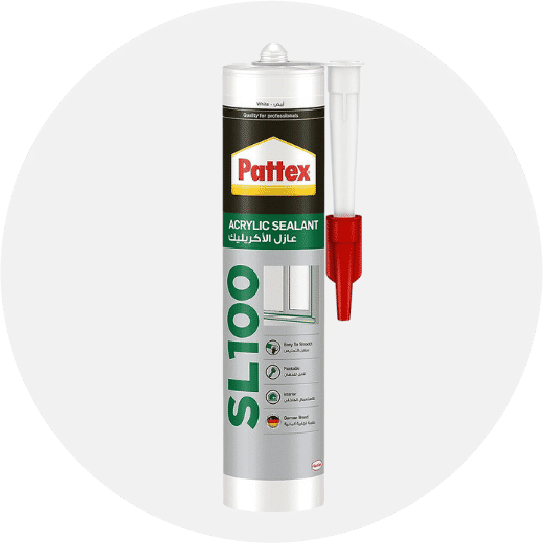
Silicone sealants are the most widely used sealant type on UAE sites. They maintain flexibility from -40°C to 200°C+ and resist UV degradation, making them suitable for glazing, wet area sanitary joints, window perimeters, and aluminum curtain wall framing. Sanitary-grade silicones contain antifungal additives critical for UAE bathrooms where humidity combined with heat accelerates mould growth. Standard 280ml cartridges cover approximately 5–7 linear metres at a 6mm bead. Skin time in UAE summer heat can drop to as little as 5–10 minutes — applicators must tool the joint immediately after gun application. Full cure typically reaches 24–72 hours depending on joint depth and ventilation [manufacturer data, Dow Corning / Momentive product datasheets].
Structural Silicone Sealant — Curtain Walls and Facades
Structural silicones are two-part or high-modulus one-part formulations used to bond glass and aluminum panels to curtain wall framing without mechanical fasteners. On UAE high-rise projects, these products must meet ASTM C1184 structural silicone glazing standards and carry independent test certification. They differ from standard silicone in tensile adhesion and elongation — critical where thermal expansion of aluminum framing in UAE heat creates significant cyclic movement. Always specify neutral cure structural silicone on metal substrates — acetoxy types release acetic acid during cure that corrodes aluminum and galvanized steel.
Acetoxy vs. Neutral Cure: Corrosion Risk on Metal Substrates
Acetoxy cure silicones smell of vinegar during cure — the acetic acid byproduct corrodes copper, brass, and galvanized surfaces. On UAE MEP projects with copper pipework or galvanized ducting, this causes visible corrosion within weeks. Neutral cure silicones — oxime, alkoxy, or amine cure systems — are odourless and safe on all metal, stone, and mirror substrates. For any application on metal, natural stone, or where off-gassing is a concern in occupied buildings, always specify neutral cure. The price premium is typically 20–30% but the liability avoidance is significant.
Polyurethane Sealant — Movement Joints and External Facades
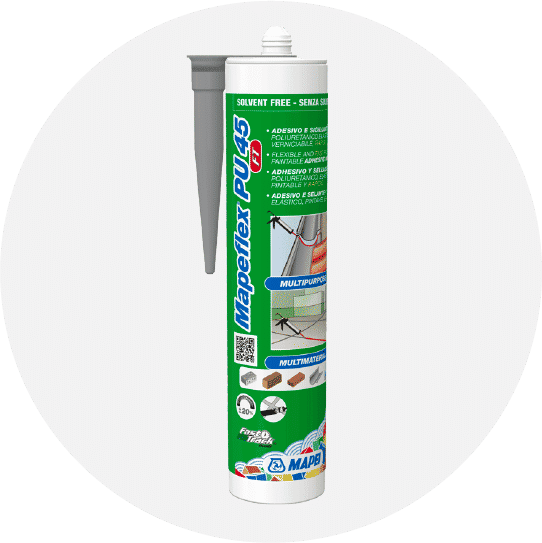
Polyurethane (PU) sealants outperform silicone in applications requiring paintability, abrasion resistance, and compatibility with porous substrates such as concrete and masonry. On UAE external facades, expansion joints in precast panels, and horizontal traffic-bearing joints in parking structures, PU sealants handle the ±25% joint movement typical of thermal cycling in this climate. They must be primed on concrete and masonry surfaces — unprimed PU sealant on UAE concrete will delaminate within one dry season. PU sealant products from Sika (Sikaflex range) and Fosroc (Thioflex) are widely specified on UAE commercial projects.
PU Foam — Windows, Doors and MEP Penetrations
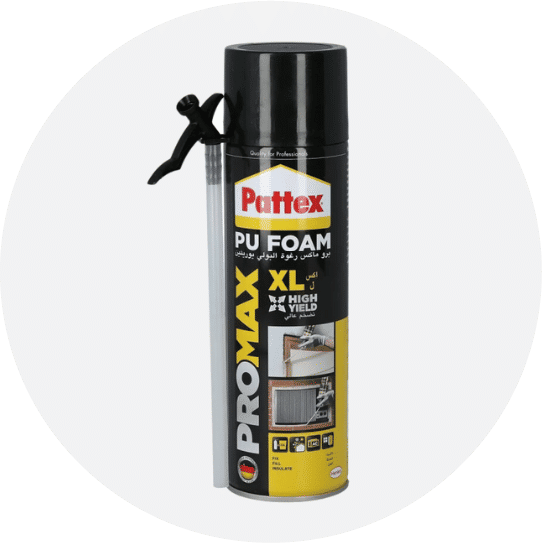
Polyurethane expanding foam fills irregular voids around window and door frames, MEP pipe penetrations, and conduit entries through masonry walls. In UAE construction, PU foam is used extensively in villa window installations and apartment block MEP sleeves. One 750ml can expands to approximately 40–60 litres of cured foam depending on substrate moisture [manufacturer data]. Critical UAE note: exposed PU foam degrades rapidly under direct UV — it must be covered within 48–72 hours with render, sealant, or paint. PU foam stored in site huts during UAE summer must be kept below 50°C to prevent premature pressurisation and can failure.
Epoxy Adhesives — Structural Bonding for Concrete, Steel and Stone
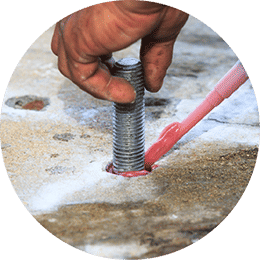
Epoxy adhesives are two-component systems (resin + hardener) that cure to extremely high compressive and tensile strengths — typically 50–80 MPa bond strength on concrete [IEC/manufacturer datasheet values]. On UAE sites, epoxies are used for anchoring rebar into existing concrete, bonding marble and granite cladding, repairing structural cracks in columns and slabs, and installing anchor bolts. Single-component epoxy systems are rare in construction — virtually all structural applications use 2-part cartridges dispensed through a static mixing nozzle. In UAE summer heat above 35°C, epoxy pot life shortens dramatically — a product with a 30-minute pot life at 23°C may have only 10–12 minutes at 40°C ambient [manufacturer technical data]. Mix only what you can apply in a single working session.
Contact Adhesives — Laminates, Rubber and Carpets
Solvent-based and water-based contact adhesives are used for bonding laminates to MDF, rubber flooring, carpet tiles, and decorative veneers on fit-out projects. Both surfaces are coated, allowed to flash off (typically 5–15 minutes), then pressed together for an instant bond. In UAE fit-out, solvent-based contact adhesives dominate for heat resistance — water-based versions can soften in sustained heat above 50°C. Ensure adequate ventilation as solvent vapour concentrations in enclosed fit-out spaces can reach hazardous levels quickly in the UAE's sealed, air-conditioned interiors.
Tile Adhesives — Indoor and Outdoor UAE Applications
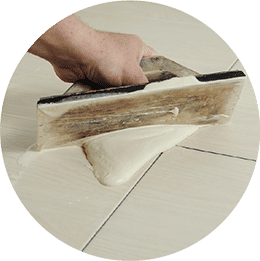
Cementitious tile adhesives are classified by EN 12004 into C1 (normal) and C2 (improved) categories, with additional S1/S2 designations for flexibility. On UAE external terraces, pool surrounds, and building facades where thermal cycling is severe, C2S1 or C2S2 flexible adhesives are mandatory — standard C1 adhesives crack and debond within one summer season outdoors. Porcelain tiles larger than 60×60cm on UAE external facades require a C2TE (extended open time, reduced slip) adhesive to allow adjustment before set. Mapei and Saint-Gobain Weber are the dominant specifications on UAE tiling projects at commercial and residential scale.
MS Polymer Adhesive-Sealants — The Hybrid Solution
Modified Silane (MS) polymer products combine the flexibility of silicone with the paintability and substrate adhesion of polyurethane — without isocyanates or solvents. On UAE fit-out projects bonding skirting, architraves, access panels, and interior cladding panels, MS polymers provide fast grab, are sandable and paintable within hours, and remain flexible in temperature cycling. They also work as sealants on movement joints where a paintable finish is required. MS polymers have largely replaced solvent-based grab adhesives in interior applications where VOC limits and indoor air quality are specified by main contractors.
Cyanoacrylate — Limited Uses on Site
Super glue (cyanoacrylate) has limited structural use on construction sites but is genuinely useful for instant bonding of small components, trim repairs, and temporary fixture during curing of other adhesives. In UAE heat, cyanoacrylate cure is faster than at temperate climates — surface moisture from ambient humidity accelerates the reaction. Shelf life drops significantly if stored in hot site huts — buy in smaller quantities and keep in a cool, dry location.
How to Choose the Right Adhesive or Sealant
Selection starts with four questions: What substrate? Is there joint movement? What is the exposure condition? Does it need to be painted or left exposed? For wet areas with no movement — sanitary silicone. For external facades with thermal cycling — neutral cure silicone or PU sealant with backer rod. For structural anchoring into concrete — two-part epoxy. For tile installation outdoors — C2S1 flexible cementitious adhesive. For window frame voids — PU foam covered within 48 hours. For interior panel bonding — MS polymer. Refer to the Quick Selector Guide table below for a condensed decision reference. Always check the manufacturer's datasheet for the specific substrate combination — no single product works on all surfaces.
For MEP teams sealing pipe and cable penetrations through fire-rated walls and floors, a fire-rated intumescent sealant or PU foam is required — standard silicone and foam provide zero fire resistance. Dubai Civil Defence and UAE building code require tested and certified firestopping at all service penetrations [Dubai Municipality building regulations]. Match the tested system to the wall or floor construction rating.
Best Brands in the UAE Adhesives & Sealants Market
| Brand | Best Known For | Typical User | Strength |
|---|---|---|---|
| Bostik | Silicone sealants, tile adhesives, PU foam | Contractors, fit-out teams | Wide product range, strong UAE distribution |
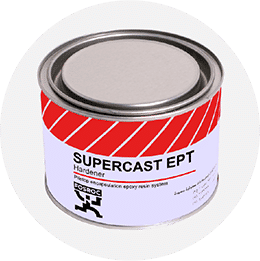
| Fosroc | Epoxy adhesives, joint sealants, crack fillers | Structural engineers, MEP | Proven in UAE infrastructure projects |
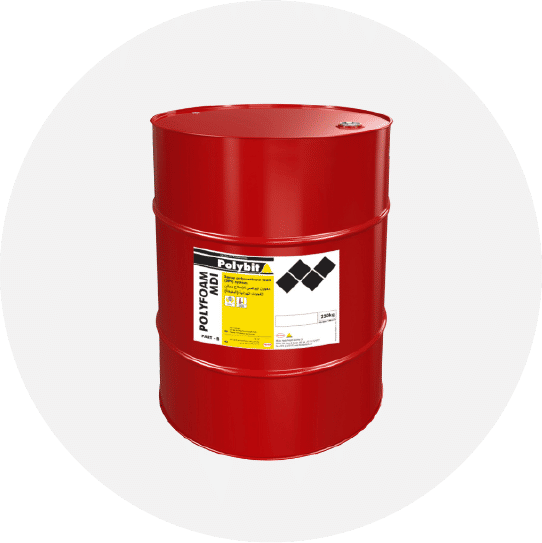
| Henkel Polybit | Waterproofing, construction adhesives | Waterproofing contractors | Strong UAE market presence, local support |
| Dr. Fixit | Waterproofing, crack fillers, sealants | Villas, residential contractors | Cost-effective, widely available in UAE |
| Asmaco | Silicone sealants, adhesives | General contractors, DIY | Value pricing, broad UAE retail availability |
| Wurth | MS polymer, silicone, epoxy adhesives | MEP, automotive, fit-out | Premium quality, professional trade focus |
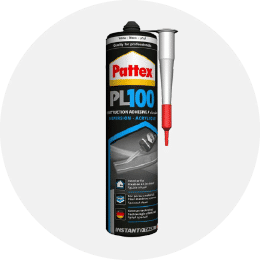
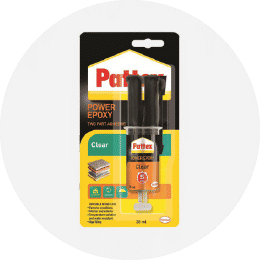
| Pattex | Contact adhesives, super glues, grab adhesives | Fit-out, joinery, DIY | Henkel brand, reliable formulations |
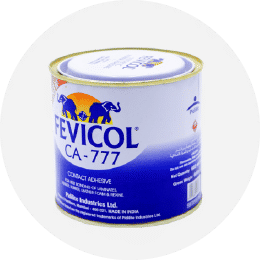
| Fevicol | Wood glues, construction adhesives | Carpenters, joinery contractors | Dominant in wood bonding across UAE |
| M Seal | Epoxy putty, pipe repair compounds | Plumbers, MEP maintenance teams | Fast emergency pipe repair in UAE sites |
Brands without a FEPY brand page listed above (Sika, Dow Corning/Dowsil, Tremco) are available through their own UAE distribution networks. The brands with FEPY links are available for direct procurement through fepy.com with UAE delivery.
Price Guide: Construction Adhesives & Sealants in UAE (AED)
| Product Type | Entry Level (AED) | Professional Grade (AED) | Premium / Specialist (AED) |
|---|---|---|---|
| Silicone Sealant (280ml cartridge) | 8–15 | 18–35 | 40–90 (structural/structural glazing) |
| PU Sealant (600ml sausage) | 20–35 | 40–70 | 80–150 (movement joint rated) |
| PU Foam (750ml can) | 15–25 | 28–50 | 55–90 (fire-rated foam) |
| Epoxy Adhesive (2-part cartridge, 300ml) | 35–60 | 65–130 | 150–400 (structural anchor grade) |
| Tile Adhesive (20kg bag) | 25–40 | 45–80 | 85–160 (C2S2 flexible) |
| Contact Adhesive (1 litre) | 18–30 | 35–65 | 70–120 (heat-resistant grade) |
| MS Polymer Adhesive-Sealant (290ml) | 25–40 | 45–75 | 80–130 |
Budget tip: For high-volume site procurement, buy silicone and PU sealants in sausage format (600ml) rather than 280ml cartridges — cost per linear metre drops by 30–45% and waste is reduced. Factor a heavy-duty caulking gun and accessories into your tool procurement — a poor-quality gun causes uneven bead application and increases product waste significantly on large sealant programmes.
UAE Climate Effects on Adhesive and Sealant Performance
- Surface temperature vs. ambient temperature: South-facing masonry walls can exceed 70°C surface temperature in July/August — far above the stated maximum application temperature of most standard sealants (typically 40°C ambient). Apply sealants early morning (before 7am) or in shaded conditions.
- Shortened open time: Tile adhesive open time drops from 20–30 minutes at 23°C to as little as 8–12 minutes at 40°C ambient [EN 12004 classification data]. Use extended open-time (TE-rated) adhesives for large-format tiles outdoors.
- Accelerated PU foam expansion: Higher temperatures cause PU foam to expand more aggressively — overfill can distort window frames. Fill to 50% of void depth and allow expansion before trimming.
- Epoxy pot life reduction: At 40°C ambient, two-part epoxy pot life can be 30–50% shorter than at 23°C reference. Pre-chill components in a cool box on outdoor sites during summer.
- UV degradation of exposed sealants: Acetoxy silicone and standard PU sealants chalk and crack under UAE UV within 2–3 years if not UV-stabilised. Specify UV-resistant or UV-stabilised formulations for any externally exposed joint.
- Salt air bond degradation: Coastal sites (Palm Jumeirah, Corniche areas, Saadiyat Island) require sealants with specific salt resistance. Standard silicones perform adequately; some PU sealants require additional primer in coastal zones.
- Dust contamination before cure: Fine desert dust settling on a wet sealant bead before tooling creates a weak skin. Tool joints within 2 minutes of application on windy days; use masking tape to protect joints during application.
- Storage temperature: Store adhesives and sealants below 30°C — site huts regularly reach 55–60°C internally. This degrades product viscosity, reduces shelf life, and causes premature curing in cartridges. Maintain a temperature-controlled store or use product within 48 hours of removal from cool storage.
Safety & Compliance
ESMA Certification
The Emirates Authority for Standardization and Metrology (ESMA) regulates construction chemical products sold in the UAE under UAE.S standards. Adhesives and sealants used in UAE construction projects — particularly on government, infrastructure, and main contractor projects — must comply with relevant UAE.S or adopted international standards (EN, ASTM, BS). Always request product conformity certificates and Safety Data Sheets (SDS) from suppliers. For current UAE product standards and conformity requirements, refer to the ESMA official website. Purchasing non-certified products risks project non-compliance and insurance voidance on completed works.
Dubai Municipality Standards
Dubai Municipality enforces building material standards through the Dubai Central Laboratory (DCL) and the Green Building Regulations. VOC (Volatile Organic Compound) limits apply to adhesives and sealants used in interior fit-out — solvent-based contact adhesives and some epoxy systems can exceed permitted VOC thresholds in enclosed spaces. Main contractors on Dubai projects increasingly mandate low-VOC or zero-VOC adhesives and sealants in occupied or partially occupied buildings. Fire-rated sealants for MEP penetrations must be tested and certified to BS EN 1366-3 or equivalent, and approval documentation must be available for Dubai Civil Defence inspection [Dubai Municipality — Building Regulations and Standards].
Personal protective equipment requirements when handling two-part epoxies and PU sealants: nitrile gloves minimum, safety glasses, and adequate respiratory protection if working in enclosed areas with poor ventilation. Isocyanate-containing PU products require specific respiratory protection [IEC/OSHA cross-reference]. Always read the product SDS before use and ensure your team is trained in chemical handling per UAE Labour Law requirements.
Where to Buy Construction Adhesives & Sealants in the UAE
FEPY stocks a comprehensive range of construction adhesives and sealants from the brands specified on UAE commercial and residential projects, with same-week delivery across Dubai, Sharjah, Abu Dhabi, and the Northern Emirates. Procurement teams can order in bulk with trade pricing — site quantity orders for tile adhesive, silicone sealant, and PU foam are fulfilled from local UAE stock, avoiding the lead times of direct import.
Unlike general hardware retail channels, FEPY's catalogue is organised by application and substrate — you can search by product type and find the right specification-grade product rather than a generic retail offering. Technical product datasheets and SDS documents are available on product pages for specification submittal to main contractors and consultants.
Browse the full range across these categories:
Maintenance Tips for Adhesive and Sealant Applications on UAE Sites
- Inspect silicone joints annually: UAE UV and thermal cycling cause silicone to harden and crack over 3–5 years. Check bathroom and window perimeter joints every 12 months and raked out and resealed before water ingress develops.
- Re-prime before resealing PU sealant joints: Old PU sealant must be fully removed and the substrate re-primed before new product is applied. Applying new PU over old PU without primer results in adhesion failure at the interface.
- Replace degraded PU foam around windows: UV-exposed PU foam that has turned orange/brown and crumbled should be fully excavated and replaced — do not simply apply new foam over degraded material.
- Check epoxy anchor performance after seismic or impact events: Epoxy-anchored rebar and anchor bolts in UAE infrastructure should be inspected for bond integrity after any significant vibration event. Core pull tests confirm in-situ bond strength.
- Clean sealant surfaces before inspection: Dust accumulation on facade sealant joints masks early chalking and cracking. Clean with water before visual inspection on high-rise rope access checks.
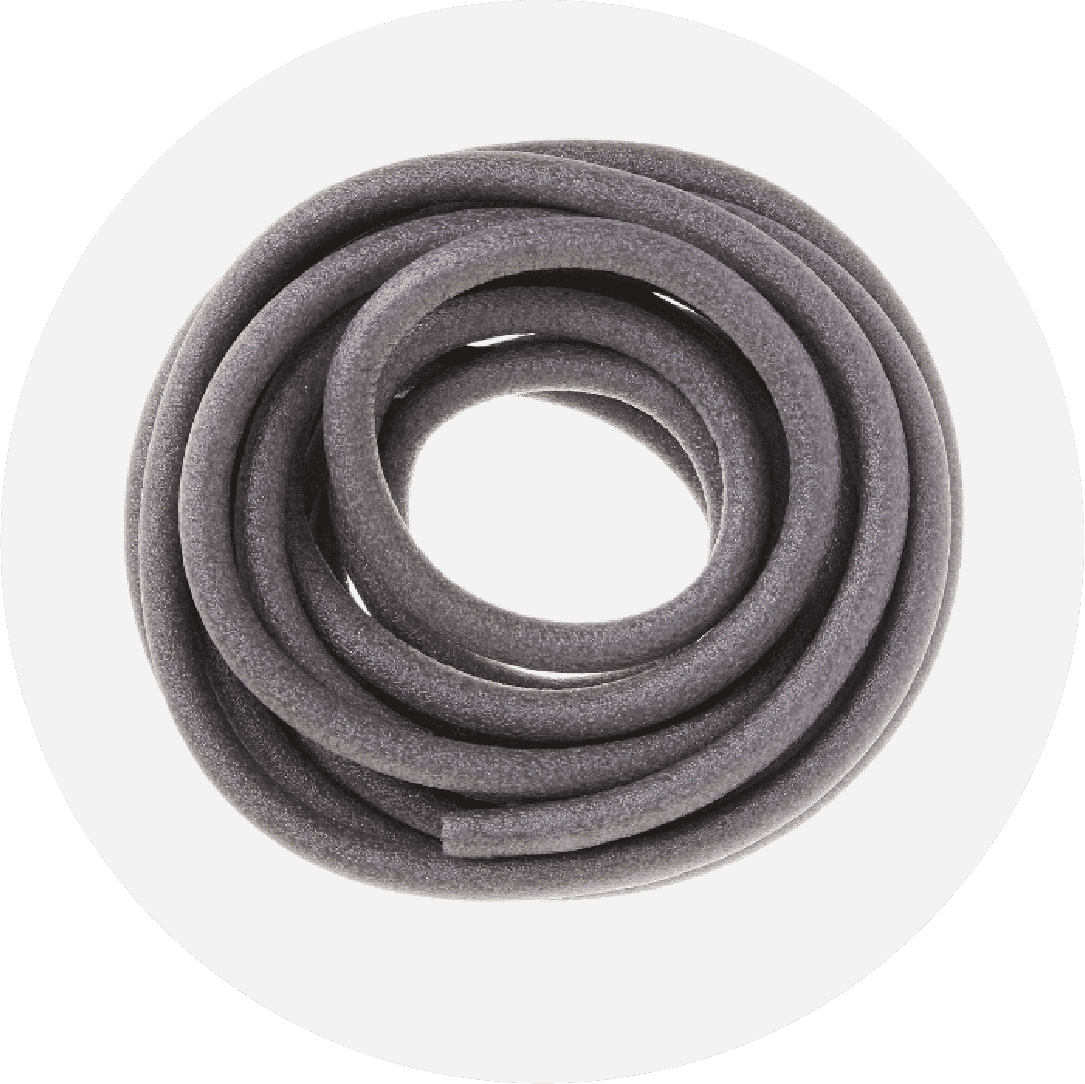
- Use backer rods in all deep joints: Sealant applied without a backer rod in joints deeper than 12mm is unsupported and cures with three-sided adhesion — a known failure mode in expansion joints. Backer rod forces two-sided adhesion and controls sealant depth.
- Rotate stock in site storage: First-in-first-out stock rotation is mandatory for sealants and adhesives in UAE heat. Check batch dates — silicone cartridges stored at 50°C+ degrade in months, not years.
- Apply tile adhesive to back of tile AND substrate (back buttering): For large-format tiles and all external applications in UAE, back-buttering ensures full coverage contact — critical where thermal movement would otherwise open voids and cause hollow bond failure.
Quick Selector Guide
| If You Need… | Recommended Type | Best Option | Typical User |
|---|---|---|---|
| Bathroom / wet area joint sealing | Sanitary silicone (neutral cure) | Antifungal silicone, 280ml cartridge | Plumbers, fit-out teams |
| Window and door frame sealing | Neutral cure silicone or PU foam + silicone topping | PU foam for gap fill, silicone for face seal | Façade contractors, fit-out |
| Curtain wall / structural glazing | Structural silicone (2-part or high-modulus) | Dow Corning 795 / Sika SG-20 | Glazing contractors |
| Expansion joints in concrete facades | PU sealant with backer rod | Sika Sikaflex-11FC or Fosroc Thioflex | Main contractors |
| Anchoring rebar / bolts into concrete | 2-part epoxy anchor adhesive | Fischer FIS V or Fosroc Lokfix | Structural contractors, MEP |
| Tile fixing — external terrace / UAE heat | Flexible cementitious tile adhesive C2S1 | Mapei Keraflex Maxi or Weber.col flex | Tiling contractors |
| Fire-rated MEP penetration sealing | Intumescent sealant or fire-rated PU foam | Hilti CP 606 / Tremco Fyre-Sil | MEP contractors |
| Interior panel / skirting bonding | MS polymer adhesive-sealant | Sika MultiSeal or Wurth MS adhesive | Fit-out teams |
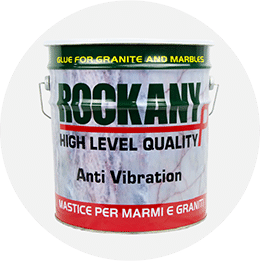
| Marble and granite bonding | White two-part epoxy or non-staining silicone | Fosroc Nitobond EP or Mapei Kerapoxy | Stone contractors, fit-out |
| Laminate and rubber flooring bonding | Contact adhesive (solvent or water-based) | Bostik Supergrip or Pattex contact adhesive | Fit-out, flooring contractors |
Common Mistakes When Buying and Using Adhesives & Sealants in UAE
- Using acetoxy silicone on metal or mirror: The acetic acid byproduct corrodes copper, aluminium, galvanized surfaces, and stains mirror edges within weeks. Always use neutral cure silicone on these substrates.
- Applying sealant to a wet or dusty joint: UAE fine dust and residual moisture from recent cleaning are the most common causes of sealant adhesion failure. Prime the substrate as per the manufacturer's datasheet — skipping primer on concrete or masonry with PU sealant guarantees early delamination.
- Not using a silicone gun for bulk sealant application: Squeezing cartridges by hand creates uneven bead pressure and wasted product. A ratchet or pneumatic gun pays for itself on the first job.
- Leaving PU foam exposed to UAE UV: Foam turns to powder under direct sunlight within weeks. Cover with render, paint, or sealant topping within 48 hours of application — without exception.
- Using standard tile adhesive outdoors: C1 non-flexible adhesive on UAE external terraces will hollow-bond and debond tiles within one thermal cycle season. Specify C2S1 minimum for any outdoor tile application.
- Mixing two-part epoxy without a static mixer nozzle: Manual mixing of two-part epoxy in an open container produces inconsistent resin-to-hardener ratios and soft spots in cured material. Always use the dispensing cartridge with its matched static mixing nozzle.
- Buying oversized packs that won't be used before UAE heat degrades them: A 25-litre drum of contact adhesive that sits in a 55°C site hut for three months will be compromised. Buy quantities aligned to your current work programme.
- Ignoring crack filler before sealing: Applying sealant over live cracks without filling and backing the crack allows continued movement that tears the sealant bead. Fill structural cracks with epoxy or flexible filler before applying face sealant.
Sources & References
- ESMA — Emirates Authority for Standardization and Metrology: UAE product standards and conformity requirements for construction chemicals
- Dubai Municipality — Building Regulations, Green Building Standards, and Dubai Central Laboratory material approval requirements
- IEC — International Electrotechnical Commission: Referenced standards for chemical safety and construction product performance classifications